
 E-Paper



‘Where's the kebab?': Unesco honour for Lucknow's food heritage leads to veg/non-veg debate
“From mouth-watering Galouti Kabab to Awadhi Biryani, delectable Chaat and Golgappe, desserts like Makhan Malai and so much more…” Unesco said in its post

 Prefer HTon Google


After Lucknow, the capital of Uttar Pradesh, received a major global honour — officially designated a Creative City of Gastronomy by a UN agency — there's been marked celebration of its many foods, but that comes with visible exceptions by vegetarians, including some top leaders.
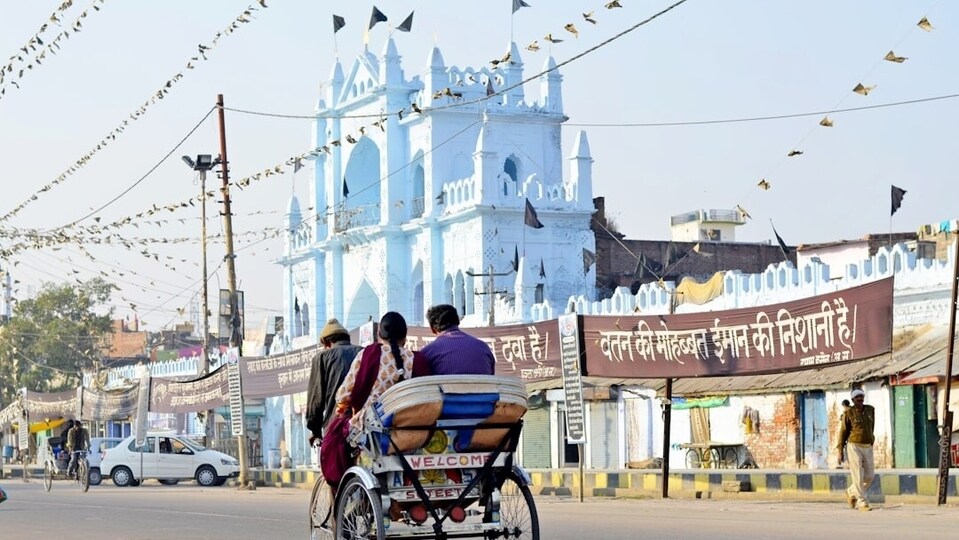
The announcement by the United Nations Educational, Scientific and Cultural Organization (Unesco) on October 31, 2025, coincided with World Cities Day, during the 43rd Session of its General Conference in Samarkand, Uzbekistan.
Kebab to Malai: What UN body mentioned
“From mouth-watering Galouti Kabab to Awadhi Biryani, delectable Chaat and Golgappe, desserts like Makhan Malai and so much more — Lucknow in Uttar Pradesh is a haven for food, enriched in centuries-old traditions,” Unesco said.
A celebration of Lucknow’s centuries-old Awadhi cuisine, other living food traditions, and rich cultural unity, the Unesco nomination highlighted iconic dishes.
These included distinct foods from both the vegetarian and meat-based (or ‘non-vegetarian’) staples.
Also read | Why the city of ‘nawabs’ and ‘kebabs’ is now a UNESCO culinary heritage
What CM Yogi's celebratory posts said
In his congratulatory message, Uttar Pradesh Chief Minister Yogi Adityanath called it a “historic achievement”, and credited the “guidance of Prime Minister Narendra Modi” for it.
Calling for social media posts using the trend ‘#OneDistrictOneCuisine’, the Hindu seer-cum-political leader mentioned a series of foods too — sticking to vegetarian ones, though.
He said, “Lucknow's Chaat, Varanasi's Malaiyo, Meerut's Gajak, Banda's Sohan Halwa, Etawah's Mattha ke Aloo (potatoes in spiced buttermilk), Baghpat's Balushahi, Agra's Petha, Mathura's Peda, Moradabad's Dal, Khurja's Khurchan — this 'delicious' list is very long!”
Many users commented to commend the BJP government, but the absence of non-veg dishes among the ones mentioned by the CM sparked a reaction too.
“This recognition celebrates Lucknow's centuries-old rich Awadhi culinary heritage, featuring unique dishes such as kebabs, biryani, korma, nihari-kulcha, and sheermal,” one user wrote.
“All restaurants in Lucknow that make delicious dishes deserve congratulations for this, especially the shops selling kebabs and biryani located in Chowk,” wrote another.
Some simply celebrated.
“This is the virtuous glory of saints. Heartfelt congratulations and best wishes to the people of UP and Lucknow,” said one of the X users under CM Yogi's post.
Another shared a suggestion: “Sir, we should post this poster in multiple languages at every restaurant, so that visitors, especially those from abroad, can understand. This will give authentic taste to international tourists.”
Seeking to balance the argument, another user mentioned: “Lucknow's non-veg is famous due to SM (social media) recently. Lucknow is famous for veg cuisine as well. Apart from non-veg, the cuisine is very seasonal with particular combinations.”
Union tourism minister Gajendra Shekhawat's post about the honour for Lucknow — reposted by PM Narendra Modi — also sparked the debate as X users said the photo of the fare he shared had only vegetarian dishes.
“Lucknow is majorly famous for its non-veg cuisine but you can't see a single non-veg dish in this picture. Seems like a ordinary dhabha thali,” remarked one user.
Lucknow after Hyderabad: how UN honour came about
The Unesco nomination process included the UP Directorate of Tourism submitting a dossier to the Union Ministry of Culture on January 31, 2025, which was officially forwarded to the UN body on March 3, and resulted in the final recognition.
Lucknow thus joins Hyderabad, which was designated in 2019, as only the second Indian city to be added to the Creative Cities Network in the gastronomy category.
UP's tourism minister Jaiveer Singh emphasised that it's expected to amplify Lucknow's global outreach and promote food-based entrepreneurship.
CM Adityanath also said, “This love for our food and dishes will become a bridge for a new wave of tourism by carrying our rich food traditions to every corner of the country and the world.”


