
 E-Paper



Centre not imposing new education policy on states: Sitharaman and Pradhan
Launching two books in Bhubaneswar to simplify primary education for tribal children in Odisha, Sitharaman said NEP 2020 is a “very progressive policy and is a result of extensive consultations”

 Prefer HTon Google


Union finance minister Nirmala Sitharaman on Thursday quelled apprehensions over the National Education Policy (NEP) amid opposition from non-Bharatiya Janata Party (BJP) ruled states such as Karnataka and Tamil Nadu, and said that the Centre will not impose NEP on all states and that they are free to adapt to it based on their requirements.
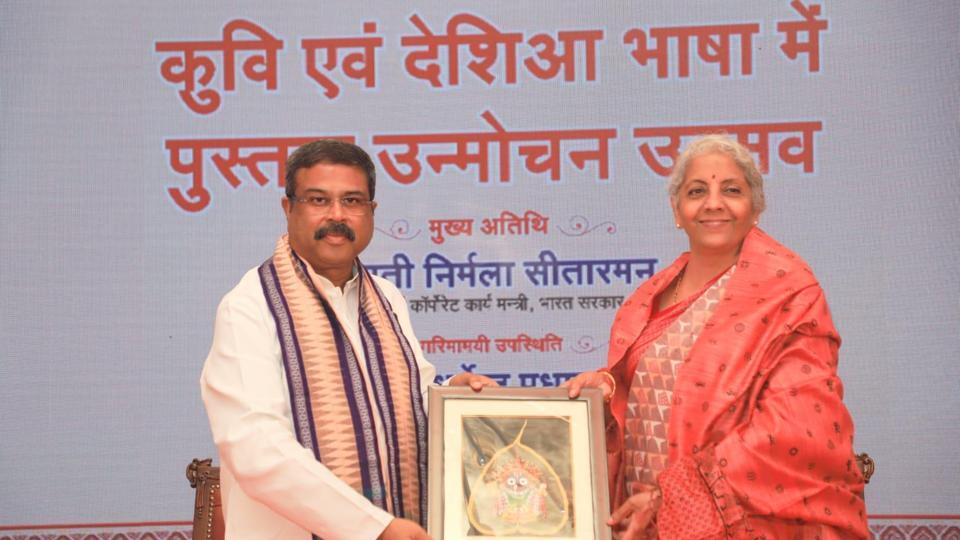
Launching two books – Kui Primer and Desia Primer – in Bhubaneswar to simplify primary education for tribal children in Odisha, Sitharaman said NEP 2020 is a “very progressive policy and is a result of extensive consultations”.
“NEP is a flexible policy. It is not something that the Centre decides and imposes on all the states. It is a broad framework, and the states are left to adapt it according to their requirements,” she said, adding that when one learns, speaks and thinks in their mother tongue, there’s a clarity of thought which can be used later. “That’s why learning in the mother tongue is important.”
Her observation came amid vehement opposition to the policy by Karnataka chief minister Siddaramaiah and DMK minister Udayanidhi Stalin in Tamil Nadu. On Monday, the Karnataka CM announced that the NEP will be scrapped from the next academic year in line with the Congress government’s poll promise.
“NEP must be abolished after making some necessary preparations. NEP is simultaneously opposed by students, parents, lecturers and teachers. The BJP has sacrificed the interest of the students of the country by implementing NEP in the state before implementing it in the rest of the country. NEP will continue this year as it should not affect students in the middle of an academic year,” Siddaramaiah said.
Stalin, who is a minister in the DMK government, on Wednesday said any move to impose Hindi through NEP will be resisted.
Meanwhile, Union education minister Dharmendra Pradhan who was also present at the meeting, took to social media platform X (formerly Twitter) to condemn the Karnataka government’s decision, calling it “politically motivated”.
“Education should be a beacon of progress and not a political pawn. Disappointed to learn about Karnataka CM’s politically motivated decision to discontinue the National Education Policy 2020. Our education system needs evolution, not regression. NEP was a result of years of consultations, reflecting aspirations of all. This decision reveals the anti-reform, anti-Bharatiya Bhasha and anti-Karnataka character of the Congress. Karnataka deserves leadership that values progress and inclusivity and not petty politics. Let’s put students first and stop the petty politics,” Pradhan said.
Pradhan said the two books that were released will not only shape a strong educational foundation of children, but also preserve and foster the cultural, linguistic heritage and identity of tribal community of Odisha.
“There are over 62 tribes covering 23% of Odisha’s population, so it becomes necessary to teach students with the help of pictures, stories and songs based on their local nature and culture to improve their speaking skills, learning outcomes and cognitive development,” Pradhan said.



