
 E-Paper



UP leads in setting up compressed bio gas plants, followed by Maharashtra and Haryana
Uttar Pradesh is followed by Maharashtra and Haryana, according to the petroleum ministry.


Uttar Pradesh leads states in setting up plants to produce compressed bio-gas (CBG) as part of efforts to reduce India’s dependence on imported energy and to check pollution from stubble burning that chokes the National Capital Region every winter.
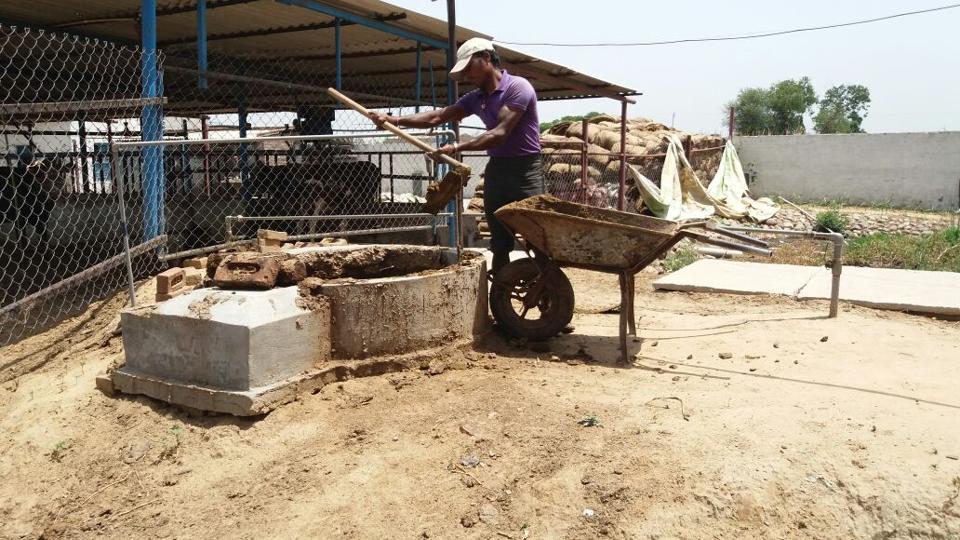
The state is followed by Maharashtra and Haryana, according to the petroleum ministry.
Of the 515 letters of intent (LoI) issued to entrepreneurs for setting up CBG plants across the country, 126 projects are located in Uttar Pradesh, 75 in Maharashtra, 59 in Haryana, 35 in Andhra Pradesh, 24 in Punjab and seven in Delhi, the official data showed.
Gujarat received the nod for setting up 32 plants, Karnataka 25, Madhya Pradesh 24, Chhattisgarh 22, Tamil Nadu 16, West Bengal 13, Bihar 11, Odisha, Uttarakhand and Telangana nine each, Jharkhand seven, Rajasthan five, and Goa, Jammu and Kashmir and Assam two each.
The estimated cost of the 515 CBG plants is Rs 18,000 crore.
A spokesperson of the petroleum ministry said, “The SATAT (Sustainable Alternative Towards Affordable Transportation) scheme is expected to have 5,000 plants across the country by 2023 that can produce 15 million metric tonnes of CBG and proportionately reduce our dependence on energy imports.”
Biomass sources such as agricultural residue, cattle dung, sugarcane press mud, municipal solid waste and waste from sewage treatment plants is used to produce bio-gas through the process of anaerobic decomposition. Bio-gas is purified to remove hydrogen sulphide, carbon dioxide and water vapour to produce and compress CBG, which has methane content of more than 90%, he said.
“CBG has calorific value and other properties similar to compressed natural gas (CNG), and it can be used as green renewable automotive fuel. It can replace CNG in automotive, industrial and commercial areas,” the spokesperson added.
The move will reduce pollution due to stubble burning. “Bio-mass surplus in India is about 150 million tonnes. From late September through October each year, farmers, mainly from Punjab and Haryana, burn an estimated 35 million tonnes of crop waste as a low-cost straw-disposal practice. CBG plants can curb this practice by giving an additional income option to farmers,” he said.
India imports nearly 83% of the crude oil its processes. About 50% of its natural gas requirement is also imported. The government has set a target to reduce this import dependence by 10% in the next two years.
This is the first time an alternative to natural gas is being sold by oil marketing companies. Commercial sales of CBG from seven retail outlets of Indian Oil Corporation (IOC) have already started. Two outlets are in Maharashtra – Pune and Kohlapur – and five are located in Tamil Nadu, including two in Salem and one each in Namakkal, Rasipuram and Puduchatram.
While inaugurating one such plant at Namakkal last month, petroleum minister Dharmendra Pradhan said the government has been promoting bio-fuels, including CBG, to increase the green energy mix, reduce import dependence, create employment, especially in semi-urban and rural areas, and reduce pollution.
“Usage of CBG shall assist in achieving climate change goals of India as per the Paris Agreement 2015,” he said, adding the project is in alignment with flagship schemes such as Swachh Bharat, Atmnirbhar Bharat and Make in India.
The business is lucrative for entrepreneurs as state-run oil majors such as IOC and GAIL India take off-take guarantee to such plants. Besides, the government is considering according it a priority sector lending tag for easy and cheaper finance. The government gives subsidy for setting up new CBG projects, which could be availed up to 2020-21, the spokesperson said.
According to Pradhan, the government is in the process of including bio-manure in the Fertilizer Control Order 1985 to make the project more lucrative. Bio-manure is a key by-product of CBG plants.
The move will make it easier for such plants to market bio-manure and provide an opportunity for organic farming. According to the oil ministry, 5,000 CBG plants are expected to produce 50 million metric tonnes of bio-manure.
The spokesperson said Western countries such as Germany, Italy, the UK, France and Switzerland too are promoting bio-gas. The number of bio-gas plants in Germany has doubled to nearly 9,000 plants from 4,136 plants in 2010. The total bio-gas production capacity of the plants is 8.98 billion cubic metres (BCM), which is equivalent to 6.6 million metric tonnes.


