E-Paper



Use of diesel gensets banned in NCR after forecast of ‘very poor’ air
The CAQM sub-committee convened an emergency meeting on Wednesday after forecasts by the Early Warning System (EWS) under the Union ministry of earth sciences showed that the air quality index (AQI) in Delhi will may touch the ‘very poor’ level by October 22 and could remain in this category for the subsequent six days

 Prefer HTon Google


New Delhi With forecasts showing that Delhi’s air quality may touch the ‘very poor’ category by October 22, the Commission for Air Quality Management (CAQM) in the national capital region’s sub-committee on Graded Response Action Plan (Grap) on Wednesday announced that measures under Stage II of the strategy were being introduced across Delhi-NCR with immediate effect.
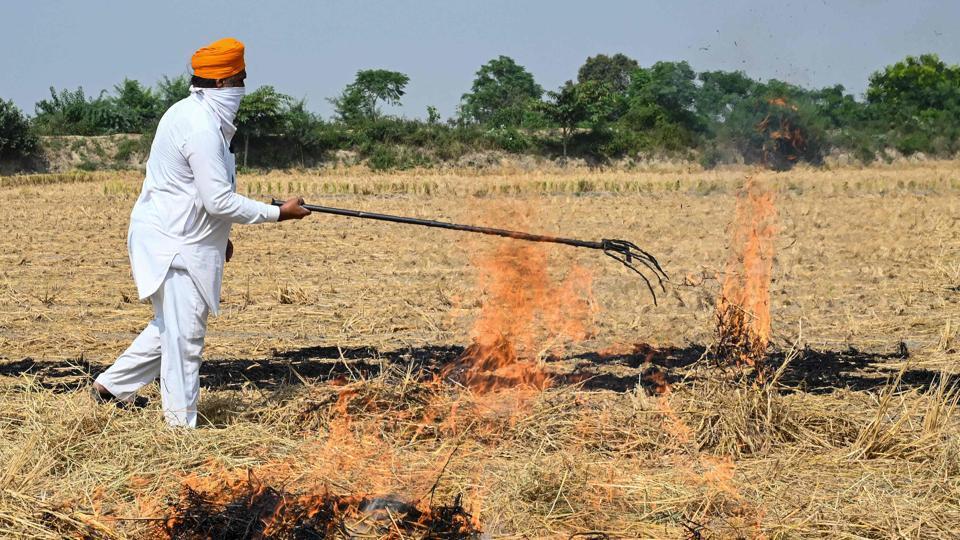
The CAQM sub-committee convened an emergency meeting on Wednesday after forecasts by the Early Warning System (EWS) under the Union ministry of earth sciences showed that the air quality index (AQI) in Delhi will may touch the ‘very poor’ level by October 22 and could remain in this category for the subsequent six days.
“In the meeting, it was noted that there is a forecast for deteriorating of air quality in Delhi and the AQI may move into the ‘very poor’ category from October 22, which is likely to be the result of calm wind conditions. Also, Diwali on October 24 is expected to worsen the situation further. Therefore, in an effort to prevent further deterioration in AQI, the sub-committee has decided that all actions as envisaged under Stage II of the Grap’s ‘Very Poor’ category need to be implemented in right earnest by all the agencies concerned and with immediate effect,” the CAQM said in an order.
Despite the introduction of these measures, Delhi’s air quality actually showed an improvement on Wednesday, recording an AQI of 228, according to the Central Pollution Control Board’s daily national bulletin, released at 4 pm each day. In comparison, it was 241 on Tuesday and 237 on Monday. However, Wednesday’s reading was still in the ‘poor’ category for a fourth consecutive day.
The CPCB defines an AQI between zero and 50 as “good”, 51 and 100 “satisfactory”, 101 and 200 “moderate”, 201 and 300 “poor”, 301 and 400 “very poor”, and over 400 is ‘severe’
Stage II of the Grap has 12 measures, including a ban on diesel generator sets across NCR (barring those for emergency and essential services) and a ban on the use of coal and firewood, including in tandoors. Other measures include asking agencies to enhance parking fees across NCR to discourage the use of private transport as well as the need for agencies to carry out the augmentation of private transport (CNG/electric buses and metro services) by either procuring additional fleet or increasing the frequency of services.
The CAQM order also asked the people to follow the citizen charter under Grap -- a set of measures people can follow to reduce air pollution around them, including using public transport as much as possible, regularly replace air filters in their automobiles, and avoiding dust-generating construction activities between October and January.
VK Soni, scientist at IMD and part of the CAQM sub-committee, said calm winds were already starting to influence air quality at night and forecasts show Delhi’s AQI on Diwali day will be ‘very poor’. “By October 22, wind speed will become calm in the region and lead to pollutants gradually accumulating. Added emissions from sources like vehicles and firecrackers may further deteriorate AQI by Diwali, but at the same time, the wind direction during this period will ensure stubble burning does not impact Delhi,” he said.
This year, a revised Grap is in place, which is linked to AQI instead of PM 2.5 and PM 10 concentration. It was revised through a new comprehensive policy that was released by CAQM on July 13, with Grap now having four stages as compared to five categories earlier.
Stage I or ‘Poor’ is when the AQI is between 201 and 300. This came into force on October 5, when Delhi’s AQI touched 211 on the day. Stage II or ‘Very Poor’ is when the AQI is between 301 and 400; Stage III or ‘Severe’ when the AQI is between 401 and 450 and the ‘Severe Plus’ or Stage IV category measures are to be enforced if the AQI is expected to touch 450+.
Under the new Grap, while measures under the ‘Poor’ category are to be enforced when the AQI touches a threshold of 201 or higher, for Stage II, III and IV, measures need to be enforced at least three days in advance, based on the forecasts of the EWS developed by the Indian Institute of Tropical Meteorology.
Anumita Roychowdhury, executive director, research and advocacy at the Centre for Science and Environment (CSE), said it was important that pre-emptive action was being taken this year. “However, like all measures and plans, it will depend on enforcement on the ground and how effectively teams are able to ensure compliance,” she said.
A transport department official said the Delhi government was ready to comply with the Grap directions, with the bus fleet similarly augmented last year by procuring 1,000 buses on an emergency basis. “Like last year, the directions will be followed. More buses will be added in due course,” the official said.
The Municipal Corporation of Delhi (MCD) meanwhile did not respond to HT’s queries on whether parking fees will be hiked across the capital.
As per the System of Air Quality and Weather Forecasting And Research (Safar), a government air forecasting body, the contribution of stubble burning in Delhi’s PM 2.5 was just 1% on Wednesday. This was despite a total of 594 farm fires being recorded across Punjab, Haryana and Uttar Pradesh in the last 24 hours. “Wind direction has started to change and so Delhi is not being impacted by stubble burning at the moment,” said Gufran Beig, founder project director at Safar.