
 E-Paper



Vehicle scrappage policy catalyst for change: PM Modi
The Prime Minister was virtually addressing an investors’ summit in Gujarat where the policy was launched in the presence of Union transport minister Nitin Gadkari, who piloted the policy in Parliament earlier this year, and Gujarat chief minister Vijay Rupani


Prime Minister Narendra Modi on Friday formally launched the National Automobile Scrappage Policy and said it would provide a “new identity” for the automobiles sector, create job opportunities, prove beneficial for the common man, and help reduce India’s carbon footprint.
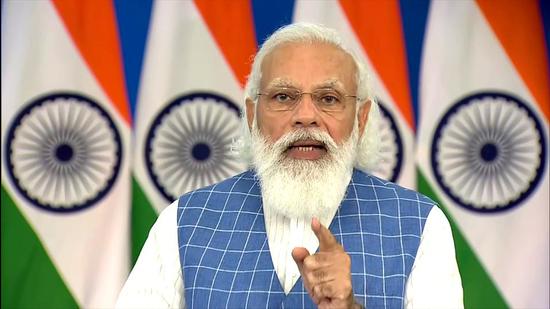
The Prime Minister was virtually addressing an investors’ summit in Gujarat where the policy was launched in the presence of union transport minister Nitin Gadkari, who piloted the policy in Parliament earlier this year, and Gujarat chief minister Vijay Rupani.
Modi also pitched the policy as a facilitator for Asia’s largest shipbreaking yard in Gujarat’s Bhavnagar to diversify into a vehicle scrapping hub. At least half a dozen investment MoUs were also signed at the summit in Gandhinagar.
Also Read | UNSC: Reading India’s global signals right
The Prime Minister called it a “waste-to-wealth mission” and went on to say that the implementation of the policy “will reduce pollution”. “The policy will bring investments worth more than ₹10,000 crore and, in the process, create employment opportunities for thousands of youngsters,” he said.
The scrappage policy would have a catalytic effect on all sectors, he said. By helping remove unfit vehicles from roads and thus cutting emissions as well as reducing road accidents, the new policy is the Centre’s commitment to provide “clean, congestion-free and convenient mobility in the 21st century”, he said.
Under the policy, those who give their old vehicle for scrap will be given a certificate. People with this certificate will not be charged any registration fee on the purchase of a new vehicle, said the PM, adding that such people will also be entitled for some rebate on road tax.
He explained that a vehicle would not be scrapped merely because it was old. “Fitness tests will be conducted at scrappage centres, and only after that will it be scrapped, that too, applying scientific methods,” he said.
Speaking on the occasion, Nitin Gadkari said, “With regular scrapping of (old and dilapidated vehicles), close to 99% of metal waste can be recovered. This will, in effect, bring down the cost of raw material by approximately 40%.” Among key benefits, Gadkari pointed out that this would make components less expensive and help global competitiveness. He added that, “With the increase in automobile sales, the government will earn ₹30,000 crore to ₹40,000 crore from GST (Goods and Services Tax),” he said.


