
 E-Paper



‘Verdict on Vijay Mallya big win for us’: CBI
The businessman, who fled to London on March 2, 2016 as bankers closed in on him to recover an estimated Rs. 9,000 crore owed by his grounded airline Kingfisher Airlines.


Former liquor baron Vijay Mallya tried every trick up his sleeve to beat Indian attempts to have him extradited home to face prosecution for financial malfeasance, but his battery of lawyers couldn’t quite weaken the tight case the Central Bureau of Investigation (CBI) and Enforcement Directorate (ED) built against the fugitive businessman.
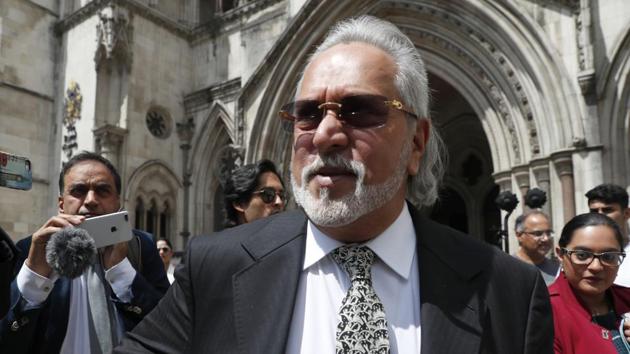
The businessman, who fled to London on March 2, 2016 as bankers closed in on him to recover an estimated Rs. 9,000 crore owed by his grounded airline Kingfisher Airlines, is likely to be India in four to five weeks after exhausting his legal options in the UK. For the agencies, winning the extradition case had become a matter of national pride, one that would set an example for other fugitives.
CBI termed the UK high court’s decision to reject his plea for permission to appeal against extradition in the UK Supreme Court as a “big victory” for the agency and a “big jolt” for Mallya, 64, a former Rajya Sabha member.
“The decision of the UK high court to order extradition of Vijay Mallya is a milestone in CBI’s quest for excellence and a reminder that economic offenders, facing probes in large-value frauds, cannot consider themselves as above the process merely because they have changed jurisdictions. The judgement also vindicates the painstaking investigation by CBI, especially since Mr Mallya had raised various issues with regard to the admissibility of evidence, the fairness of investigation itself and extraneous considerations, with a view to divert attention from his own acts,” said CBI spokesperson RK Gaur.
During the extradition proceedings held in the court of chief magistrate Emma Arbuthnot between December 4, 2017 and December 10, 2018, Mallya engaged experts from banking and aviation sectors, prisons conditions/human rights, political economics and law, apart from erstwhile executives of United Breweries Group and Force India Formula One Team Limited to defend himself.
“He tried to defend himself by making submissions claiming about business failure and that the trial against him was motivated by extraneous factors including media frenzy, political motivations, etc. He also mentioned that the prison conditions in India did not conform to the European Convention on Human Rights (ECHR) regulations and that the Indian prisons were incapable of providing {him} with the stipulated lodging facilities with adequate healthcare, food, exercise in conformity with European Convention on Human Rights norms (ECHR),” said a CBI official who didn’t want to be named.
Those claims were successfully refuted by the joint teams of ED and CBI.
Mallya questioned then CBI special director Rakesh Asthana’s professional integrity during the trial, but judge Emma Arbuthnot rejected the allegations saying: “I find that there is no evidence that Mr Asthana has acted corruptly.”
CBI, under Asthana and his team members -- ex-joint director Sai Manohar and investigating officer Suman Kumar -- made a video of barrack number 12 at Byculla jail in Mumbai, where Mallya would be lodged if he returned, to show that prison conditions in India were up to European standards.
They collected elaborate evidence of a conspiracy with bank officials and forgery. They even pursued every hearing in the UK courts by one of them being physically present there to assist the crown prosecution service (CPS), which represented the Indian government.
Suman Kumar, who has won the outstanding investigator award in CBI twice, has been associated with the Mallya probe from the beginning. Asthana is currently director general of the bureau of civil aviation security (BCAS) and Manohar has gone back to his parent cadre, Madhya Pradesh.
In ED, much of the credit goes to Satyabrata Kumar, joint director of the agency’s Mumbai’s Zone, who has been In-charge of the probe from day one and was often present at the UK court. Kumar and his team traced all bank transactions of Mallya and his associates in a dozen countries to prove that public money was laundered in a systematic manner. The ED team also attached properties worth around Rs 13,000 crore, more than what he owed to the banks (Rs 9,000 crore).
Mallya seemed to have accepted defeat. “Congratulations to the Government for a Covid 19 relief package. They can print as much currency as they want BUT should a small contributor like me who offers 100% payback of State owned Bank loans be constantly ignored ? Please take my money unconditionally and close,” he wrote in a Tweet.
Rakesh Asthana and Satyabrata Kumar couldn’t be reached for comment on Thursday.


