
 E-Paper



Diplomat Satinder Kumar Lambah, mentor to generations, dies at 81
Diplomat Satinder Kumar Lambah played a major role in India’s back-channel talks with Pakistan that led the two sides close to a deal on Kashmir


Veteran diplomat Satinder Kumar Lambah, who played a major role in India’s back-channel talks with Pakistan that led the two sides close to a deal on Kashmir, died after a prolonged illness in New Delhi on Thursday night. He was 81.
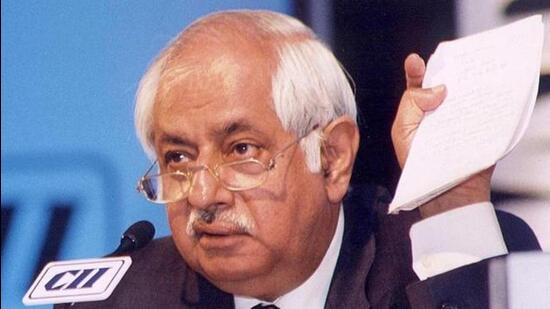
Lambah, a proficient but low-key official who helped shape relations with Pakistan, Afghanistan and Russia, served as the special envoy for Afghanistan under prime minister Atal Bihari Vajpayee during 2001-2004 and went on to become special envoy under prime minister Manmohan Singh in 2005 – a reflection of his ability to work with different political dispensations.
In a storied career, he was part of the team that started the new Indian mission in Dhaka after the creation of Bangladesh in 1971, led the Indian delegation that went to Kabul to re-establish India’s diplomatic presence after the ouster of the Taliban regime in Afghanistan in late 2001 and helped forge the strategic partnership agreement with Russia in 2000 during his stint as ambassador in Moscow.
In a tweet conveying his condolences to Lambah’s family, external affairs minister S Jaishankar said: “He was one of our most distinguished diplomats and a real mentor to the generations that came after him.”
Lambah, known to both colleagues and journalists as “Sati”, will probably be best remembered for his role in the back channel talks with his Pakistani counterpart Tariq Aziz, who was appointed by military ruler Pervez Musharraf. Over the course of secret visits to Pakistan and meetings in third countries, Lambah and Aziz thrashed out the draft agreement on what has come to be known as the “four point formula” to address the issue of Kashmir.
Also Read | Almost had Kashmir deal with Pakistan: Ex-PM’s envoy Lambah
This formula – which envisaged the solution of the Kashmir issue without redrawing borders through demilitarisation, free movement across the Line of Control, self-governance and a joint supervision mechanism – could not be converted into a formal agreement largely because of domestic political problems in Pakistan from 2007 that weakened Musharraf’s grip of power and led to his ouster.
The turmoil in Pakistan meant then prime minister Manmohan Singh could not go ahead with a planned visit at which the draft agreement was likely to have been unveiled. Subsequent developments, including the 2008 Mumbai attacks by the Pakistan-based Lashkar-e-Taiba and a string of attacks blamed on Jaish-e-Mohammed, took India-Pakistan relations to an all-time low.
The self-effacing diplomat rarely spoke about his role in the back channel talks, except for a speech at the University of Kashmir in Srinagar on May 13, 2014, when he said Manmohan Singh had “consistently advocated a solution that does not seek to redraw the border or amend the Constitution; but one that makes the boundary irrelevant, enables commerce, communication, contacts and development of the Kashmiri people on both sides and that ends the cycle of violence”.
Lambah also said he had worked with six prime ministers on matters related to Pakistan in the past 35 years, and each one had “given priority to improving relations with Pakistan” and this “has helped us to move forward”.
In an interview with Hindustan Times in 2015, Lambah said the two sides had “agreed there would be no reference to the United Nations resolution or a plebiscite in Kashmir” and that borders “cannot be redrawn”.
Notwithstanding the setback on Kashmir, successive governments retained faith in Lambah’s expertise on India’s western neighbourhood, which had its roots in his origins in Pakistan. Lambah was born in the northwestern city of Peshawar in 1941 in then undivided India, and his stint as joint secretary (Pakistan-Afghanistan-Iran) and two postings in Islamabad – as deputy high commissioner during 1978-81 and high commissioner during 1992-95 – helped him forge an extensive network of sources and connections that stood him in good stead in subsequent negotiations on delicate issues.
Among these contacts was former prime minister Nawaz Sharif, whom Lambah got to know as a protégé of then military ruler Zia-ul-Haq. Sharif hosted a lunch for Lambah on the day after he presented his credentials as high commissioner, and Sharif’s successor Benazir Bhutto did the same when Lambah completed his tenure three years later – yet another reflection of the diplomat’s ability to work with politicians from different ends of the spectrum.
Besides serving as the envoy to Hungary and Germany in the 1980s and 1990s, Lambah played a crucial role in his first stint in Russia in forging closer cooperation in a range of areas. This included negotiations in the mid-1990s that led to cooperation between India and Russia in the oil sector. Subsequently, he helped facilitate Oil and Natural Gas Corporation’s (ONGC) investment in Russia’s Sakhalin oil field.
Lambah had a key role in arrangements for the Non-Aligned Movement Summit hosted by India in 1983 and the Commonwealth Heads of Government meeting in New Delhi in the same year. He also led a committee on the reorganisation of the external affairs ministry and foreign missions in 2001 and many of its recommendations were implemented.


