
 E-Paper



Vijay's Week 1 report: Big orders against liquor, an astrologer U-turn, plus a ‘rebel’ subplot in CM's thriller debut
Closing hundreds of TASMAC liquor shops was among his key orders, as was a focus on women's safety; but there were at some major political twists too

 Prefer HTon Google


Vijay is no stranger to thrillers and Week 1 box-office impact. True to form, the actor-turned-politician's first week as the chief minister of Tamil Nadu has been nothing short of a thriller.
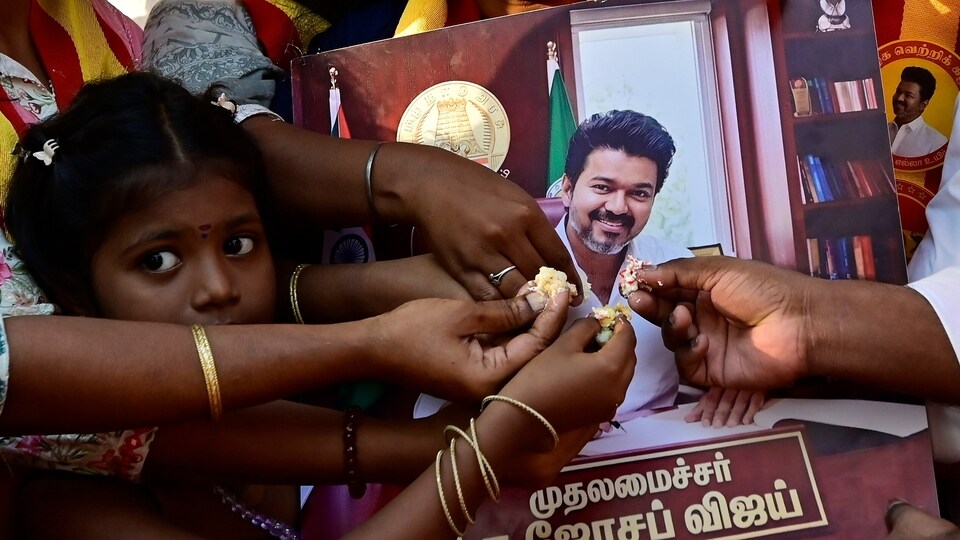
Following his swearing-in on May 10, and a successful trust vote won comfortably, CM C Joseph Vijay marked his debut in office with a righteous policy blitz, a viral controversy, a rapid reversal, and subplot that cracked a party. We'll come to the subplot later.
Day 1: Three orders before sundown
Just after Vijay was sworn in at Chennai's Nehru Indoor Stadium before a roaring crowd, his Tamilaga Vettri Kazhagam (TVK) having won 108 seats in the April 23 polls — enough, with Congress and Left allies, to form a coalition government — He signed his first three orders.
- Free electricity was doubled from 100 to 200 units for eligible domestic consumers.
- A new all-women security force, the 'Singa Pen Sirappu Athiradi Padai,' was established across the state.
- And 65 anti-narcotic task force units were ordered into every district, the centrepiece of his campaign promise of a “drug-free Tamil Nadu”.
There's been criticism of how these forces do anything different than becoming new names for existing operations, and if the state has enough money since Vijay has spoken about a ₹10-lakh-crore debt he inherited from MK Stalin's DMK regime.
TASMAC crackdown, and reinforced drinking age
Two days later, CM Vijay signed an executive order directing the closure of 717 TASMAC liquor outlets within a two-week deadline. These were the ones all operating within 500 metres of places of worship, educational institutions, or bus stands. The state's total outlet count will thus fall from 4,765 to 4,048.
The government also reinforced the legal drinking age of 21, issuing instructions to all remaining TASMAC staff to stringently enforce it, with mandatory ID verification — Aadhaar cards or driver's licences — required wherever a buyer's age is in doubt.
A reduction in operating hours, potentially moving the current 10 pm closing time to 8, is also being actively discussed. The decision was welcomed by women's groups and social organisations that had campaigned for such restrictions for years.
Here, too, there is stark fiscal reality beneath the applause. The Tamil Nadu State Marketing Corporation Limited or TASMAC, which runs these shops, generated over ₹48,000 crore in revenue for the state in 2025 alone.
Superstar's superstitions, and a U-turn
The same day brought an embarrassing twist too. The government formalised the appointment of astrologer Rickey Radhan Pandit Vettrivel — the man who publicly predicted Vijay's political rise — as Officer on Special Duty (Political) to the Chief Minister. Backlash came from opposition parties, rationalist groups, and even TVK's coalition allies; and later on the floor of the assembly itself.
A petition was also filed in the Madras High Court challenging the appointment on grounds of lacking a transparent recruitment process and violating constitutional provisions on equality in public employment.
Less than 24 hours after the order was made, the government withdrew it. In the assembly, Vijay did not address it directly.
Instead, he threw a line: “This government will function with the speed of a horse and not indulge in horse-trading.”
The horse-trading charge, however, came on May 13.
The ‘rebel’ subplot
The government's floor test produced a result that went well beyond confirming Vijay's majority.
Against an expected tally of around 120, the TVK government won with 144 votes.
Because, 25 AIADMK MLAs, led by former ministers SP Velumani and CV Shanmugam, defied a party whip and voted in favour of the TVK. The rebels argued the whip was itself illegitimate, having not been ratified by a legislature party meeting. They said Vijay had the people's mandate and deserved support.
This meant the AIADMK — now a distant third in the state, in alliance with Centre's ruling BJP — suffering yet another implosion since the death of party matriarch J Jayalalithaa in 2016.
AIADMK's formal leader, general secretary Edappadi Palaniswami (EPS), left with just 22 loyalists, filed disqualification petitions against the defectors the same afternoon. He's accused them of being greedy for ministerial posts.
The rebel faction, in turn, announced it would move a resolution demanding EPS resign from his posts now that he'd lost faith of most of the MLAs. The battle between the two AIADMK factions may be headed to court, while the speaker, a TVK MLA, gets to have a major say in whether or not the anti-defection law applies immediately or at all.
The DMK, led by Leader of the Opposition Udhayanidhi Stalin, staged a walkout before the vote, meaning the TVK is sailing smooth. Vijay still does not have numbers of his own, but has allies more than enough, for now.
This was just Week 1 anyway.


