
 E-Paper



Number Theory: Voter turnout rises on 55 UP seats, sees slight dip in Goa, Uttarakhand
Both UP and Uttarakhand have a history of voting the incumbent government out of power, and the BJP will look to break this cycle, while in Goa, the BJP will look to consolidate its rule, having been in power since 2012.


Goa, Uttarakhand, and 55 of 403 assembly constituencies (ACs) in Uttar Pradesh went to the polls on Monday, with the Bharatiya Janata Party (BJP) — the ruling party in all three states — looking to beat anti-incumbency and return to power in the state.
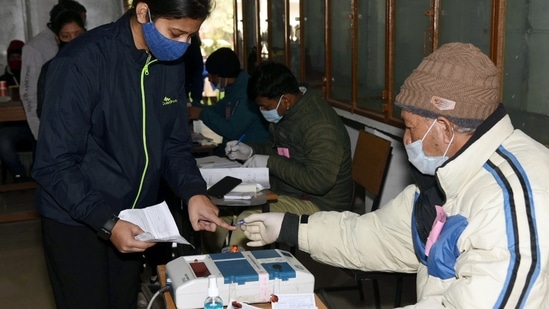
Both UP and Uttarakhand have a history of voting the incumbent government out of power, and the BJP will look to break this cycle, while in Goa, the BJP will look to consolidate its rule, having been in power since 2012.
Click here for full coverage of assembly elections 2022
In UP, the Samajwadi Party-Rashtriya Lok Dal alliance is looking to exploit chinks in the BJP’s armour, and in Uttarakhand, the ruling party will see a two-pronged challenge from traditional rivals the Congress and new entrants the Aam Aadmi Party. Meanwhile, Goa is a political free-for-all, with the Congress, AAP and Trinamool Congress challenging the BJP for power in the coastal state, along with other parties.
Uttar Pradesh
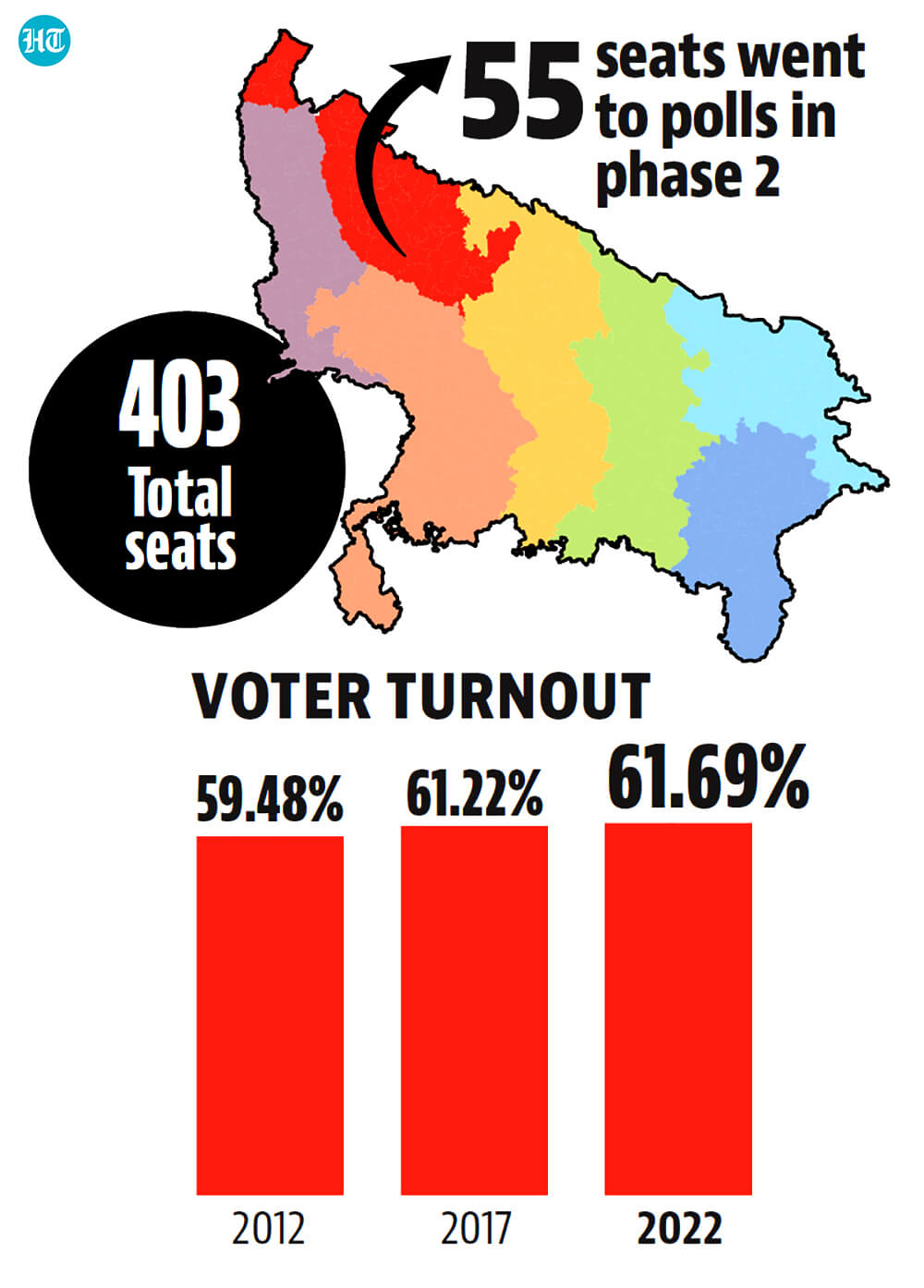
The 55 assembly constituencies (ACs) out of a total of 403 seats in Uttar Pradesh which went to polls in the second phase of elections recorded a turnout of 61.69%, according to data accessed at 8pm on February 14 from the Voter Turnout App of the Election Commission of India (ECI).
The aggregate turnout in these ACs was similar (61.22%) in the 2017 assembly election, and was slightly lower (59.48%) in the 2012 assembly election.
Also Read| Phase 2 ends in UP, 60.44% voter turnout across 55 seats
To be sure, these trends might not necessarily hold when the final result of the election is declared.
The data for past elections is based on the count of registered electors and valid votes polled as published in the result for those elections by the ECI and collated by Trivedi Centre for Political Data (TCPD), while the data for the current election is provisional.
“This is approximate trend as data from some Polling Stations (PS) takes time. Final data for each PS is shared in Form 17C with all Polling Agents,” the Voter Turnout App says.
Goa
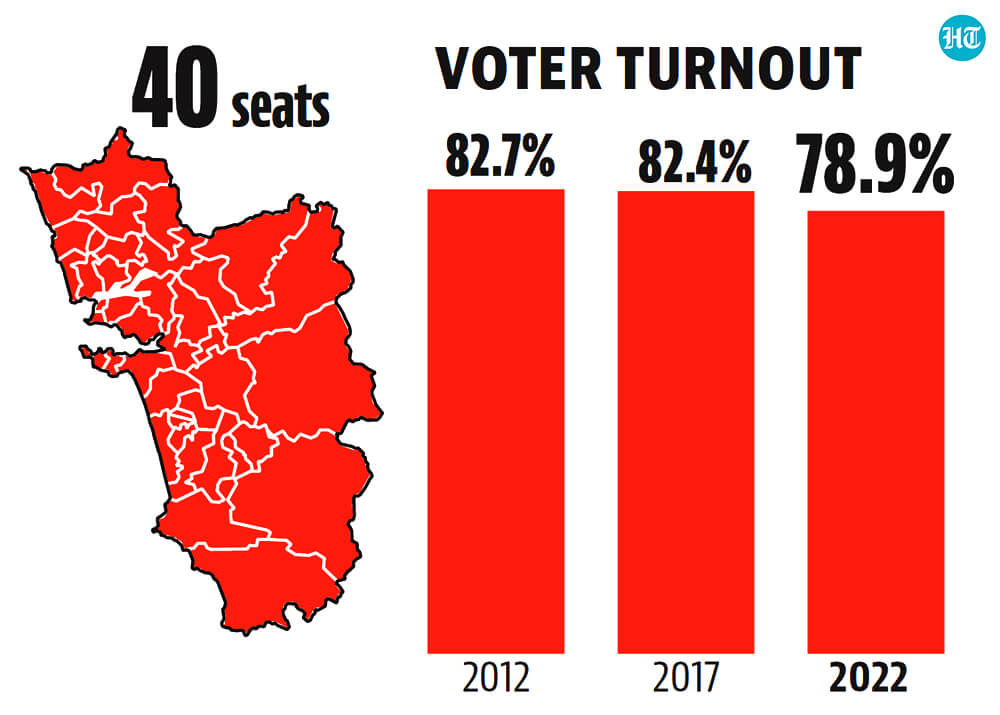
All 40 ACs of Goa voted in a single phase on February 14. The 78.9% aggregate turnout in the state as of 8 pm was higher than the aggregate turnout in the other two states – Uttar Pradesh and Uttarakhand – that voted on Monday.
Also Read| TMC’s rethink of Goa alliance strategy may impact Oppn politics
However, unlike Uttar Pradesh, where this year’s turnout was similar to that in 2012, the turnout in Goa was 3.5 to 3.8 percentage points lower than in the elections of 2012 and 2017.
As pointed out above, some of this difference might decrease when the final results are published.
Uttarakhand
As of 8 pm, the data from the hill state showed that it had the lowest turnout (59.5%) among the three states voting on Monday, and the turnout was about six to seven percentage points lower than in 2012 and 2017.
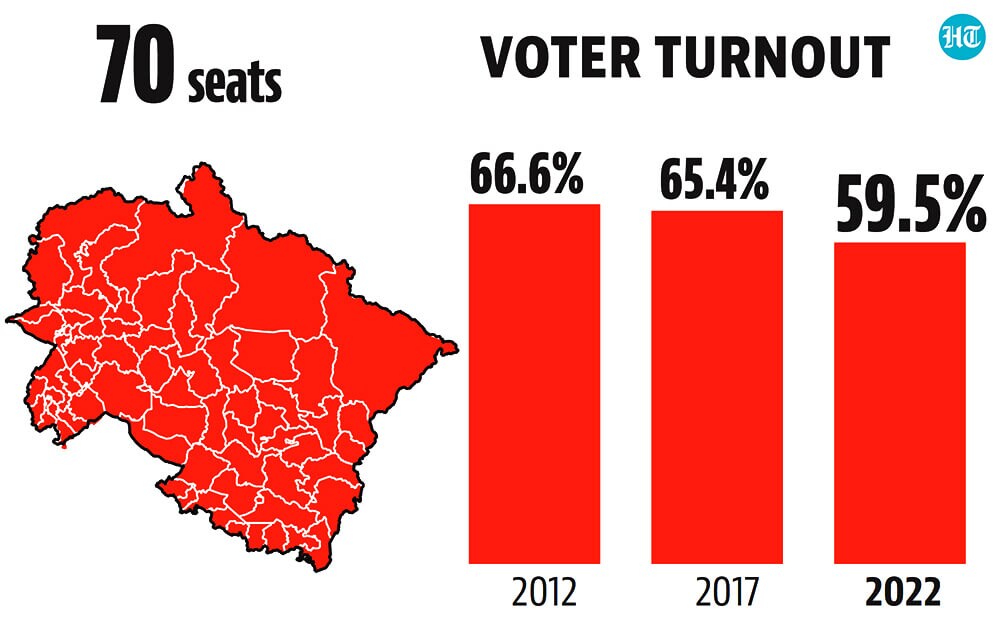
A reason for this, however, could possibly be the difficulty of fast communication from remote polling stations. In the elections in 2012 and 2017, while Uttarakhand indeed had a lower turnout than in Goa, it had a higher turnout than the 55 ACs voting on Monday in Uttar Pradesh.


