
 E-Paper



War shouldn't feed egos: IAF chief on why India ended conflict with Pak early after Operation Sindoor
Air Chief Marshal AP Singh suggested that war should not feed on egos and that the world must learn from India how to start and end a conflict early.

 Prefer HTon Google


Chief of the Air Staff, Air Chief Marshal AP Singh, said on Thursday that a lot of people wanted the fighting with Pakistan to not stop during the military conflict after the Operation Sindoor strikes in May this year, adding that the action was terminated because the main objectives were achieved.
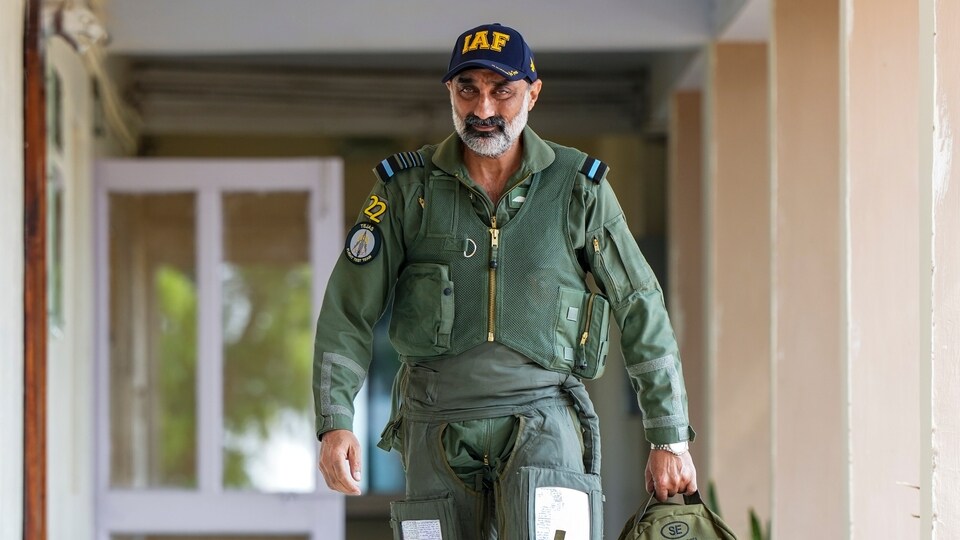
Air Chief Marshal AP Singh suggested that war should not feed egos and that the world must learn from India
The Indian armed forces in May this year launched Operation Sindoor, retaliatory strikes that successfully targeted terrorist infrastructure in Pakistan and Pakistan-occupied Kashmir (PoK) after the April 22 Pahalgam terrorist attack that killed 26.
The Operation Sindoor strikes sparked a military conflict between India and Pakistan, with both countries exchanging drones and missiles for four days. The military action stopped after the Pakistani DGMO reached out to the Indian counterpart seeking a ceasefire understanding.
‘We met objectives’
Addressing an event on Friday, the Indian Air Force chief put to rest the argument by a section of people supporting a prolonged action against Pakistan and said India terminated the conflict as it had met the main objective – “anti-terrorism”.
Air Chief Marshal AP Singh said that continuing a conflict comes with a price, citing Israel and Russia-Ukraine wars as examples.
“The main wars that are going on today, be it Russia, Ukraine or the Israel war. They are going on, years have passed, because no one is thinking about conflict termination...We heard that people said that no, we should have done a little more. We stopped the war very quickly. Yes, they were on the back foot, no doubt, but what were our objectives?,” AP Singh said.
“Our objective was anti-terrorism. We had to strike them. We had done that. So if our objectives have been met, then why should we not terminate a conflict? Why should we carry on? Because any conflict has a lot of price which has to be paid. It will affect our preparedness for the next one. It will affect our economy,” Air Chief Marshal AP Singh added, as per clips of his speech shared by ANI news agency.
'Conflict comes at a price'
He said continuing conflict will affect the progress of the country and India set an example of how to start and terminate a conflict at the earliest possible opportunity.
"So, I think this is what the world is forgetting. They do not know what our target was when we started the war. Now their goal post is shifting. Egos are coming in between. And this is where I think the world has to learn a lesson from India how to start and terminate a conflict at the earliest possible opportunity...," the Indian Air Force chief said.
Chief of Defence Staff (CDS) General Anil Chauhan on Thursday said that the Indian forces carried out a planned strike on terrorist targets between 1 and 1:30 am on May 7 during Operation Sindoor to avoid civilian casualties.
India has maintained that the Operation Sindoor strikes have only been paused and that the armed forces are ready to act if Pakistan resorts to any mischief.


