
 E-Paper



Increased war-risk premiums may drive up airfares for flights to West Asia, say experts
The conflict involving the US, Israel, and Iran has already led to higher operational costs, including a 30% surge in jet fuel prices.

 Prefer HTon Google


Insurance companies are moving to raise war-risk premiums for airline fleets operating to West Asia, which could push up already-elevated airfares as carriers are likely to pass on part of the additional cost to passengers, multiple aviation industry insiders told HT.
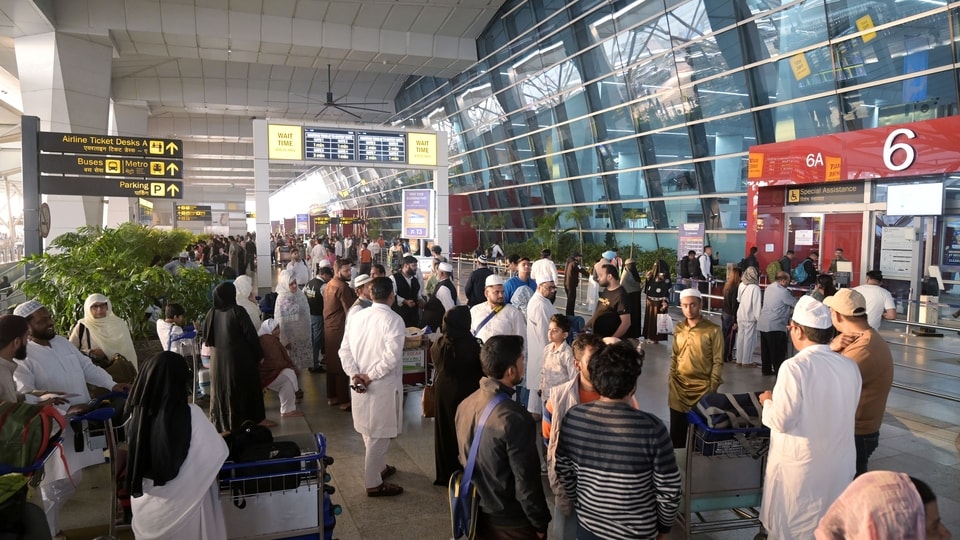
People familiar with the discussions said insurers have begun reaching out to airlines operating flights to parts of West Asia, citing higher operational risks to “war zone” areas and seeking to revise premiums for aircraft flying these routes. Carriers have started operating a limited number of flights to ferry stranded passengers to and from Gulf airports in the wake of the escalating conflict involving the US, Israel and Iran.
Queries sent to Air India, IndiGo, Air India Express, SpiceJet and Akasa Air did not get a response.
“In situations like this, the underwriter has the right to issue a notice of cancellation or apply additional war-risk policy premiums because of the apprehension of war or perceived heightened risk. In the current case, this is an actual conflict and airlines are continuing to operate, so insurers may increase the war-risk premium,” said Prabodh Thakker, an aviation insurance expert.
Industry estimates suggest the revised premiums could add about ₹30-40 lakh to the cost of operating a narrow-body aircraft on West Asia routes and around ₹90 lakh for a wide-body aircraft per round trip (for instance, Abu Dhabi-Delhi-Abu Dhabi), according to people aware of the development.
This could translate to roughly additional costs of ₹20,000 per passenger on narrow-body flights and about ₹30,000-35,000 on wide-body services, based on typical passenger loads, one of the persons told HT.
“There will be an impact on airfares due to the premium revision, but it is too soon to assess how much ticket prices could increase,” another industry insider said.
The conflict has also pushed up other operating costs. Industry officials said jet fuel prices have surged by nearly 30%, adding further pressure on airlines. To be sure, fuel accounts for around 40% of airline operating costs.
“Surge in fuel cost can alone push ticket prices for passengers travelling to and from the Middle East up by another 10-12%,” people aware of the matter said.
For example, random check of a Mumbai Dubai flight of a budget airline operating on March 8 has a fare of ₹20,000 on Thursday. While, in a normal circumstance, the fare on this sector usually hover around ₹12,000
The evolving security situation has also disrupted airline schedules and aircraft utilisation. According to industry officials, airspace restrictions, operational uncertainties, and sudden route changes have affected about 20% of flights for every airline operating in the region.
Slots at several airports in the region are currently being allocated on a day-to-day basis, leading to frequent last-minute changes in flight operations.
“Airlines are unable to sell seats on these flights in advance, particularly on services departing from the Middle East. Aircraft often have to be filled at short notice, sometimes just a few hours before departure, leading to lower passenger loads and higher operating costs,” a second person aware of the matter said.
Despite the higher costs, airlines are expected to continue operating these routes because of strong demand and the importance of Gulf connectivity for Indian carriers, industry officials said.
Air India Express on Thursday operated flights from Fujairah, Ras Al-Khiamah and Muscat, Dubai. SpiceJet too operated flights to Mumbai from Fujairah and Dubai.
In the other direction, IndiGo announced it will operate 6E 91 from Mumbai to Jeddah on Friday. Air India announced additional special ad-hoc flights to Dubai, Muscat, and Ras Al Khaimah.
According to industry insiders, the outbound flights are seeing lower loads than the inbound flights. “While the flights to India are almost full, inbound flights are seeing not more than 20% loads,” one of the persons said.


