
 E-Paper



Water supply to be hit for 16 hours in Delhi's Rohini on this day
Tankers will be available on demand from the Delhi Jal Board helpline or the central control room.


The Delhi Jal Board (DJB) on Saturday said that water supply in the national capital's Rohini area will be disrupted on November 11 for 16 hours due to “maintenance work”, news agency PTI reported.
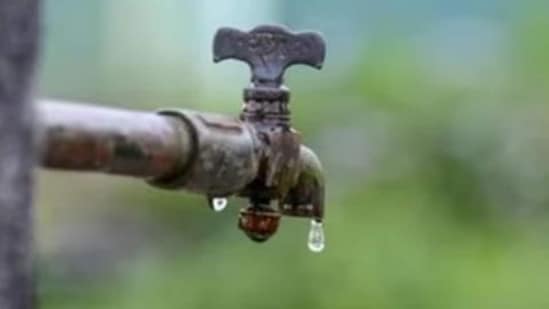
The affected areas would include Rohini Sector-6, Rohini Sector-7, Rohini Sector-8, and their adjoining areas.
Also read: Delhi water crisis: AAP blames Haryana for ammonia contamination in Yamuna, BJP hits back
“The work of installation of flow meter at 700 mm dia. outlet line of Rohini Sector-7 BPS is proposed to take up on November 11 from 10 am onwards for 16 hours. Therefore, water supply will not be available in the evening and may be available at low pressure in the morning of November 12,” the DJB statement said.
The agency advised residents to make judicious use of water and said that water tankers will be available on demand from the DJB helpline or the central control room.
Water supply crisis in Delhi
The national capital faced an acute water supply crisis over the last week as high levels of ammonia contamination in the Yamuna River affected the efficient functioning of Delhi's water treatment plants.
Water treatment plants (WTPs) at Sonia Vihar and Bhagirathi struggled to cope with the ammonia content in the Yamuna's raw water.
Also read: 'It's not shampoo': Woman washes hair with toxic foam in Yamuna, internet shocked
High ammonia levels in the Yamuna are indicative of high industrial load or sewage disposal in its water. DJB’s plants can treat up to 1ppm of ammonia in raw water through chlorine, but chlorination beyond this limit leads to the production of toxic chloramine compounds.
Thus, water production at the treatment plants was hit when ammonia levels breached the 1ppm mark.
Delhi's residents at tail-end areas such as Vasant Kunj and Anand Vihar complained of water shortages and ammonia contamination issues.
WTPs reportedly returned to optimal capacity once the ammonia levels were reduced in Yamuna. “The plants are now operating at optimum capacity. There is still a pollutant load in the raw water, but we are trying to manage the situation,” a DJB official had told HT on the condition of anonymity.


