
 E-Paper



What’s behind the BPSC protests? Prashant Kishor and students’ demands explained
Students have raised concerns over irregularities in the BPSC exam, citing the poor quality of the question paper and its resemblance to model papers.

 Prefer HTon Google


Amidst the biting cold, the controversy surrounding the 70th Combined Preliminary Exam of the Bihar Public Service Commission (BPSC) is growing louder, as protesting students continue to demand justice and the cancellation of the exam.
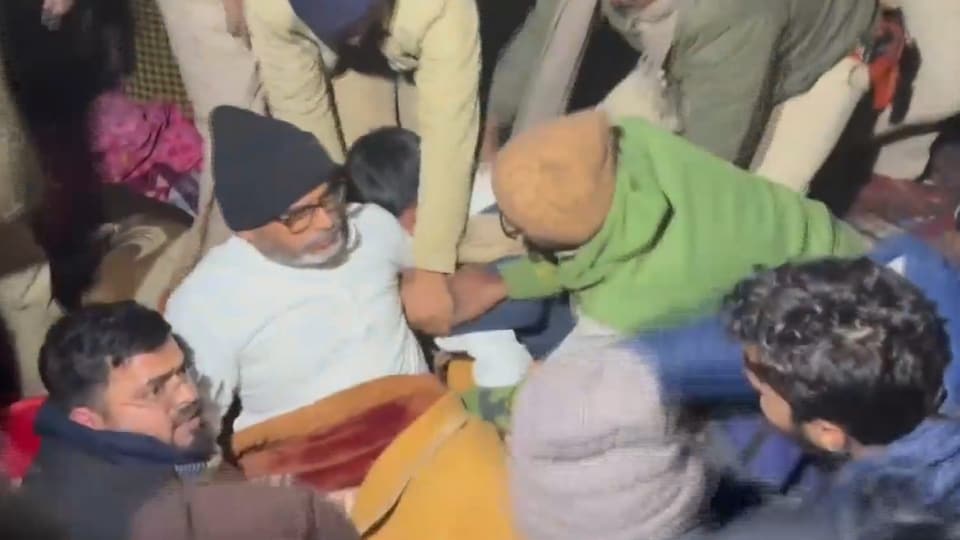
The protesting students have gained support from strategist-turned-politician Prashant Kishor, who was detained by the Bihar Police on Monday morning while backing their cause.
The Jan Suraaj founder was sitting on an indefinite hunger strike at Gandhi Maidan in Patna when he was removed from the site.
Kishor, a former election strategist who transitioned into full-time politics, has been on an indefinite hunger strike since January 2 in solidarity with the protesting students.
Students have raised concerns over irregularities in the BPSC exam, citing the poor quality of the question paper and its resemblance to model papers from coaching institutes.
As a result, they are demanding the cancellation of the exam and a re-conduct of the test.
How students' anger escalated
The BPSC prelims exam was conducted at 912 centres statewide, but a disturbance occurred at a Patna centre due to delayed distribution of question papers. Patna District Magistrate Chandrashekhar Singh swiftly arrived at the scene. In the ensuing tension, invigilator Ram Iqbal Singh, 58, suffered a cardiac arrest and was rushed to the hospital, but protesting students obstructed the way. During the chaos, Patna DM Singh slapped a student, escalating the anger of the protesters.
Protests by students in Patna began at two locations, where they demanded a retest and the withdrawal of FIRs filed against students during earlier protests. Tensions rose after the alleged suicide of Sonu Kumar, a BPSC aspirant, reportedly under pressure to secure a job.
Prashant Kishor takes the stage
On December 25, the police lathi-charged the demonstrators, causing injuries to several, with one female student accusing male officers of assault. Prashant Kishor visited the protest site, where he met with the students and called for a march to meet chief minister Nitish Kumar on December 27.
By December 29, over 15,000 students gathered, but their march was blocked. Kishor held a dharna while students were offered a meeting with government officials, though opinions were divided about the proposal.
Government offers dialogue
The Nitish-led NDA government on December 30 had offered students a chance to meet chief secretary Amrit Lal Meena to discuss their demands, but no resolution was reached. Former IPS officer RK Mishra led a delegation, but it made no breakthrough. The government remained silent on the demand for a retest. Prashant Kishor then set a 48-hour deadline for the government to act, after which he began a hunger strike at Gandhi Maidan in Patna. Two FIRs were filed against Kishor and three against protesting students, but no arrests have been made.


