
 E-Paper



When Manmohan Singh defended he was not a silent prime minister: 'I was not afraid of…'
Manmohan Singh death: Manmohan Singh, the architect of India’s historic economic liberalisation, passed away on Thursday night at the AIIMS in Delhi. He was 92.

 Prefer HTon Google


Manmohan Singh death: Manmohan Singh, known for his soft-spoken nature and intellectual depth, was a consensus builder who commanded respect across political lines. His tenure as Prime Minister saw landmark initiatives such as the Mahatma Gandhi National Rural Employment Guarantee Act (MGNREGA) and the India-US Civil Nuclear Agreement, among others.
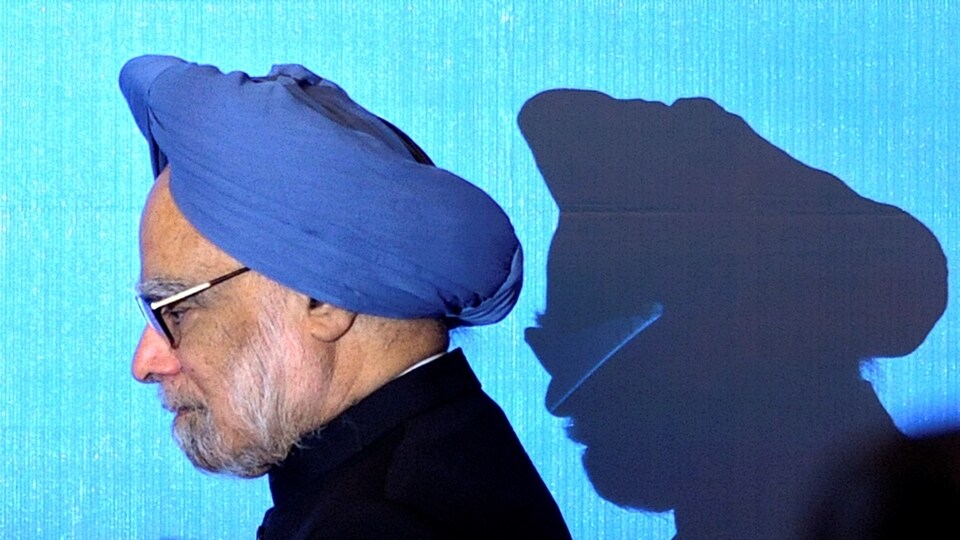
The two-time former prime minister, the architect of India’s historic economic liberalisation, passed away on Thursday night at the All India Institute of Medical Sciences (AIIMS) in Delhi. He was 92.
Follow Manmohan Singh death latest updates
Despite being labelled by critics as a “silent PM", Manmohan Singh defended his leadership style. At the launch of his book Changing India in December 2018, Manmohan Singh said, “People say I was a silent Prime Minister. I think these volumes speak for themselves. I would certainly like to say that I was not the prime minister who was afraid of talking to the press – I met the press regularly, and on every foreign trip I undertook, I had a press conference in the plane, or immediately after landing. So there are a large number of those press conferences whose results are also described (in the book).”
Also Read | Manmohan Singh death: Government declares 7-day mourning; ex-PM's last rites on Saturday | 10 updates
Singh, who served as India’s 13th prime minister from 2004 to 2014, was a scholar, economist, and a transformative leader who guided the nation through some of its most critical economic and political challenges. As finance minister in 1991, Singh unshackled India’s economy from the ‘licence raj’, introducing reforms that set the stage for the nation’s economic growth and global integration.
Also Read | Manmohan Singh: The politician who was defeated by politics
Born on September 26, 1932, in Gah (now in Pakistan), Singh’s journey from a village boy to a globally respected economist and politician is a story of perseverance and vision. His legacy as the architect of modern India’s economic reforms and his role as a statesman will be remembered for generations.
Recalling how he became the finance minister by “accident”, Manmohan Singh said the then prime minister, PV Narasimha Rao, wanted economist IG Patel for the post but with Patel unwilling to take up the job, it came to him. “People say I was an accidental Prime Minister, but I was also an accidental finance minister,” he said in a lighter vein.
Several months before the 2014 Lok Sabha elections, Singh said he would retire after the polls, with Rahul Gandhi earmarked to take his place if the Congress won.
But the Congress crashed to its worst-ever result at that time as the Bharatiya Janata Party, led by Narendra Modi, won in a landslide.
Manmohan Singh – who said historians would be kinder to him than contemporary detractors – became a vocal critic of Modi's economic policies, and more recently warned about the risks that rising communal tensions posed to India's democracy.


