
 E-Paper



Why Chandrayaan module return is key for future missions
These experiments also form the basis of sending humans to the moon and bringing them back safely—a mission recently approved by PM Modi, and expected to happen by 2040

 Prefer HTon Google


The Indian Space Research Organisation (Isro) has successfully brought back the propulsion module of Chandrayaan-3 from the lunar orbit into the Earth’s orbit, establishing its capabilities of not just sending but also bringing back objects safely to Earth in preparation of its return lunar missions in the future.
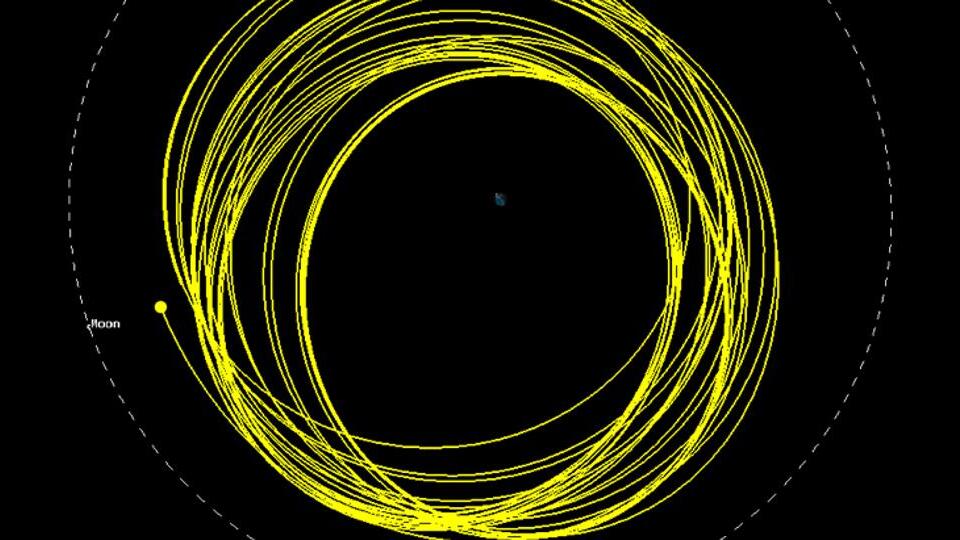
“Chandrayaan-3’s propulsion module (PM) takes a successful detour. In another unique experiment, the PM is brought from lunar orbit to Earth’s orbit. An orbit-raising manoeuvre and a trans-Earth injection manoeuvre placed PM in an Earth-bound orbit,” the agency said in a statement issued on Tuesday.
According to senior scientists from Isro, this is the second experiment conducted on the sidelines of the primary Chandrayaan-3 mission, after the ‘hop experiment’ on September 3, which tested India’s capabilities and systems for lunar missions to bring back samples to Earth. These experiments will also form the basis of sending humans to the moon and bringing them back safely—a mission recently approved by Prime Minister Narendra Modi, and expected to happen by 2040.
‘Bonus’ experiment
Scientists said neither of the two experiments was part of the primary mission plan, although the agency was clear it would do them if all other aspects of the mission went off successfully.
“Once all the primary mission objectives were achieved, we felt that we had a great opportunity to test out our systems for the upcoming projects. That is why we went about conducting the hop experiment. We did not expect propulsion module to have enough fuel to be brought back . This is an extremely significant milestone for our teams to help plan for subsequent lunar missions,” said a senior Isro scientist who asked not to be named.
The main objective of the propulsion module was to ferry the lander (Vikram) module from geosynchronous transfer orbit (GTO) to the final lunar polar circular orbit and separate the lander. According to the original plan, the plan was to operate Spectro-polarimetry of Habitable Planet Earth (SHAPE)--the payload on-board PM for about three months during which pictures and observations from the Moon’s orbit were to be analysed.
“The precise orbit injection and optimal Earth and lunar burn manoeuvres resulted in over 100kg of reserve fuel remaining in the PM after over one month of operations in the lunar orbit. It was decided to use this fuel in the PM to derive additional information for future lunar missions and demonstrate the mission operation strategies for a sample return mission,” the official cited above added.
How was it done?
Officials explained that bringing the PM to the Earth’s orbit was done using a series of manoeuvres, similar to the ones conducted for sending the lander and rover modules to the Moon.
Isro documents show that the first manoeuvre was performed on October 9, to raise the apolune (the point at which a spacecraft in lunar orbit is furthest from the moon) altitude to 5112km from 150km—increasing the period of orbit from 2.1 hours to 7.2 hours.
The space agency then went on to perform a trans-Earth injection (TEI) manoeuvre on October 13, which set the PM on a trajectory to enter Earth’s sphere of influence. Isro added in its statement that after TEI, the PM made four fly-bys before it exited the Moon’s sphere of influence on November 10.
“Currently, the propulsion module is orbiting Earth and crossed its first perigee on November 22, with an altitude of 1.54 lakhs km. The orbit period is nearly 13 days with 27-degree inclination. The perigee (the point in the orbit of the moon or a satellite at which it is nearest to the earth) and apogee altitude vary during its trajectory and the predicted minimum perigee altitude is 1.15 lakhs km. Hence, as per current orbit prediction, there is no threats of close approach with any operational Earth orbiting satellites,” the agency added.
Why is it significant?
Senior officials said that it was for the first time that the space agency has conducted a gravity assist fly-by not around Earth but around another celestial body. In simpler terms, this process uses the gravity of a celestial object to move or ‘slingshot’ a spacecraft to follow a certain path—in this case from the Moon to Earth.
The Indian space agency relies on this method to save fuel and make its missions more cost effective. It was because of this method that the trip of the Chandrayaan-3 spacecraft took over 40 days.
Isro also said that by bringing the propulsion module back, it has also been able to avoid its uncontrolled crashing on the Moon’s surface at its end of life, avoiding unnecessary space debris.
In its latest plan submitted to the ministry of science and technology, Isro detailed Chandrayaan-3 follow-up missions, where the space body aims to test its systems for docking and robotics, plan sample returns and long duration missions, and also conduct in-situ resource utilisation.
The tests performed on the sidelines of Chandrayaan-3 mission—the return of PM and the hop experiment—are among the first steps to achieving these objectives.
“The data that we gathered from Chandrayaan-3 experiments and from the Gaganyaan missions, will make our systems better in the future and we will be able to send the first Indian to the Moon by 2040, as directed by the Prime Minister,” said S Somanath, chairperson, Isro.


