E-Paper



Why edible oil prices could stay high long after the seasonal onion surge
Commodities such as onion are experiencing a transient spike that would peak over the next few weeks and then decline as the Kharif harvest increases supply

 Prefer HTon Google


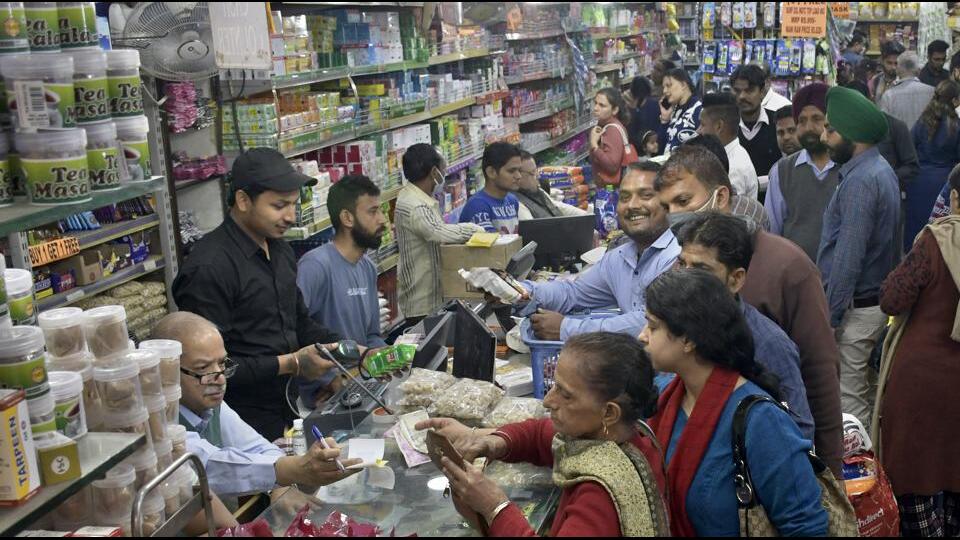
Consumers are bracing for higher grocery bills as kitchen staples such as onions, cooking oil, sugar, rice, and several pulses have registered sharp price increases over the past year, even as prices for potatoes and tomatoes remain subdued.
“The recent rise in food prices is not a broad-based demand-led food inflation story. It is primarily a combination of supply shocks, weather disruption and geopolitical conflict-led price spike in a few important commodities,” said Pushan Sharma, director-research, Crisil Intelligence.
Onion prices may ease as fresh crop arrives
For now, onions are the biggest pressure point.
The all-India average retail price rose to ₹54.13 a kg on September 24, almost double the ₹27.21 a year ago, according to data maintained by the Department of Consumer Affairs. Wholesale prices more than doubled to ₹4,617 a quintal from ₹2,107. Retail onion prices have also risen 24% in a month.
But the current onion spike is largely a supply-side problem and is expected to ease as the next crop reaches markets.
Sharma said commodities such as onion were experiencing a transient spike expected to peak over the next few weeks and then come down as the Kharif harvest increases supply around October.
Madhavi Arora, chief economist at Emkay Global Financial Services, said part of the increase in vegetable prices was seasonal and weather-related.
“Vegetable inflation can be extremely volatile and tends to correct once supply conditions normalise,” she said.
The Centre has also been releasing buffer stocks of onions at ₹35/kg through NCCF, NAFED, Kendriya Bhandar and mobile vans. It has also expanded supplies through rail and road, including the Kanda Express, to major consumption centres.
Edible oil a bigger worry
Unlike vegetables, edible oil could keep household costs elevated for longer.
According to consumer affairs ministry data, retail sunflower oil is up 19.5% from a year ago to ₹193.97/kg, palm oil is up 15.9% to ₹153.61, and soybean oil is up 13.9% to ₹167.11. Peanut oil is up 11.4%, and mustard oil 8%.
“Among the crops showing a price spike, edible oil could be more persistent than others given the continuation of the West Asia conflict, as well as key suppliers such as Indonesia diverting an increasing share of their palm oil production towards biodiesel over the years,” Sharma said.
Arora said pulses and edible oil deserve closer attention because India’s import dependence leaves their domestic prices exposed to global prices, import costs and currency movements.
On September 24, the Centre scrapped the 10% basic customs duty on crude sunflower oil and reduced the duty on crude soybean and palm oil to 5%. It also reduced the corresponding duty on refined oil while retaining the 19.25 percentage-point differential between crude and refined oils.
Pulses and rice also dearer
Tur and urad dal prices have risen nearly 8% each over the past year. Tur is now ₹125.18/kg against ₹116.12 a year ago, while urad is ₹122.89 against ₹113.95. Chana, moong and masur have seen much smaller increases, government data showed.
Rice prices are up 7.6% year-on-year to ₹46.43/kg, while wholesale prices have risen nearly 8%.
Sharma said rice production could be lower this kharif season because of weather risks, lower acreage and yields, but substantial government stocks provide a buffer.
The government has kept imports of tur and urad in the “free” category until March 31, 2027. It is also procuring pulses under its price-support programme to strengthen domestic supplies.
Sugar prices rise, but the government takes steps
Sugar has recorded one of the sharpest annual increases in the kitchen basket. The retail price is ₹56.70/kg, up 22% from ₹46.46 a year ago.
The Centre has cut the stockholding limit for sugar dealers from 4,000 quintals to 2,000 quintals until November 30 to curb hoarding and speculative trading. It has also been monitoring stocks at mills, dealers and traders.
Sharma expects sugar prices to remain firm in the near term before easing as the sugarcane harvest peaks from October to November.
How long will the pressure last
The latest data does not point to a uniform rise across the entire food basket. Potato is down nearly 10% from a year ago, and tomato is marginally cheaper. Moong and masur prices have also barely moved.
“The real red flag would be if the price pressure starts broadening across the staples basket and remains elevated for several months,” Arora said. “For now, I would describe the situation as a food-price uptick that warrants monitoring, rather than a broad-based inflation resurgence,” she said.