E-Paper



Relevance of farmers’ stir in remaining election cycle
Two developments in Punjab - the Congress visibly aligning itself with the BJP to corner AAP and the conglomeration of farmers’ organisations fielding candidates - suggest that no matter what the Punjab results are, they will not be seen as some sort of unanimous assertion against the farm laws.

 Prefer HTon Google


After the polling on February 20, three out of the five states and 399 out of the 690 assembly constituencies (ACs) that are voting in the current election cycle are done with the process. What remains of the current election cycle is voting in 231 ACs in Uttar Pradesh and the state of Manipur. While there is no point in trying to predict the results, one question is worth asking. Now that polling is over in the state of Punjab and the Jat-dominated regions of western Uttar Pradesh, will farmers’ protests against the three repealed farm laws matter in the rest of the election cycle?
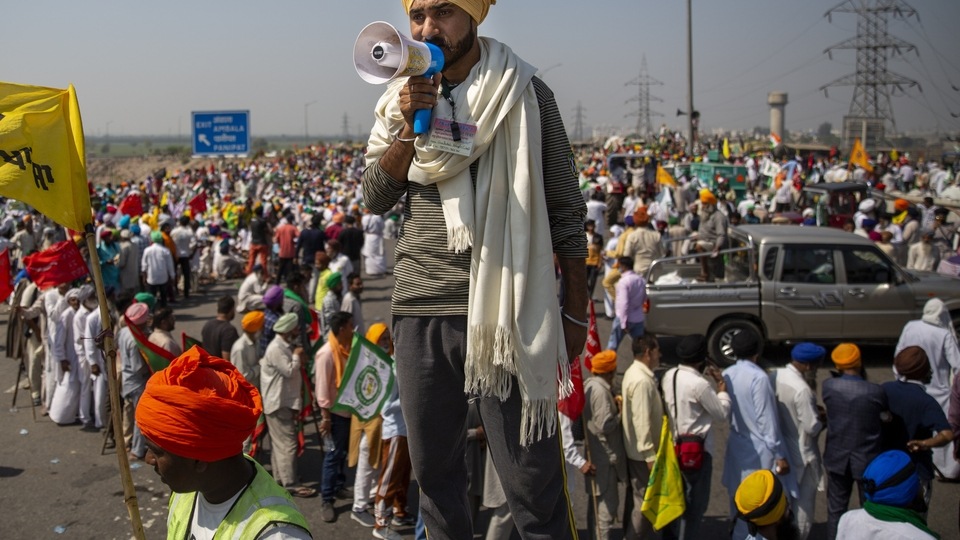
Mass movements and electoral success do not always align in India. Some mass movements, such as the Dravidian movement, which began even before independence in the state of Tamil Nadu, land struggles in the state of West Bengal, and the long agitation which culminated in the implementation of Mandal Commission recommendations have had a major influence on electoral politics. But others such as the grassroots struggle which culminated into the implementation of the MGNREGS have failed to find direct political traction.
The BJP is expected to suffer some loss in Punjab and west Uttar Pradesh
The movement for the repeal of the three farm laws is one of the most successful mass struggles in post-reform India. What about the movement’s electoral impact though? One way to look at this question is to ask about the potential damage to the Bharatiya Janata Party (BJP) in the Jat-dominated ACs of western Uttar Pradesh which went to the polls in the first and second phases. In Punjab, the movement cost the BJP its long-time ally Shiromani Akali Dal (SAD). Here, one can expect the BJP to suffer some damage. The exact magnitude of this will be known on March 10.
But the narrative of Punjab polls has undermined the larger solidarity behind farmers’ protests
Two developments in the Punjab campaign suggest no matter what the Punjab results are, they will not be seen as some sort of unanimous assertion against the farm laws.
The first is the Congress visibly aligning itself with the BJP – the chief minister of Punjab wrote a letter to the Union home minister which was promptly acknowledged – to corner the Aam Admi Party (AAP) on the issue of the latter’s alleged proximity to pro-Khalistani elements. The second is a conglomeration of farmers’ organisation putting up their own candidates in the state, betraying either a lack of trust in the existing political parties (which also opposed the farm laws) or political ambitions of their own.
These factors suggest that there has been a failure to translate the large-scale political solidarity behind the farmers’ protests into electoral solidarity. To be sure, even the possibility of this kind of electoral solidarity required some sort of broad coalition within the overwhelming majority of the political spectrum which was opposed to the farm laws. The 1977 Janata Party experiment to exploit the anti-emergency sentiment is a good example of this. That the Congress and the AAP decided to attack each other on a deeply divisive issue – the 2017 post-poll survey by CSDS-Lokniti betrays an uncomfortable silence by a large share on the separatist movement in Punjab – shows that the anti-BJP spectrum is still not willing to make short-term sacrifices for the cause of building a long-term larger narrative against the BJP. In case of the farm laws it would have been the BJP having a bias in favour of big-capital. The message will not be lost to observers outside the state.
The BJP’s quest to convert the farmer into labharthees in Uttar Pradesh
As the election moves from more prosperous western parts of Uttar Pradesh to relatively poorer eastern regions, the BJP’s welfare discourse is likely to gain salience. This was more than evident in Prime Minister Narendra Modi’s election speech in Hardoi on February 20, when he referred to a video where an old woman pledged loyalty to the BJP (Modi) for the free ration scheme of the Union government. The BJP’s ability to convert welfare transfers into political benefits by a meticulous political targeting of beneficiaries (labharthees) of such programmes has been acknowledged widely by political scientists. Potential tailwinds to the BJP from schemes such as provision of free ration under the Pradhan Mnantri Garib Kalyan Yojna (PMGKY) will increase in the remaining phases of the Uttar Pradesh elections.
The caste barrier to farmers’ solidarity outside western Uttar Pradesh
Last but not the least, the most obvious reason why farm laws are going to be less important in the remaining phases is the decline in the importance of cultivation, particularly the kind that pays well. The latest Situation Assessment of Agricultural Households and Land and Livestock Holdings of Households in Rural India (SAS) survey conducted in 2018-19 shows that in west Uttar Pradesh, agricultural households had an average monthly income 2.22 times ( ₹15,388) that in rest of the state ( ₹6,934). They also earned 48% of this income from cultivation compared to 39.5% elsewhere in the state, with absolute cultivation income in the former ( ₹7,383) almost three times in the latter ( ₹2,736).
To be sure, even in the eastern part of the state, farmers with larger land holdings are likely to have larger incomes than what the average number suggests. But outside the western part of the state, dominant castes, with the exception of Yadavs, are more likely to rally behind the BJP in order to prevent a return to power of the Samajwadi Party (SP), a political force which is the mainstay of Mandal politics in Uttar Pradesh. Ironical as it may sound, the fissures around Mandal politics are likely to undermine the potential solidarity which well-off farmers could have evolved among themselves against the BJP. And among the not so well-off, the BJP’s welfare schemes could outweigh the discontent over agrarian distress.