E-Paper



‘Will support any peace effort’: Modi tells Ukraine’s Zelenskyy in phone call
The phone conversation between Ukrainian President Volodymyr Zelenskyy and Prime Minister Narendra Modi was their second since October and comes a fortnight after PM Modi’s phone call with Russian President Vladimir Putin

 Prefer HTon Google


NEW DELHI: Ukrainian President Volodymyr Zelenskyy on Monday sought India’s support for implementing a “peace formula” he had proposed to the G20 Summit in Indonesia last month, while Prime Minister Narendra Modi said New Delhi will back any peace effort aimed at ending the conflict in Ukraine.
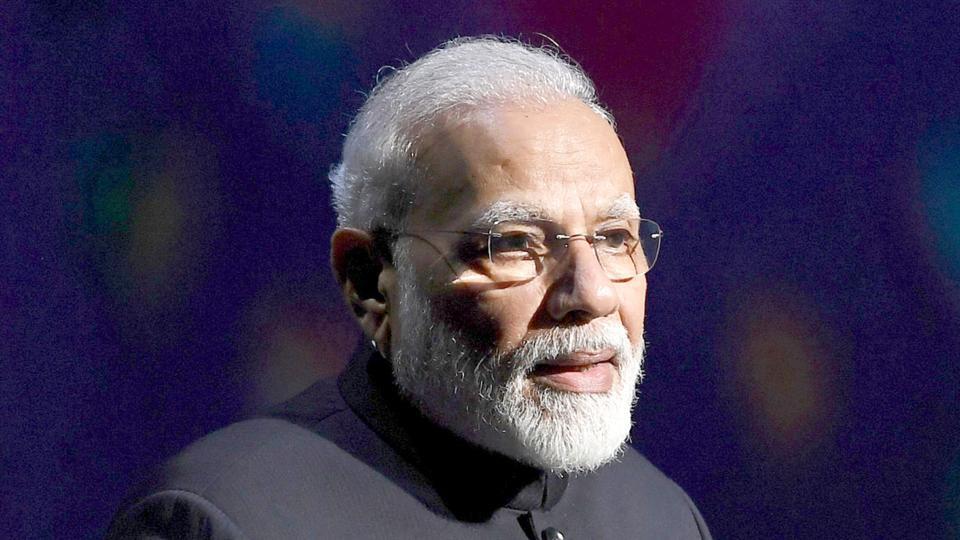
Modi and Zelenskyy discussed the conflict in Ukraine during a phone conversation, and the Indian leader reiterated his call for an immediate end to hostilities and a return to diplomacy and dialogue.
This was the second phone conversation between Modi and Zelenskyy since October and came less than a fortnight after the prime minister’s phone call with Russian President Vladimir Putin. Zelenskyy said in a tweet that he had sought India’s participation for implementing a “peace formula” he proposed to the G20 Summit.
Modi and Zelenskyy “exchanged views about the ongoing conflict in Ukraine”, and the prime minister “strongly reiterated his call for an immediate cessation of hostilities, and said that both sides should revert to dialogue and diplomacy to find a lasting solution to their differences”, a statement from the Indian side said.
The prime minister “conveyed India’s support for any peace efforts, and assured India’s commitment to continue providing humanitarian assistance for [the] affected civilian population” in Ukraine.
Zelenskyy said in his tweet that he had wished Modi a successful G20 presidency. “It was on this platform that I announced the peace formula and now I count on India’s participation in its implementation. I also thanked for humanitarian aid and support in the UN,” he said.
The Indian statement did not directly refer to Zelenskyy’s peace formula, which the Ukrainian leader outlined during a video speech beamed to the G20 Summit in Bali, Indonesia, on November 15. At the time, Zelenskyy referred to the grouping of the world’s 20 largest economies as “G19”, a snub to Russia.
Zelenskyy had spoken about a 10-point peace plan that was aimed at ending the “aggressive Russian war...justly and on the basis of the UN Charter and international law”. The 10 points included nuclear safety, food security, energy security, release of all prisoners and deportees, restoration of Ukraine’s territorial integrity, withdrawal of Russian troops and cessation of hostilities, prevention of escalation and confirmation of the end of the war.
During their last phone conversation on October 4, Modi had emphasised the importance India attaches to the safety and security of nuclear installations, including in Ukraine. He had said that endangering nuclear facilities could have “far-reaching and catastrophic consequences”. He had also said that “there can be no military solution to the conflict”.
During Monday’s conversation, the two leaders discussed opportunities for strengthening bilateral cooperation, and Modi requested Ukraine authorities to facilitate arrangements for the continued education of Indian students who had to return from Ukraine.
Some 20,000 Indian students, most of them enrolled in medical and engineering courses, left Ukraine in the weeks after Russia launched its invasion on February 24. About 1,000 students have returned to Ukraine in recent months, though uncertainty surrounds the future of others.
The Indian statement said Zelenskyy conveyed his best wishes for India’s G20 presidency and Modi explained India’s main priorities for the presidency, including “giving a voice to the concerns of developing nations on issues like food and energy security”.
During a meeting with Putin on the margins of the Shanghai Cooperation Organisation (SCO) in Uzbekistan in September, Modi told Putin that “today’s era is not of war” and also called for ending the conflict in view of its fallout on developing countries. While India has refrained from publicly criticising the Russian invasion, it has repeatedly called for the ending of hostilities and respecting the territorial integrity of all states.
At his last phone conversation with Putin on December 16, Modi reiterated his message that dialogue and diplomacy is the “only way forward” in the Ukraine crisis. Modi and Putin had also reviewed bilateral ties, including energy cooperation, trade and investments, and defence and security cooperation.