
 E-Paper



Women candidates contesting elections have increased, but it is only 10%
Among the six national parties, the National People’s Party (NPP) at 67 per cent has the highest number and proportion of women candidates


New Delhi: The number of women candidates contesting the Lok Sabha election has consistently increased from three per cent in 1957 to ten per cent in 2024, according to the data from the PRS Legislative Research.
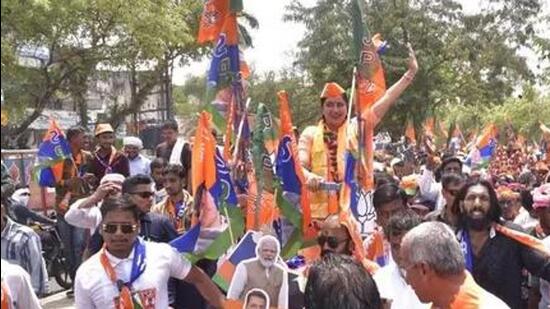
The growth of women’s participation in elections since then has been consistently low, in 2019, it showed nine per cent of women candidates contesting the general elections.
According to a report from the Association of Democratic Reforms, in the 2009 Lok Sabha elections, there were 556 female candidates, making up seven per cent of the total 7,810 candidates. This year, 797 women are in the fray, constituting 9.6 per cent of the total 8,337 candidates.
Among the six national parties, the National People’s Party (NPP) at 67 per cent has the highest number and proportion of women candidates i.e., two of the three are women while the All India Anna Dravida Munnetra Kazhagam (AIADMK) and the All India Forward Bloc have the lowest levels of female representation at three per cent.
The Bharatiya Janata Party (BJP) has fared better than the Congress party. The BJP fielded 16% of women candidates in the 2024 Lok Sabha polls whereas the Congress party fielded 13% of women candidates.
Among regional parties contesting more than 20 seats, the Biju Janata Dal (BJD) has 33% women candidates and the Rashtriya Janata Dal (RJD) has 29%, the highest proportion of women candidates.
Moreover, six individuals of the third gender are contesting elections. Of these, four candidates are independents, and two are contesting as candidates of unrecognised parties. There were six third-gender candidates in the 2014 and 2019 elections as well, the PRS report said.
During the first phase of the elections held on April 19, out of 1,618 contesting candidates, only 135 were women.
Smaller and regional parties exhibited higher proportions of female candidates. The Naam Tamilar Katchi has an equal gender representation with 20 out of 40 candidates being women. The Lok Janshakti Party (Ram Vilas) and the Nationalist Congress Party each have 40 per cent female candidates.
Hindustan Times spoke to Congress leader Pawan Khera about the number of women participating in the ongoing polls. “At one level, it is encouraging to see the upward trend in the data on the participation of women in elections. At the same time, the slow pace at which this data has grown over the decades is concerning. The Congress Party has been at the forefront of the demand to bring in reservations for women in Assemblies & Parliament,” he said.
He added, “It was Rajiv Gandhi’s [Former Prime Minister of India] initiative which resulted in institutionalised participation of women in local bodies. The 2022 Uttar Pradesh Assembly election saw a unique women-centric narrative that the Congress party bravely introduced. All other parties were forced to recalibrate their politics around that. Ms Sonia Gandhi [Congress chairperson] kept drawing the attention of the Modi government towards fast-tracking the women’s reservation bill. The Indian National Congress firmly believes that there’s an urgent need to substantially increase the participation of women in the political process.
The Constitution (One Hundred and Eighth Amendment) Bill, 2023, was introduced by the government, which seeks to reserve one-third of all seats for women in the Lok Sabha and the state legislative assemblies.
(with PTI inputs)


