
 E-Paper



‘Yes, we are goons… slap but don't make video’ : Uddhav and Raj at Thackeray reunion rally over ‘Marathi pride’
Two decades after breakup over Shiv Sena succession, cousins' patch-up comes on language agenda after BJP-led govt had sought to introduce Hindi in schools

 Prefer HTon Google


Citing “protection of Marathi pride", Uddhav Thackeray appeared emphatic at the reunion rally with cousin Raj Thackeray in Mumbai on Saturday: “Yes, we are goons; if we have to be goons to get justice, we will do goondagiri.”
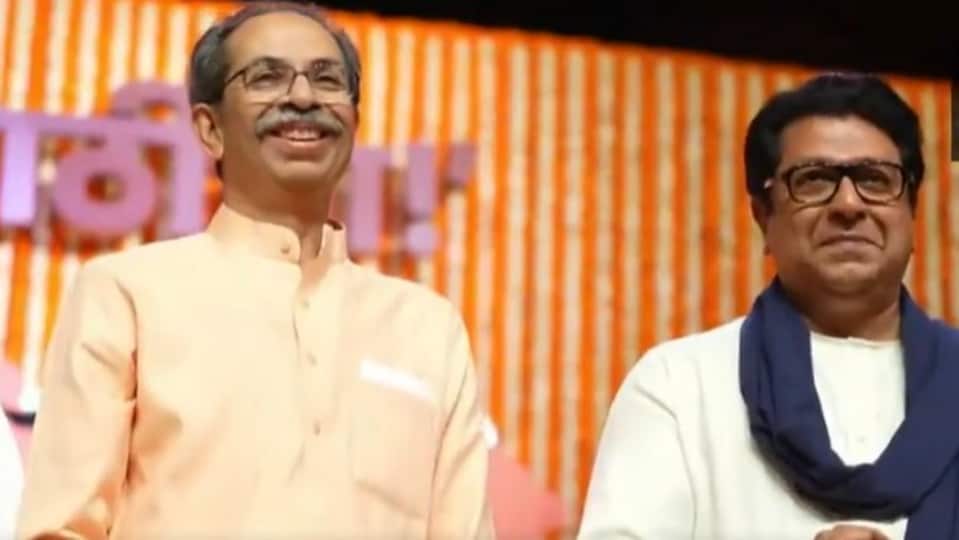
He was apparently addressing criticism about the Thackerays' men slapping and intimidating people, including street vendors, over their not speaking in Marathi.
‘Slap, but don’t make video'
Raj, too, addressed this before Uddhav's speech, both speaking in Marathi: “Be it a Gujarati or anyone else here, must know Marathi, but there is no need to beat people for that if they don't speak Marathi. Yet, if someone does some drama, you must hit them below their eardrums.”
He followed up with advice: “If you beat someone, don't make a video of the incident. Let the person beaten up tell that he has been beaten up; you don't need to tell everyone.”
Two decades after their breakup over Shiv Sena succession, the patch-up comes on agenda of “Marathi pride” after the BJP-led state government sought to introduce Hindi as a third language in schools. That decision has since been withdrawn.
This rally was announced as a protest against the original move, and later converted to a celebration of the rollback.
‘Will come to power together’
Uddhav said that on the question of linguistic identity, "Raj, I and everyone else here is united.”
"We have come together to stay together," he asserted, saying that they will capture power in the Mumbai civic body and Maharashtra together.
In his speech, MNS chief Raj Thackeray credited Maharashtra's BJP Chief Minister Devendra Fadnavis for doing what, he said, thousands others couldn't.
"Uddhav and I are coming together after 20 years… What Balasaheb Thackeray could not do that Devendra Fadnavis managed to do," Raj Thackeray said in his speech in Marathi at the massive event in Worli.
The breakup had come while Bal Thackeray was alive, as he preferred son Uddhav over nephew Raj to hand over the Shiv Sena reins.
Attack on BJP, allies
"Your power is in the legislature. We have power on the street," Raj also said in his speech, taking credit for the government's withdrawal of the Hindi decision.
Attaching another alleged agenda to the third-language move, Raj claimed, “They just tested waters. Had this decision on Hindi been accepted quietly, the next step would have been an attempt to separate Mumbai from Maharashtra.”
He spoke about migration from other states: “Hindi-speaking states are economically backward. People are migrating from these states to non-Hindi-speaking states. Why has Hindi not helped them progress?”
Both said that they had no problem with any other language, but Marathi must get foremost respect without any other language being imposed.
Uddhav also criticised the BJP - in power in Maharashtra and the Centre - for allegedly imposing the agenda of “Hindi, Hindu, Hindustan” on India. “We will protect the ideology of Hindutva, in Marathi language,” he further said.
He repeated the charge against Deputy Chief Minister Eknath Shinde of being a “traitor” over dividing the Shiv Sena to get into power with the BJP.
How reunion came about
It was back in April, even before the latest language row, that Raj Thackeray spoke about uniting with his cousin “in the interest of Marathis”. At a separate event, Uddhav Thackeray said he was ready to put aside trivial fights.
Raj Thackeray had quit the undivided Shiv Sena in January 2006 and formed the MNS, which won 13 seats in the assembly polls three years later. But its performance has since been dismal – it won no seats in the 2024 assembly polls – even as it aligned with the BJP too at different points.
The reconciliation was being speculated ever since Eknath Shinde split the Shiv Sena in 2022 by winning over a majority of its MLAs, leading to Uddhav's resignation from the CM's post. Shinde, who became CM then with BJP support, eventually got the party name and the original symbol. He is currently deputy CM to BJP's Fadnavis.
2024 turning point
The 2024 assembly election was seen as a turning point towards a Thackeray family compromise. Uddhav's Shiv Sena (UBT), Congress, and the Nationalist Congress Party of Sharad Pawar alliance had done well in the 2024 Lok Sabha polls, but could not dislodge the BJP-led alliance in the state polls six months later.
After Raj broached the topic of a patch-up in April, progress was slow, before emerged the June 17 government order making Hindi a mandatory third language. This was a familiar plank for the cousins, and they seem to want to capitalise on it much beyond a rapproachment now, hoping to be strongly back in the game.


