
 E-Paper



As JNU controversy escalates, PM Modi’s silence gets louder
As the country appeared to be sinking rapidly into a violent ideological contest, the loudest questions are being asked of Prime Minister Narendra Modi.

 Prefer HTon Google


As the country appeared to be sinking rapidly into a violent ideological contest, the loudest questions are being asked of Prime Minister Narendra Modi.
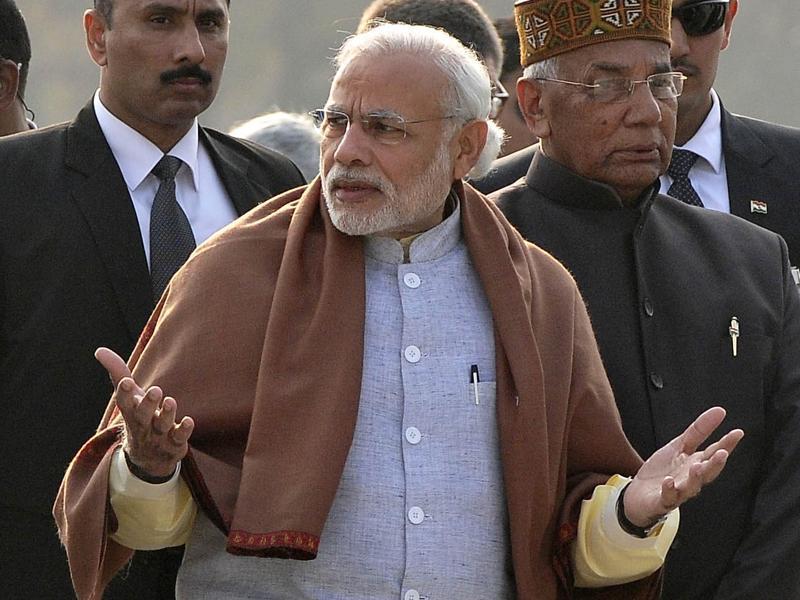
Indeed, it’s been quite a transition for Modi that he should now be facing questions over his silence, rather than his eloquence. The irony has gone too far, so much so that former PM Manmohan Singh, often mocked for his own reticence, can now accuse Modi of keeping mum (as he did in a recent interview to a magazine).
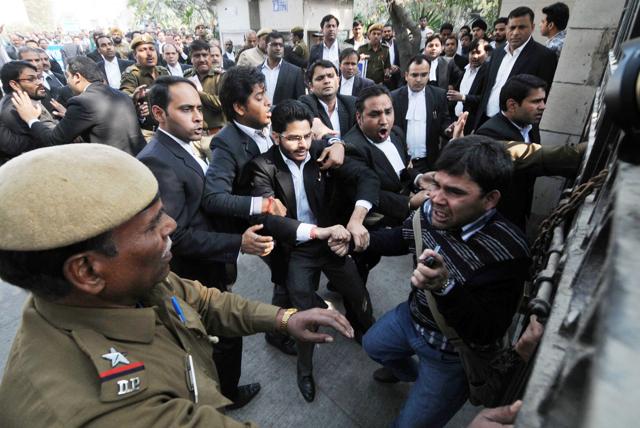
An escalating row over the arrest of Jawaharlal Nehru University student leader Kanhaiya Kumar, charged with sedition and being beaten up along with journalists inside a court’s premises by lawyers in New Delhi is just one among many cases of Modi’s silence on right-wing bullies and rants. And when he spoke, rarely did he address the issue directly.
Here are some instances worth recalling.
When: January 17, 2016
What: Rohith Vemula, a second-year PhD student at the University of Hyderabad, commits suicide, allegedly over social discrimination on campus. Union labour minister Bandaru Dattatreya – who had complained against Rohith – was named in the FIR.
When PM spoke: January 22, 2016
What did he say: “The power of youth is a big legacy for us. But then we hear that my country’s young son, Rohith, was forced to commit suicide…What would his family be going through…the truth is that a mother lost her son; indeed Mother India has lost a son...I can feel the pain.
Read: Rohith Vemula: An unfinished potrait
When: September 28, 2015
What: A mob barges into Mohammad Akhlaq’s house in Dadri and lynches him for allegedly eating beef. His son is also grievously injured in the attack.
Read: This silence is damaging: PM Modi has to speak on Bisada
When PM spoke: October 8, 2015
What did he say: “I have said it earlier too. Hindus should decide whether to fight Muslims or poverty. Muslims have to decide whether to fight Hindus or poverty. Both need to fight poverty together. The country has to stay united, only communal harmony and brotherhood will take the nation forward. People should ignore controversial statements made by politicians, as they are doing so for political gains.”
When: December 2014
What: A spate of attacks on churches and Christian institutions in the Capital, leading to insecurity amongst the community.
When PM spoke: February 13, 2015
What did he say: Expresses “deep concern and anguish” during a meeting with the Delhi police commissioner BS Bassi, who was summoned over the rising crime rate in the national capital.
When: December 1, 2014
What: Minister of state Sadhvi Niranjan Jyoti asking voters in Delhi to choose between ‘ramzadon’ (those born of Ram) and ‘haramzadon’ (illegitimately born).
When PM spoke: December 4, 2014
What did he say: Modi told Parliament: “The minister has apologised, she is new and we are also aware of her social background. She comes from a village.”
Modi, in fact, has spoken precious little on thorny issues. His clearest endorsement of tolerance and freedom of faith came during an address he made to Church leaders in February last year.
“India will remain secular” he said. “Religion is a matter of personal choice. We will not allow anyone to spread hatred.”
Yet, an image of filthy intolerance has caught world attention as much as domestic angst due to overboard sedition charges, intimidation and threats.
In the wake of the JNU row, popular public reasoning has seen all this as the hegemony of a government that is half-awake, half-asleep at the wheels.
Read: First Vemula, now JNU: Govt plans image makeover to counter bad PR
Classical political theory, however, tells us that hegemony isn’t coercion. As Italian thinker Antonio Gramsci theorised, hegemony organises itself through consent. Hegemons buy consent by influencing and shaping minds through policies. Modi’s own Swachh Bharat is an apt example. Hegemony isn’t about beating people up.
A Gramscian “war of position” is playing out. Diverse groups and political parties have now come to form a bigger bloc to position themselves as a counter-hegemony to the BJP. That could be a bigger problem for Modi.
The right-wing is being checkmated by its biggest drawback: the inability to shape people’s mind through ideas, again a very liberal concept. Bereft of such an ability, violence and ‘lumpenisation’ become the only option to claim institutions. That’s explains the events in JNU and the court.
What is the Modi-led NDA government up to and what direction does it want to give the country are the larger questions being asked. But to no avail. But let’s remember another of Gramsci’s line: a demagogue is often the first victim of his own demagogy.
(The views expressed by the author are personal)
Read: From Kolkata to Chennai, students call for Kanhaiya Kumar’s release


