
 E-Paper



Behind Mayawati’s aggression, an eye on UP 2017 elections
She has three objectives: consolidate the entire Dalit base behind her; project a strong anti-BJP message; and position herself as a ‘strong leader’ ready to take over Uttar Pradesh in 2017.


When Mayawati spoke in the Rajya Sabha on Friday, and forcefully reiterated her demand for a Dalit member in the committee investigating Rohith Vemula’s suicide, she was not in a mood to listen to anyone. The BSP chief brushed aside the Chairman and told him, “You listen to what I have to say.” Mayawati told the HRD minister Smriti Irani, who had threatened to cut off her head if the former UP CM was not satisfied, that she was not impressed--and mischievously asked her what Irani would do now.
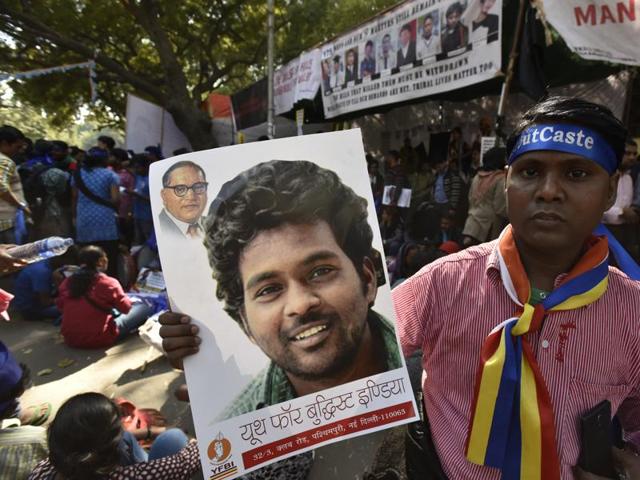
Mayawati’s speech on Vemula, a Dalit student who committed suicide in the University of Hyderabad, was not marked with great flair. Her tone remained monotonous, but the aggression was palpable.
And this aggression, coming after a period of relative silence, is what her base in UP was waiting for.
Mayawati had three clear objectives with her speech: use the Vemula issue to consolidate the entire Dalit base behind her; project a strong anti-BJP message to send a signal to the state’s Muslims; and position herself as a ‘strong leader’ ready to take over Uttar Pradesh in 2017.
“Dalits have always been victims of aggression of other communities. And that is why the community now seeks aggression in its leaders,” said Satish Prakash, a BSP sympathiser and Meerut-based Dalit intellectual.
Tracing the history of BSP, he said that it is when Mayawati gave her most aggressive slogans that the party’s base grew. In 2007, an alliance with upper-castes helped it win in the assembly. But it came at a cost, for it had to dilute its slogans and focus on cross caste-collaboration. This, many Dalits felt, diluted its commitment to justice for its social base. And the party had to pay a price for it in 2009 and 2012.
“She has to show she remains aggressive, and she remains committed to Dalit issues. The Rohith (Vemula) issue is an opportunity for her to show it.” It was noteworthy that Mayawati said in Parliament that if BSP was in power in UP, it would have, by now, given a job to Vemula’s brother.
Dalits in UP are heterogeneous and while Jatavs, Mayawati’s own community, is solidly behind her, other non-Jatav Dalit communities often veer to the BJP. This was obvious in the 2014 elections. By picking up an issue of discrimination against a Dalit student, Mayawati hopes to consolidate all Dalit communities--or at the very least, sow a seed of doubt in their minds about the BJP.
Mayawati’s new found aggression is also a signal to the state’s Muslims that it can bank on her.
A Muslim MP of the party told HT, “We have to strive for Dalit-Muslim unity. Muslims are disillusioned with SP because of frequent riots, and also because SP has not fulfilled its promises of releasing innocent Muslims trapped in prison or providing them reservation.” He says this vacuum can be filled by BSP if it can succeed in assuring the community that there would be no pact with the BJP. “By taking on BJP in parliament, Mayawati has done that.”
And finally, the BSP hopes to convert the Uttar Pradesh 2017 battle to one where Mayawati is projected as a ‘strong leader’.
The Samajwasdi Party government’s tenure is, in the public perception, associated with a degree of lawlessness and a weak CM, riddled with super-CMs from his family and party. This is contrasted with Mayawati’s term, where she was seen to be strict on law and order and who kept the administration under tight control. “If people in UP today look back at her rule with nostalgia, it is because she was strong. This strength was reflected in the speech yesterday,” said Prakash.


