
Black money: Disclosing names easier under UN convention
It could have been easier for the government to disclose the names of persons having accounts in foreign banks had it implemented the United Nations Double Taxation Convention. Centre gives black money list to SC
It could have been easier for the government to disclose the names of persons having accounts in foreign banks had it implemented the United Nations Double Taxation Convention. The UN convention prescribes re-negotiating Double Taxation Avoidance Agreement (DTAA) in tune with domestic laws and the process to disclose the names.
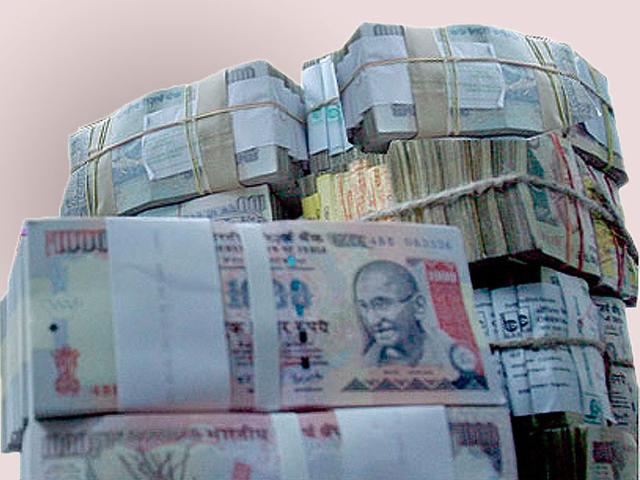
India is not a signatory to this UN convention.
The Centre on Wednesday gave a list of 627 persons having bank accounts in foreign countries in a sealed cover to the Supreme Court on the direction of the apex court.
The Centre was earlier reluctant to provide the information citing secrecy clause in the DTAAs it had signed with the countries from where the information was received.
The UN convention that provides a model framework for DTAAs had gone a step further to help the developing countries in tracking black money deposited in the developed world. It suggested the member countries frame national law to protect their interests and ensure the confidentiality clause does not come in the way of seeking information.
The convention prescribes the methodology for making the name of the persons holding bank accounts in foreign countries through a court of law.
The Centre has disclosed only three names so far against whom income tax department proceedings have been initiated. Names of other foreign bank account holders have not been disclosed despite some of the information being revealed about a decade ago.
Venkatesh Nayak, a transparency campaigner with the Commonwealth Human Rights Initiative, wants the NDA government to meet its election promise of disclosing the name of black money account holders and re-negotiate the DTAAs on the secrecy clause.
ABOUT THE AUTHORChetan ChauhanChetan Chauhan is the National Affairs Editor looking into all aspects of news and features from across India. A Chevening scholar with over three decades of experience in reporting and news management, Chetan has extensively covered all important aspects of the social sector, political economy, environment and climate change nationally and internationally. He did a journalism course at the Reuters Institute of Journalism in Oxford and Digital Media training at Nanyang Technological University in Singapore. He started as a reporter with The Statesman in 1996 and joined the Hindustan Times in 2000 in the metro bureau covering environment, crime and Delhi politics. He covered hot local news, from the Jessica Lal murder case to the rebellion of Delhi Congress MLAs against then Chief Minister Sheila Dikshit, to the replacement of toxic vehicle fuel with cleaner compressed natural gas (CNG) in the national capital. Some of his stories on air pollution became part of the Supreme Court’s landmark MC Mehta versus Government of India case in the National Capital Region (NCR), forcing the government to take corrective measures. As part of the national political bureau since 2004, he covered important central sectors such as environment, education, social justice, labour, rural development, water resources, renewable energy, agriculture, broadcasting and the Planning Commission for more than a decade producing several exclusive and investigative breaking stories. His specialisation is the environment, having covered at least a dozen United Nations global conferences on climate change, biodiversity and wildlife including climate summits in Paris, Copenhagen and Bali. He also covered India’s two five-year plans ---11th and 12th and reported on drafting and execution of right based laws such as Right to Education, Right to Information and rural job guarantee law, MG-NREGA, now being introduced in new format as VG-RAM-G Act. He has in-depth knowledge of social sector issues. He was one of the first to report on tigers vanishing from Sariska and Panna wildlife reserves in 2004 and 2008, respectively, leading to the setting up of the National Tiger Conservation Authority (NTCA) and the introduction of stringent penal provisions for poaching. He has written extensively on the rising human-animal conflict in India and the degradation of India’s biodiversity hotspots because of mining and other activities. Since 2004, Chetan has covered Parliament comprehensively and participated in training on the nuanced coverage of Parliament proceedings. He has travelled extensively across India to cover national and provincial elections since 1998, especially in the Hindi heartland states, considered India’s road to power. He writes a regular column for Hindustan Times, Ecostani, on important national politics, economy, Himalayan ecology and environmental issues. His other responsibilities include providing inputs for edits and edit page articles for the publication, apart from managing news flow from across India.Read More

E-Paper


