
 E-Paper



In UP, a record: maximum vote, minimum violence
With electoral violence being passé, enthusiastic young and women voters helped Uttar Pradesh to record its highest ever voter turnout of 60%. Chetan Chauhan reports.


With electoral violence being passé, enthusiastic young and women voters helped Uttar Pradesh to record its highest ever voter turnout of 60%.
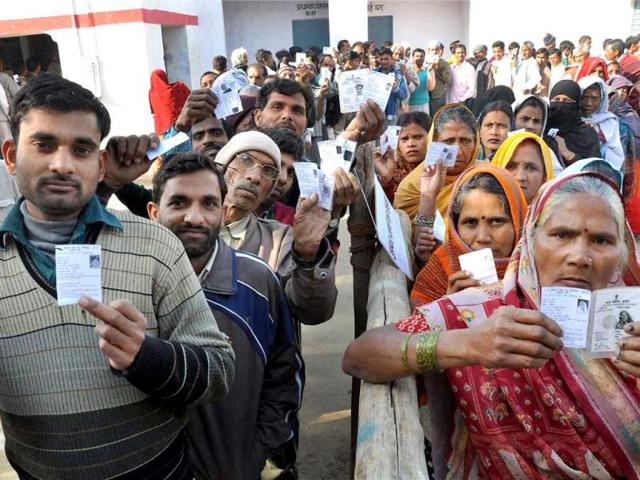
It meant two crore (or 30%) more people came out for voting in 2012 as compared to 2007. If the Election Commission statistics are taken into account, majority of them were young and women voters. Around 60% of women voted as compared to just 42% in 2007.
“It was because the elections were held in totally peaceful and in free and fair manner,” said chief election commissioner SY Quraishi, in-charge of last elections before his retirement in June.
India’s political battlefield, Uttar Pradesh had traditionally recorded low voter turnout, except the elections post Babri Masjid demolition in 1993, when 57% polling was recorded.
The lowest ever polling recorded - 38% - was in the first assembly elections in 1951 and remained in mid-50s till 1974. Thereafter, less than or half of the total voters turned out for elections till 1991.
“There was nine percentage point increase in voting percentage in 1993 because as an aftermath of Babri Masjid demolition,” said an independent election analyst Pushpash Pant.
2012 had beaten all records with a 14 percentage point increasing in polling since 2007 and five time dip in poll related crimes.
“Not a single person was killed in poll related violence in Uttar Pradesh,” Quraishi said.
No case of clash between supporters of political parties was reported and less than 100 incidents of poll related crime was reported from the state as compared around 500 in 2007 elections, said election commission officials.
The police detained over 76,000 people and executed non-bailable warrants to over 26,000 people. Around 61% of the total licensed weapons were deposited with police.
Not just rural areas, even urban centers in UP such as Lucknow, Mathura, Ghaziabad and Gautam Budh Nagar witnessed voter turnout higher than 60%. Firozabad district recorded the highest increase from 44.33% to 64% and two districts - Saharanpur and Lalitpur - recorded more than 70% polling.
Pant said voting pattern showed that people from all caste and communities came out in large numbers to vote. Till 1990s, voting percentage of dalits, women and backwards were very less, which has seen an upward swing.
Highest polling years
2012: 60%
1993: 57.13%
1996: 55.73%
Lowest polling years
1951: 38.01%
1957: 44.77%
1980: 44.92%
Fact file
* Total voters in Uttar Pradesh: 11.91 crore
* Total assembly seats: 403
* 60% women turnout as compared to 75% men
* Two crore additional votes polled in 2012, more than total votes polled in Punjab.
* Reason: voter awareness campaigns such as 152 km long human chain in Ferozabad and 500 km relay race in Mainpuri and incident free polls.


