
 E-Paper



Liquor mafia use tribal boats to smuggle alcohol into Gujarat
A thriving liquor mafia in Madhya Pradesh is using boats owned by disgruntled tribals to smuggle alcohol worth Rs 1.5 million every day across the Narmada into the dry state of Gujarat.


A thriving liquor mafia in Madhya Pradesh is using boats owned by disgruntled tribals to smuggle alcohol worth Rs 1.5 million every day across the Narmada into the dry state of Gujarat.
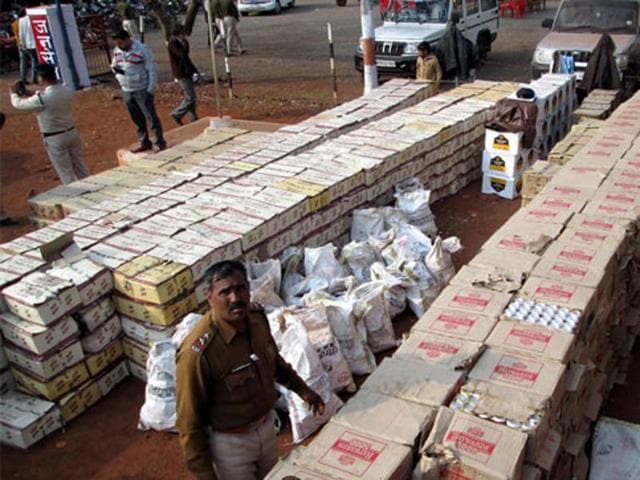
Three big gangs are using more than 30 lifeboats in the tribal-dominated districts of Jhabua and Alirajpur to smuggle alcohol, using both arms and money power in collusion with police and excise department officials, local residents allege.
“Earlier the boats were used to smuggle bullocks and calves to Maharashtra but since Maharashtra banned cow slaughter, the boats are now of no use for me. But some people involved in illegal smuggling are still using it. They have about half a dozen of boats,” said a boat owner, requesting anonymity.
The boats that cost between Rs 4 and 8 lakh help smugglers avoid police attention as no license or identification is required to operate them. HT found some of the boats were made in the United States, Japan and other countries.
Till now, Alirajpur Police have raided the river-borne consignments only twice, in 2012 and 2015.
The illegal trade is helped by tribal discontent that peaked after the excise department auctioned liquor shops in Jhabua and Alirajpur for 125 crores and 118 crores respectively in 2015, whereas locals prefer toddy.
Over 85% of the district is comprised of Bhils and Bhilala tribes, and they avoid consuming alcohol because it is too expensive.
“From what I understand, the excise department is promoting illegal smuggling in the area. Why are they auctioning shops at such high prices when they know the area is tribal dominated and no consumes it,” said a senior police officer.
Madhya Pradesh tops the country in seizure of liquor with a total of 51, 646 cases registered in 2014, with the high number indicating a thriving smuggling trade into Gujarat.
But local officials say only 10% of the liquor that passes through the state gets seized.
A person involved in the smuggling said consignments reach Alirajpur district’s Kakarana village, a hub of liquor trade, in the morning and are kept in the ravines for the day.
“Six people guard the liquor with pistols and sharp-edged weapons. In the night, they transport the alcohol to Gujarat through Bhuchiya (in Nandurbar district) and by morning the boat returns,” said a former smuggler.
Residents allege the state government has done little to clamp down on smuggling. Raids and seizure of vehicle used for smuggling are few and far between, they say.
“A section of Alirajpur police know what is going on here but the smugglers bribe them. This is also a fact that police never know that the level of trade,” said a person who used to be involved in smuggling.
Some boats are used to transport people to Barwani and parts of Maharashtra and Gujarat but the numbers are very few.
Deputy Commissioner (Excise) Vinod Raghuvanshi told HT the department knew of some gangs working in the area. “We have seized boats and liquor in huge quantity from Narmada in last one year. Whenever we get information about the smuggling we act on it,” he added.
-kW0H-U20214218012MgB-250x250%40HT-Web.jpg)


