E-Paper



Madhya Pradesh villagers offer prayers to Ravana on Dussehra
As people across India gear up to witness the annual ritual of burning Ravana's effigy, some villagers in Madhya Pradesh have congregated to offer special prayers to Ravana at his temple. This is one of the few Ravan temples in India.


As people across India gear up to witness the annual ritual of burning Ravana's effigy, some villagers in Madhya Pradesh have congregated to offer special prayers to Ravana at his temple. This is one of the few Ravan temples in India.

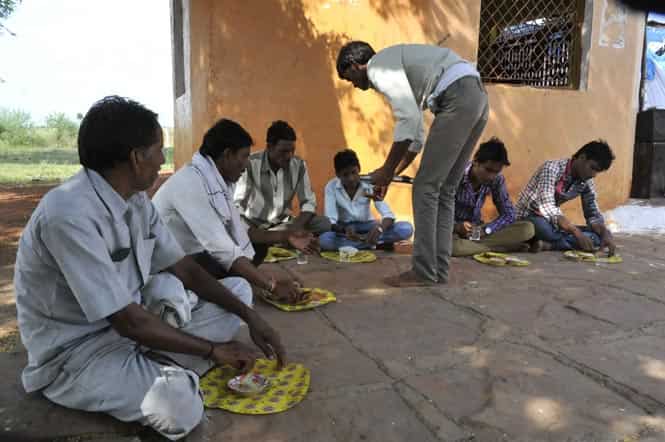
Chanting 'Jai Lankesh Jai Lankesh' and 'Ravan Baba Ki Jai', villagers have been turning up in great numbers since Friday morning to participate in the special prayers and have food at the 'bhandara' organised outside the temple premises.
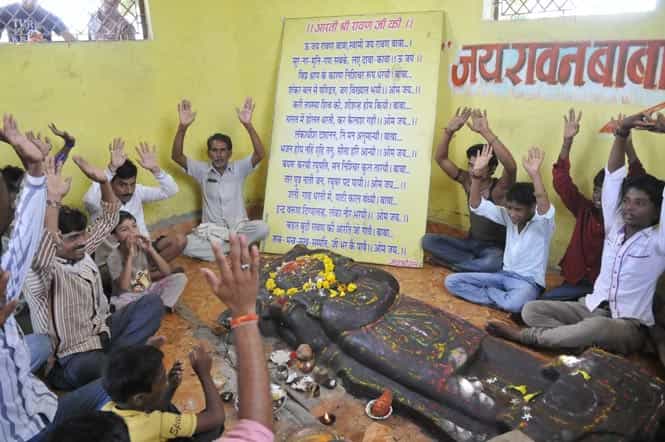
The villagers have never burnt the effigy of Ravana here. For them, Ravana is their protective deity, without whose blessings no occasion — marriage or buying a new two-wheeler – is complete. No marriage is solemnised without sending a wedding card to Ravana at his temple. Not just that, all the two-wheeler owners in this village flaunt 'Jai Lankesh' symbols on their vehicles. They believe it prevents accidents.
Ravan village is located in Nateran tehsil of Vidisha district, nearly 45kms from district headquarters, where for centuries, Ravan has been worshipped by Kanyakubja Brahmins, a Brahmin sub-sect, to which Ravan belonged.
HT travelled to Vidisha district to talk to these Kanyakubja Brahmins about their legacy and heritage and see how these Ravana worshippers celebrate Dussehra. On Friday, villagers gathered in front of the temple to offer special prayers. Some of them were having food outside the temple.
Inside the temple, a 10-feet idol of Ravana greets visitors. The priest Naresh Tiwari, says, "People are surprised to see us worshipping Ravana Baba but can there be a Ram without Ravana? He complements Ram. Ravana was a great Brahmin and an ardent devotee of Shiva. We, who have been receiving his blessings, are proof that our Baba is not evil. He just played his part to let the world see the greatness of Ram but we see his greatness."
In Ravan and its surrounding villages, thousands of Kanyakubja Brahmins as well as people from other castes consider Ravaanaas their protective deity and have never burnt his effigy. A few years ago, residents of the area collected money to build a small temple around the ancient idol.
"Ravan Baba is a constant in all our affairs. The local legend is that an unforeseen calamity would strike the village if anyone tries to put the idol in upright position or disturb it in some way," said Ram Lakhan Tiwari, an elderly man in the village.
Another villager, Hemraj Tiwari, a bank employee, said wherever they go, live or work, they have to worship Ravana, who otherwise gets furious like Lord Shiva. "We believe Ravan Baba's statue wards off evil influence and misfortune from our lives. We have to show our respect to him as has been done by our forefathers for centuries," said Kamal Singh Dhakad, a farmer.
Amidst the Dussehra celebrations, their faith in Ravana continues to remain unshaken. Bunty Singh, a mason in the village, said when the world burns Ravan Baba’s effigy, they celebrate his ethos. "Our Ravana Baba was a great warrior and scholar. The problem is that people are burning the wrong Ravana. The real evils are roaming freely," he says.