
 E-Paper



More poll dates give us flexibility for troop movement, says election panel chief
Chief election commissioner VS Sampath spoke to HT’s Chetan Chauhan about preparedness for Lok Sabha elections and gave reasons why the poll panel opted for nine poll dates as against five phases in the 2009 polls. Here are the excerpts from the interview: Poll:Which are the three issues that, according to you, will top the voters’ mind in these polls?


Chief election commissioner VS Sampath spoke to HT’s Chetan Chauhan about preparedness for Lok Sabha elections and gave reasons why the poll panel opted for nine poll dates as against five phases in the 2009 polls. Here are the excerpts from the interview:
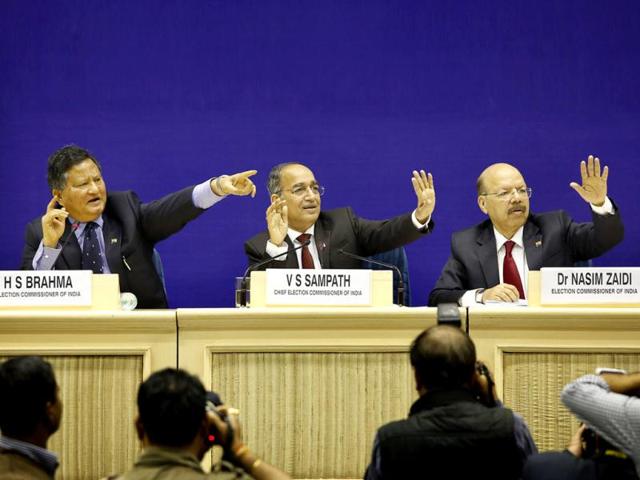
Q. Why did the election commission choose to carry out the Lok Sabha elections in nine poll dates?
A. It would be wrong to say that the 2014 general elections would be the longest. We will complete the entire election process in 72 days as compared to 75 in 2009. One cannot compare 2009 elections with 2014 as the concepts adopted are different. We have introduced “poll dates” as against phases in 2009. Apples cannot be compared with oranges. Between April 7 and April 12, we have four polling dates and after that, the polling schedule is similar to 2009… There were several factors such as local festivals and weather conditions we considered before deciding the poll dates.
We had to make optimal utilisation of manpower to ensure smooth elections. We took into account the movement of security personnel and therefore are holding entire north-eastern states’ polling on two days. Having more poll days gave us flexibility in troop movement and to ensure adequate forces in the Naxal-affected areas.
Read:Indians urged to vote in 'informed, ethical manner'
Q. How would the 2014 general elections be different from the past elections?
A. We have allowed enrollment of voters after the poll dates have been announced. Booth level officers on March 9, Sunday, would be available with election officers to enroll people who have been left out. In 2014, we will also disburse photo based voter identity slips at the doorsteps. We will also have facilities at each polling station for voters’ guidance. We are making arrangements for e-filing of the affidavits by the candidates. A stringent expenditure monitoring mechanism would be put into place.
Read: Money power causing concern: Sampath
Q. Use of black money in elections has been a big issue. What steps is the election commission taking to curb the use of black money?
A. We have expenditure observers for each Lok Sabha constituency. If need arises, we will increase the number of expenditure observers. Instructions have also been issued to set up flying squads and have media monitoring committees to deal with paid news. The candidates will have to open a separate bank account in advance for election expenses.
Read:BJP welcomes poll schedule announcement
Read: An election of contrasts to celebrate the Indian Republic


