
 E-Paper



‘Outsider’ Kejriwal talks of AAP’s good intentions in Punjab
Like a non-judgmental outsider, AAP’s Kejriwal embraces traditional ways in Punjab, yet talks of “good intentions” overriding all else, even the near-absence of a home-grown, grassroots leadership.


Outsider — that’s the word rivals in Punjab use most to describe Aam Aadmi Party (AAP) convener and Delhi chief minister Arvind Kejriwal, certainly not as a compliment. Being an outsider, however, is one of the activist-turned-politician’s positive pitches.
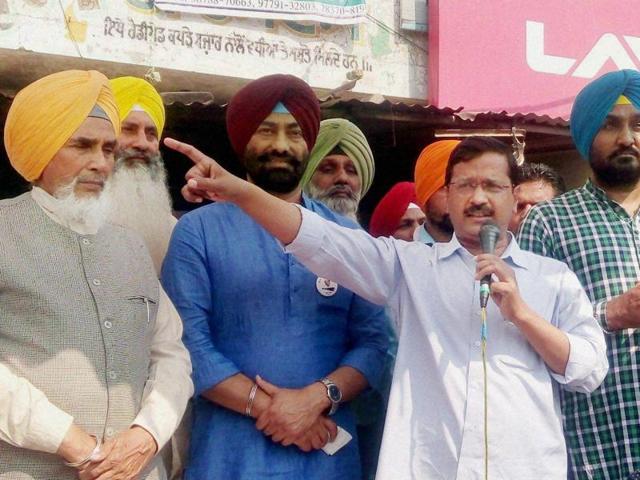
“Kehnde koi changa banda hai, Dilli ton manistar. Wekhde haan je eh hi kuch changa kar dave (Some good person he is, I am told, some minister from Delhi. Let’s see if he does something good),” says Bhajan Kaur at Sur Singh village in Tarn Taran, one of the bereaved mothers of drug addicts gathered to meet the AAP leader during a five-day visit that concluded on Monday.
Kejriwal insists he understands Punjab better than the Akalis and Congress. Like a non-judgmental outsider, he embraces traditional ways that people seek out of habit, yet talks of “good intentions” overriding all else, even the near-absence of a home-grown, grassroots leadership. “Candidates do not matter, don’t you worry,” he tells HT in an interview.
The traditional paradigm sticks out in hoardings welcoming, thanking, backing Kejriwal/AAP. These have his photo and of sundry local aspirants. Unprompted during an interview — in which he also claims to take India’s politics beyond religion and caste — Kejriwal urges Dalits to “hear and take note” of Punjab Congress chief Capt Amarinder Singh’s statement seeking quota for the poor among the general category. “Reservation can be only 50%. This means Dalits’ share in quota will have to come down!”
The AAP leader even tries the Panthic card with religious slogans in the Sikh heartland of Punjab. He meets handpicked victims of three issues — drug addiction, farm crisis, systemic corruption.
Kejriwal advertises his Delhi success, but on Punjab’s issues offers oversimplified promises: “Will finish the drug problem in two-three months… Will give exemplary punishment to the corrupt…Will turn the economy around in two-three years.”
“People see hope in us,” he says, denying that the AAP is banking on the negative sentiment against the Akalis, in particular, and a rotational poll equation, in general. Punjab has always led revolutions, he says, calling the AAP “inquilaabi” (revolutionary).
On the CM candidate, he says that doesn’t matter much. On finding 117 candidates, he says these questions interest the media more than the public.
“The ticket” is a discussion at every corner among hangers-on. Young landlords in SUVs — wearing the politician’s uniform of kurta-pyjama and sleeveless jackets — are a significant part of the caravan.
Des Raj, 50, a painter from Pathankot, is concerned. “These people are in every party. A lot of them are joining the AAP for the ticket. We should not succumb,” he says on the sidelines of a rally in Batala.
Ask Kejriwal about being a one-man show, and he says, “All our candidates will be honest. That’s all the janata wants, isn’t it?” The panic in rival parties — who protest at his every step and issue more statements against him than each other while also calling him “irrelevant” — begets the question: Will Kejriwal ride the momentum of hope and novelty to the kind of success he tasted in Delhi last year?


