Sign in

Researchers plan new colony as population of African penguin dwindles

The population plunged to around 13,000 breeding pairs last year, from more than 1 million pairs in the 1920s, when their eggs started to be harvested for human consumption, government data shows.

Published on: Nov 9, 2020, 21:48:32 IST
Cape Town | By
Share
Share via
  • facebook
  • twitter
  • linkedin
  • whatsapp
Copy link
  • copy link

South African researchers plan to release scores of abandoned, hand-reared African penguin chicks at the Western Cape’s De Hoop nature reserve, boosting efforts to start a new breeding colony of the seabirds at risk of extinction.

Group of endangered African penguins walk across Seaforth Beach, near Cape Town, South Africa. (REUTERS)
Endangered African penguin stands on a rock at Seaforth Beach, near Cape Town, South Africa. (REUTERS)

The only penguin that breeds in Africa, it was once South Africa’s most abundant seabird. But the population plunged to around 13,000 breeding pairs last year, from more than 1 million pairs in the 1920s, when their eggs started to be harvested for human consumption, government data shows.

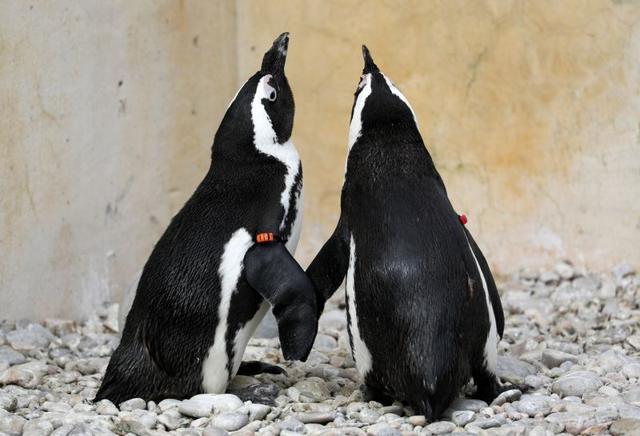
Pair of rescued penguins sit in an enclosure while being treated at the African Penguin and Seabird Sanctuary in Gansbaai, South Africa. (REUTERS)

Researchers have since January 2019 deployed dummy penguins that emit the distinctive call of the birds to try to entice them onshore at De Hoop, 230 km (140 miles) southeast of Cape Town. But success has been limited.

They now plan to release around 50 juvenile birds each year for several years, starting in early 2021, to try to establish a breeding colony at De Hoop, a protected site.

Decoy concrete African penguins, used to encourage the development of breeding colonies, are shown at Seaforth Beach, near Cape Town, South Africa. (REUTERS)

“A couple of months ago when I was at the site, I saw a juvenile penguin within 10 metres of the shore, said Christina Hagen, who leads the project. “Unfortunately, it didn’t come ashore.”
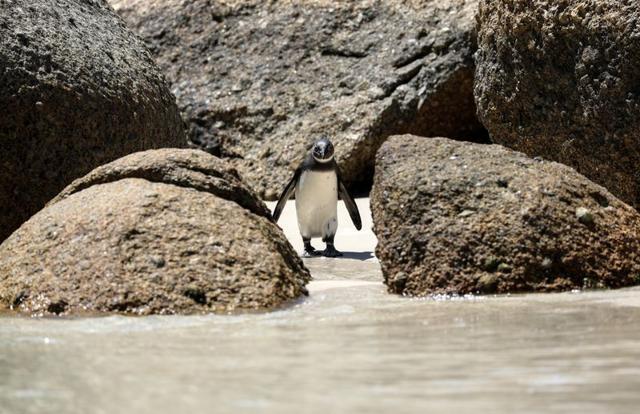
Endangered African penguin is seen at Boulders Beach, near Cape Town, South Africa. (REUTERS)

Hagen said hand-reared chicks were normally released into existing colonies, such as those at former apartheid prison Robben Island or at Boulders beach, a tourist attraction.

Researcher Christina Hagen from BirdLife South Africa positions decoy concrete African penguins at Seaforth Beach, near Cape Town, South Africa. (REUTERS)

De Hoop had good fishing waters critical to a new colony, Hagen said, and had been settled briefly by penguins in the mid-2000s, but deserted by the seabirds when leopards started preying on them.
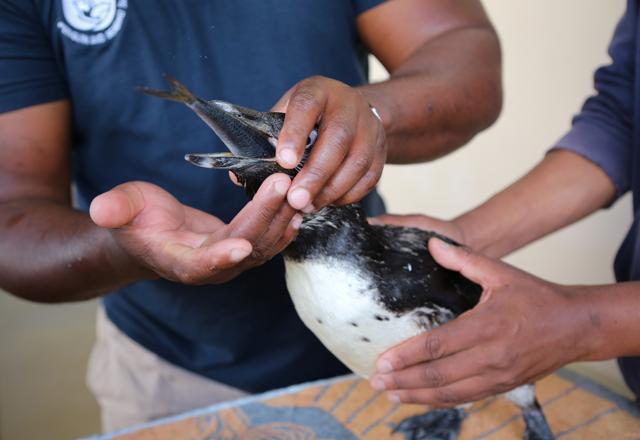
Senior bird rehabilitator Xolani Lawo feeds Rescued penguin at the African Penguin and Seabird Sanctuary in Gansbaai, South Africa. (REUTERS)

Found at nesting sites only in South Africa and Namibia, the decline of natural African penguin populations has been attributed mainly to dwindling fish stocks, including anchovy and sardines, and worsened by climate change.

Endangered African penguin emerges from the water at Seaforth Beach, near Cape Town, South Africa. (REUTERS)

“It is hard to say if they’ll actually go extinct, but it is a real possibility and we are doing all that we can to prevent that,” said Hagen.

Get Latest Updates on Trending News Viral News, Video, Photos and Weather Updates of India and around the world