
 E-Paper



Scientists solve puzzle surrounding reptile with neck half of its entire length which lived about 242 million years ago
Field Museum took to Twitter to share a post detailing various interesting facts discovered about the reptile.

 Prefer HTon Google


A reptile species, which lived during the Middle Triassic period about 242 million years ago, named Tanystropheus with a really long neck has been puzzling scientists ever since a fossil was discovered back in 1852. However, recently, in a new study, scientists unveiled some absolutely amazing facts surrounding the animal. This news soon reached social media, and has since created quite a buzz online.
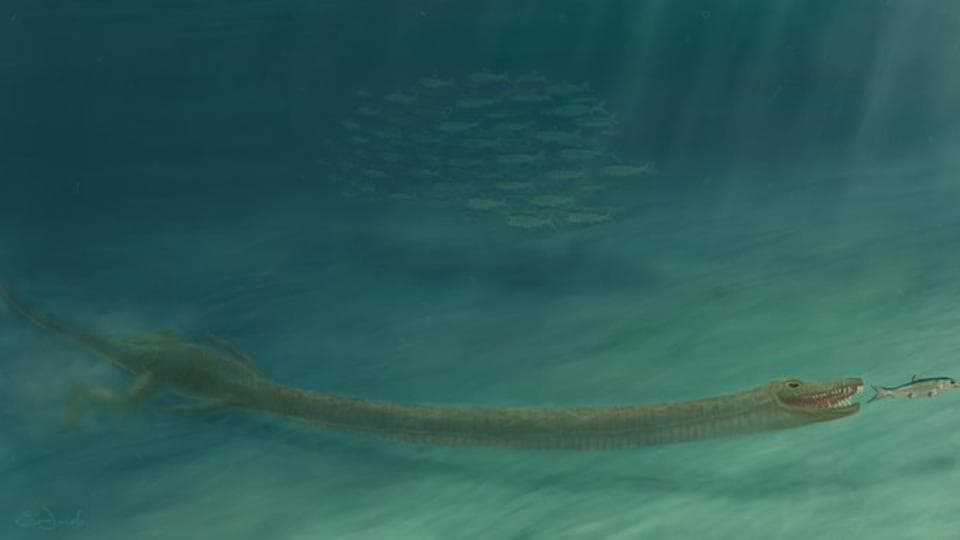
“For those people who are interested in Triassic reptiles, it’s always been not only an iconic fossil but also a matter of dispute and discussion,” Olivier Rieppel, a palaeontologist at the Field Museum in Chicago and one of the study’s authors said to CNN.
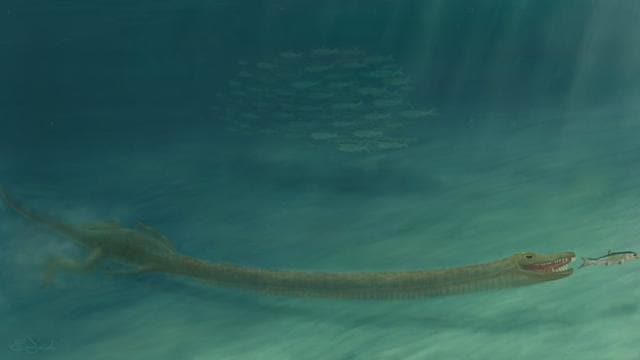
Field Museum also took to Twitter to share a thread detailing various interesting facts discovered about the reptile and a link to a report by CNN. “Since 1852, scientists have been puzzling over Tanystropheus, an animal that lived 242 million years ago. Long, hollow bones suggested it was a flying reptile, like a pterodactyl. In fact, these were neck bones,” they tweeted and shared an illustration of the reptile.
They also tweeted that these animals with remarkably huge necks didn’t stay on land but in water.
The species once lived in Switzerland’s Monte San Giorgio basin during the Middle Triassic period, reports CNN. They also had unusual looking long necks which were about 10 feet long, half of their entire 20-foot-long body.
Tanystropheus has always intrigued scientists. Now, by using the computed tomography (CT) scan technology scientists have digitally reconstructed the crushed skulls of the fossils, which presented them with new information.
People shared various comments on social media platforms, especially Twitter.
What are your thoughts?


