
 E-Paper



Jaipur’s property tax potential untapped: Economic Survey
The Jaipur civic body collects only 5% to 20% of its potential property taxes and has the scope of increasing its revenue collection manifold by making use of technology, a satellite-based imagery of the city has revealed


The Jaipur civic body collects only 5% to 20% of its potential property taxes and has the scope of increasing its revenue collection manifold by making use of technology, a satellite-based imagery of the city has revealed.
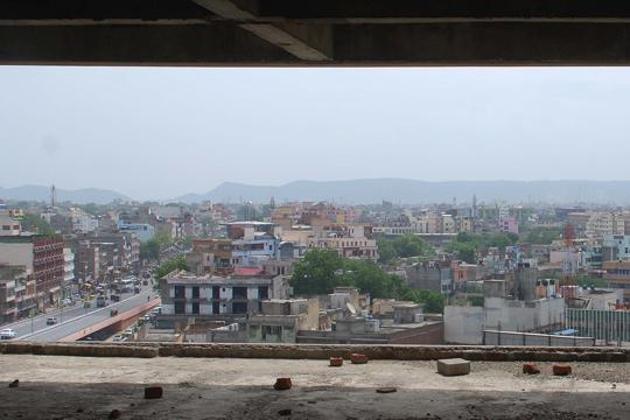
The data analysis is part of a chapter on urbanisation published in the recent Economic Survey of the union finance ministry.
“Bengaluru and Jaipur can collect five to 20 times their current property tax collection. Revenue self-sufficiency can significantly enhance the urban local bodies’ (ULBs) capacity to invest in much-needed infrastructure,” states the Economic Survey.
Property tax is the primary source of revenue for urban local bodies.
The Survey has cited poor assessment rate, weak collection efficiency, flawed methods for property valuation, loss on account of exemptions, and slack enforcement as the main factors behind poor realisation of the property tax, also known as urban development tax.
Jaipur Municipal Corporation (JMC) data shows that its outstanding urban development tax between 2007 and 2016 stands at ₹700 crore.
“I am not aware about this study, but we are making consistent efforts to boost tax collection. We will soon be holding camps for collecting property taxes and have also been in touch with CREDAI (Confederation of Real Estate Developers’ Association of India) in this regard,” JMC deputy commissioner Kailash Narain Meena told HT.
“Action will be taken against defaulters including seizing property in some cases.”
JMC’s urban development tax revenue for 2015-16 was ₹65 crore. Sources said tax exemption given to residential buildings of less than 300 square yards could be one reason for lower collection.
STUDY FINDINGS
*The study has attempted to estimate the property tax potential of Jaipur by using satellite imagery from LANDSAT program from NASA and United States Geological Survey (USGS).
*Jaipur has a total area of 484 sq km with 39% built-up area. In the absence of official FSI data for Jaipur, elevation and non-elevation scenarios were considered in the study.
*The satellite-based raw data has been processed to identify built-up area, including everything from an independent housing unit to apartments.
*During eight years, from 2007 to 2015, the number of properties billed for tax has increased by a mere 2% (1,19,680 properties in 2007 to 1,21,498 in 2015).


