
 E-Paper



Tiger in Kota’s MHTR sanctuary dies after preying on feral cattle
Feral cattle are believed to be a problem in all tiger reserves across the country, which are exposed to villages and human habitation.

 Prefer HTon Google


A tiger has died in Mukundra Hills Tiger Reserve (MHTR) in Rajasthan’s Kota district because of preying on feral cattle that led to accumulation of fat in its vital organs, which has triggered a fresh move to relocate at least three of the 14 villages located within the reserve on an urgent basis.
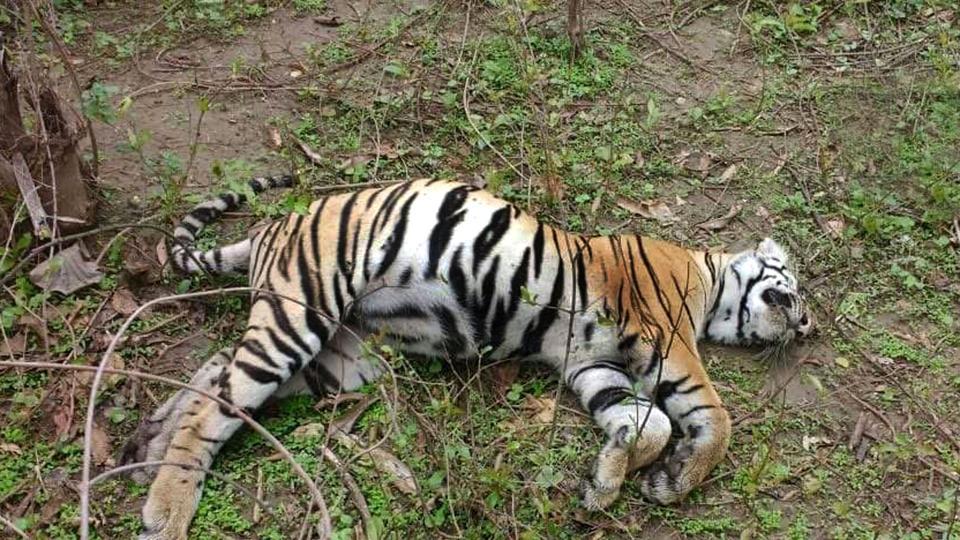
MT-3, the tiger, had died on Thursday (July 23) in Mashalpura block of MHTR and its autopsy revealed a lump of fat in its heart, lungs and other vital organs.
At present, MHTR has three tigers.
Anand Mohan, the chief conservator of forests (CCF) Kota, said: “MHTR is a newly developed tiger reserve, where the animal had gone extinct four decades ago. They have been rehabilitated again. Though their prey base number is growing, it’s still short of the desired figure within the 80-square (sq)-kilometre (km) natural habitat for tigers.”
Feral cattle are believed to be a problem in all tiger reserves across the country, which are exposed to villages and human habitation.
“Similar problem exists in MHTR as well because 14 villages are located within the reserve,” the CCF said.
Tigers don’t need to put an extra effort to prey on fat-rich feral cattle, he added.
“Ungulates like deer, blue bull or other prey bases of tigers are aware of the prey predator’s hunting tactics in the wild, but the feral cattle are not acquainted with the animal’s hunting technique. They have become tigers’ soft targets, as they are easier to kill, as compared to wild animals,” he said.
“Less fat is burnt in a tiger’s body while killing cattle. Consumption of bovine fat also leads to further accumulation of fat in a Big Cat’s body, in turn, affecting its vital organs,” he added.
A tiger has to exhibit more endurance in killing wild animals than cattle. Besides, wild animals have less fat in their body.
The forest officials are looking at measures to prevent a recurrence of similar mishaps.
“Relocation of the villages can minimise the stray cattle problem and also facilitate more grasslands in MHTR that can increase tigers’ prey base,” Mohan said.
Though there are 14 villages within MHTR, tigers are found to be moving around in three hamlets that need to be relocated on an urgent basis. The relocation of three villages will also provide an inviolate area, measuring around 300 sq km, within the reserve.
The CCF said he would incorporate these facts in his report on MT-3’s death to chief wildlife warden of Rajasthan on Monday.


