
 E-Paper



A Muggle breaks a spell: The remarkable tale of Harry Potter stuntsman David Holmes

 Prefer HTon Google


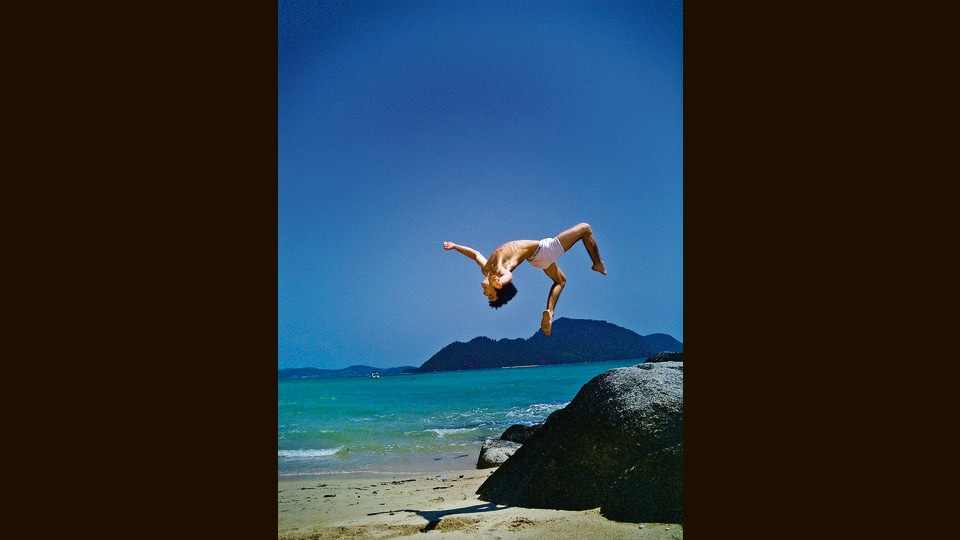
He was Daniel Radcliffe’s stunt double. An accident on set left him paralysed. Holmes discusses new loves, new life, as a documentary sets out to tell his tale.
It still feels strange to him to think back on the day it happened; a day of normalcy simply taken for granted.
David Holmes was 25, and had arrived for work at the Warner Bros studio in Leavesden, England, where the seventh Harry Potter film, …The Deathly Hallows: Part 1, was being shot.
It was a cold day in January, 2009, and year nine of Holmes acting as Daniel Radcliffe’s stunt double. The Harry Potter films had been an unusual series to work on. Holmes had flown through the air, levitated on broomsticks, been thrown back by the explosive powers of spells and wands.
One such explosion changed it all. They call it the jerk-back routine. The stuntman is strapped into a harness, after which a wire-and-pulley system lifts and throws them into a padded wall.
The team had performed the stunt hundreds of times by 2009. But that day, something was wrong. “I knew it as soon as I felt the wire pull,” Holmes says. It felt like there was too much weight on the pulleys. He felt his body fly through the air and slam into the wall “at a frightening pace”. The impact broke his neck, severed his spinal cord and led his sternum (the bone at the centre of the ribcage) to fold inward.
“I was instantly paralysed,” says Holmes, 40, speaking from Thailand, where he is currently on vacation. “I kept consciousness… so I knew pretty much as soon as I landed on the floor.”
Holmes spent the six months in hospital, and years in recovery. A cyst in his spinal cord led to further complications, including the loss of the use of his right arm.
How does one respond to such suffering, such a fracture from the life one knew?
David Holmes: The Boy Who Lived, a documentary released in November, traces Holmes’s unusual response of optimism, courage and indefatigable humour. The film is directed by former Potter crew member Dan Hartley, and executive-produced by Radcliffe.
“The journey that I’m now on, as a paralysed person, is not the one I would have picked for myself,” Holmes says, “but it’s the one that’s taught me the biggest of lessons. I always say breaking my neck made a man out of me.”
Making ripples
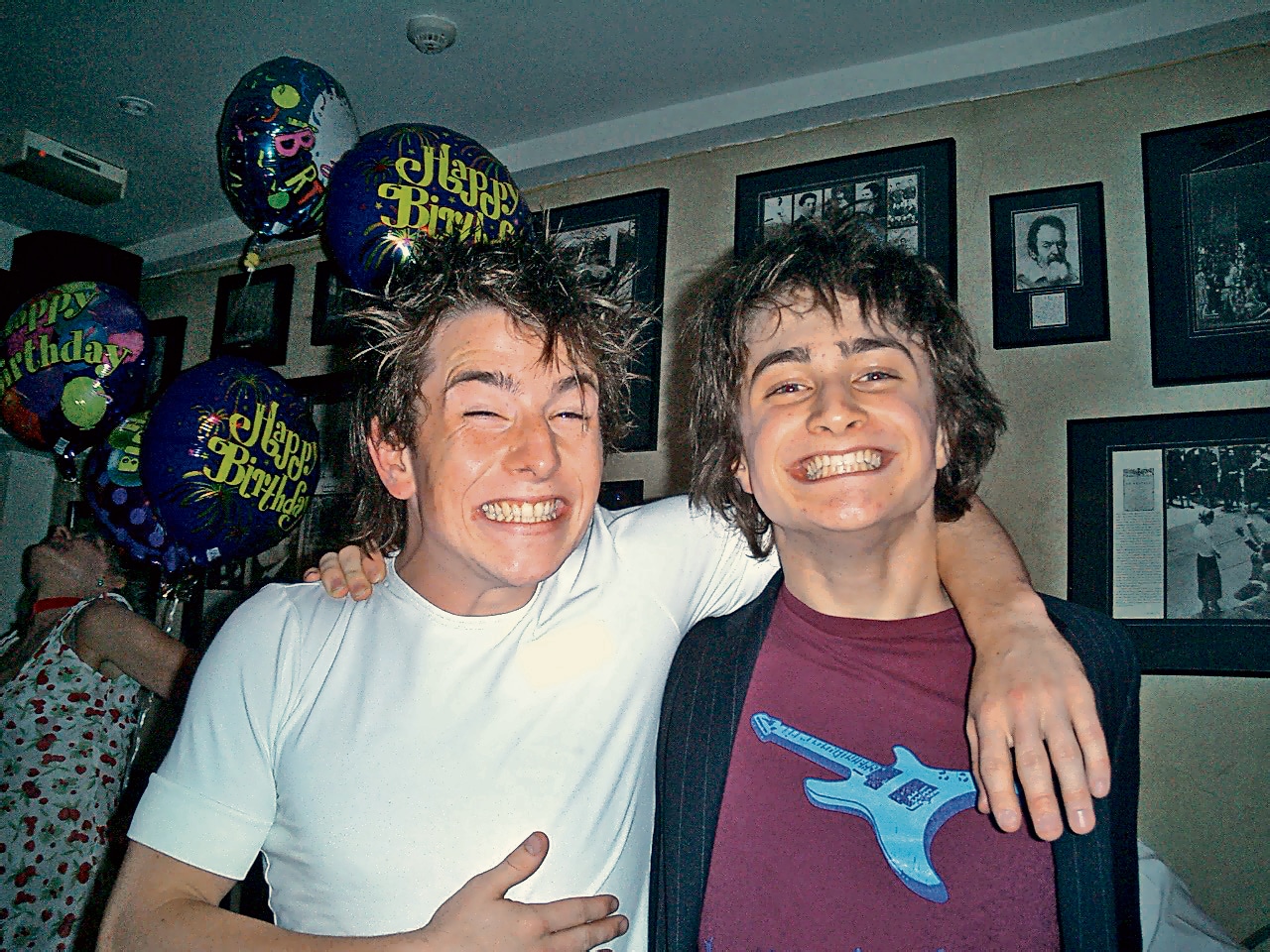
Holmes grew up in Essex, the middle of three boys born to Sue Holmes and Andy Holmes. When he was five, all three were enrolled in a local gymnastics club. “My parents were both working, and realised that this was the world’s best babysitter,” he says, laughing. By the time he was 13, Holmes was competing in national-level gymnastics tournaments, and dreaming of the Olympics.
“Then I got my first taste of Hollywood, at 14, and that was it. I was going to be a stuntman.”
Veteran stunt coordinator Greg Powell signed Holmes up for his first film in 1997, the sci-fi adventure Lost in Space, directed by the Jamaican-British Stephen Hopkins. Holmes spent that summer riding robots, diving out of the way of explosions, and falling madly in love with filmmaking.
“You go through a film stage door, and I describe it as the airlock into fantasy world,” he says. On his first day, he was glued into a rubber “spacesuit”, put in a “spaceship”, and asked to jump out of the way of a pyrotechnics display. “It made a very big impression on a 14-year-old, that’s for sure,” he says.
Three years later, Powell called him in for another stunt test. Holmes was strapped onto a broomstick that was cantilevered on the back of a pickup truck, with Chris Columbus, the director of the first two Potter films, sitting in the truck bed.
Holmes remembers pretending he was flying, dodging quaffles and reaching for snitches, as the truck was driven into a ravine. “I was the world’s first Quidditch player,” he says.
By the end of the day, he was the lead stunt double for Radcliffe. In the early years, he also occasionally served as stunt double for some of the other child characters, including Emma Watson (who played Hermione Granger) and Tom Felton (who was Draco Malfoy).
The children in particular grew close. “Radcliffe grew from my on-set ward and mentee to one of my best friends,” Holmes says. The friendship and community that surrounded Holmes after the incident is part of what makes …The Boy Who Lived so compelling.
“They say it takes a village to raise a child. Well, it takes a very large village to support a survivor of spinal cord injury,” Holmes says.
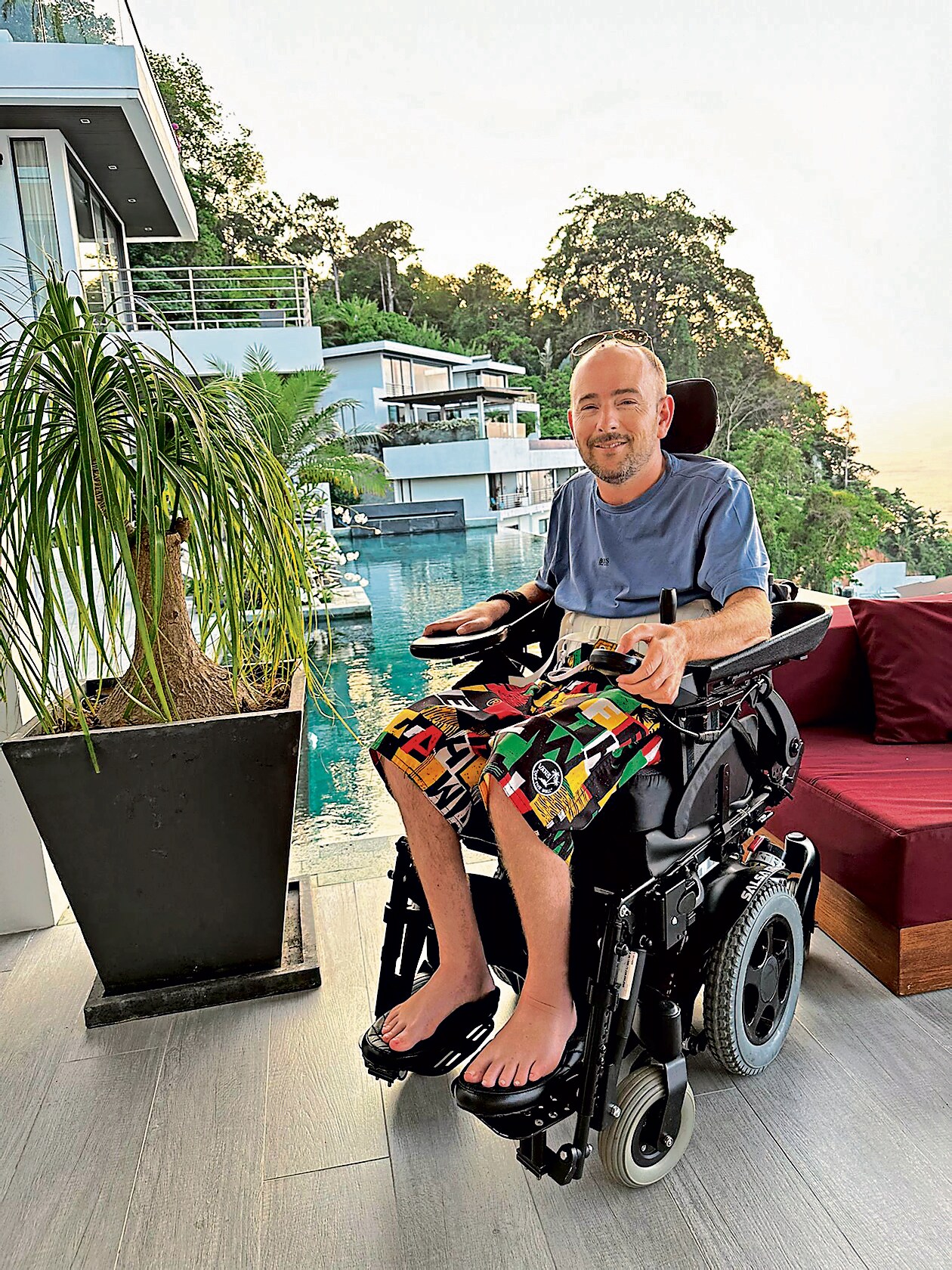
His sense of humour shines through too, in the film and in conversation. He points out the logistical nightmare of travelling from the UK to Thailand in a wheelchair (“I had go so far as to dig up the architectural plans of my hotel before booking it”).
There’s a fair amount of levity on Holmes’s podcast as well. Cunning Stunts is where he now channels his love for performance. The podcast is produced by Ripple Productions, which he founded in 2013. On the show, he and Radcliffe interview stunt coordinators and performers.
“We don’t get Oscars, we don’t get BAFTAs. But I knew there were a million stunts out there that could be articulately described, for the wider audience to start to appreciate the value of what stunt work is,” Holmes says. “So I decided to give my friends the canvas and let them show the world the creative artists they are.”
His other projects include a book on his life, which he says will be full of adventure (“I once got arrested, in my wheelchair, in Amsterdam!”) and fundraising for the Royal National Orthopaedic Hospital in London, which played a pivotal role in his recovery.
He remembers films being pivotal too. “There have been times when I’ve been stuck staring at ceilings for days, so I got a projector and projected movies onto the ceiling,” he says. “You’d be surprised at the power of storytelling, and what it can do for you in your darkest times.”
He likes to think that out there, children who feel challenged, sad, alienated or alone are thinking the same things, he adds, of the movies he made.


