
 E-Paper



A souper Swiss spectacle: Notes from the festival of L’Escalade in Geneva

 Prefer HTon Google


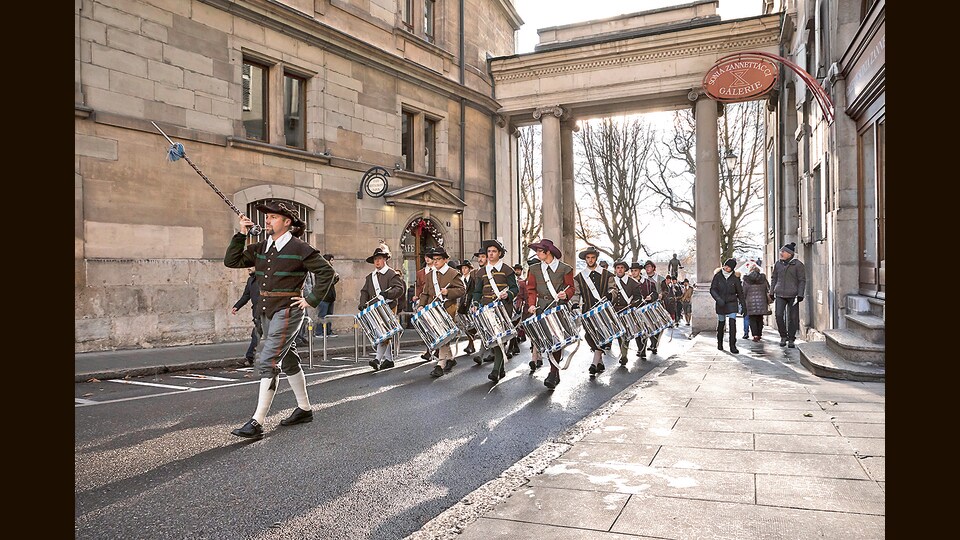
Once a year, the city celebrates an old victory with costumed parades, little chocolate pots full of marzipan vegetables, and a form of trick-or-treating.
Drums, trumpets, brass bands and costumes from the medieval era explode onto the streets of quiet, staid Geneva, once a year, as citizens dress up to parade through the Old Town, recreating a historic event from 1602.
The festival of L’Escalade commemorates the Protestant city-state’s victory over an army sent over by the Catholic city-state of Savoy, in that year.
The Duke of Savoy, Charles Emmanuel, had long coveted the wealth of Geneva. After biding his time and gathering his troops, he finally launched a surprise attack on a dark December night, sending thousands of soldiers across the border, armed with ladders (l’escalade, in French) and a plan that involved simply scaling the walls and claiming the town.
The Savoyard troops attacked with stealth and many had begun their 21-ft climb when an alarm was unexpectedly sounded from within.
Legend has it that a mother of 14 named Catherine Cheynel, later nicknamed Mere Royaume or Mother of the Kingdom, leapt into action first, spotting the invading soldiers from her window and emptying a cauldron of scalding vegetable soup onto their heads. Their cries, and hers, woke others nearby, alerted the guards, and the battle began.
Amid cannon fire and the clashing of swords, a night guard rushed to close the city gates. Soldiers within Geneva sprung into action, using a network of secret narrow alleys to launch surprise counter-attacks around the periphery, from within.
The next morning, the sun rose on a row of severed enemy heads, stuck on pikes along the tops of the perimeter wall: A warning to the Duke of Savoy, and to anyone else with designs on their city.
Emmanuel signed a peace treaty and was ordered not to concentrate troops or build fortresses within four miles of Geneva. The heads remained in place for two days. Geneva remained independent for two centuries (until it opted to join the Swiss Confederation, in 1814.)
Another two centuries on, L’Escalade remains a celebration of the city’s spirit of freedom, unity and resilience.
Celebrations start with schoolchildren dressing in medieval costumes for a sort of trick-or-treat ritual in which they visit neighbours to claim coins or candy.
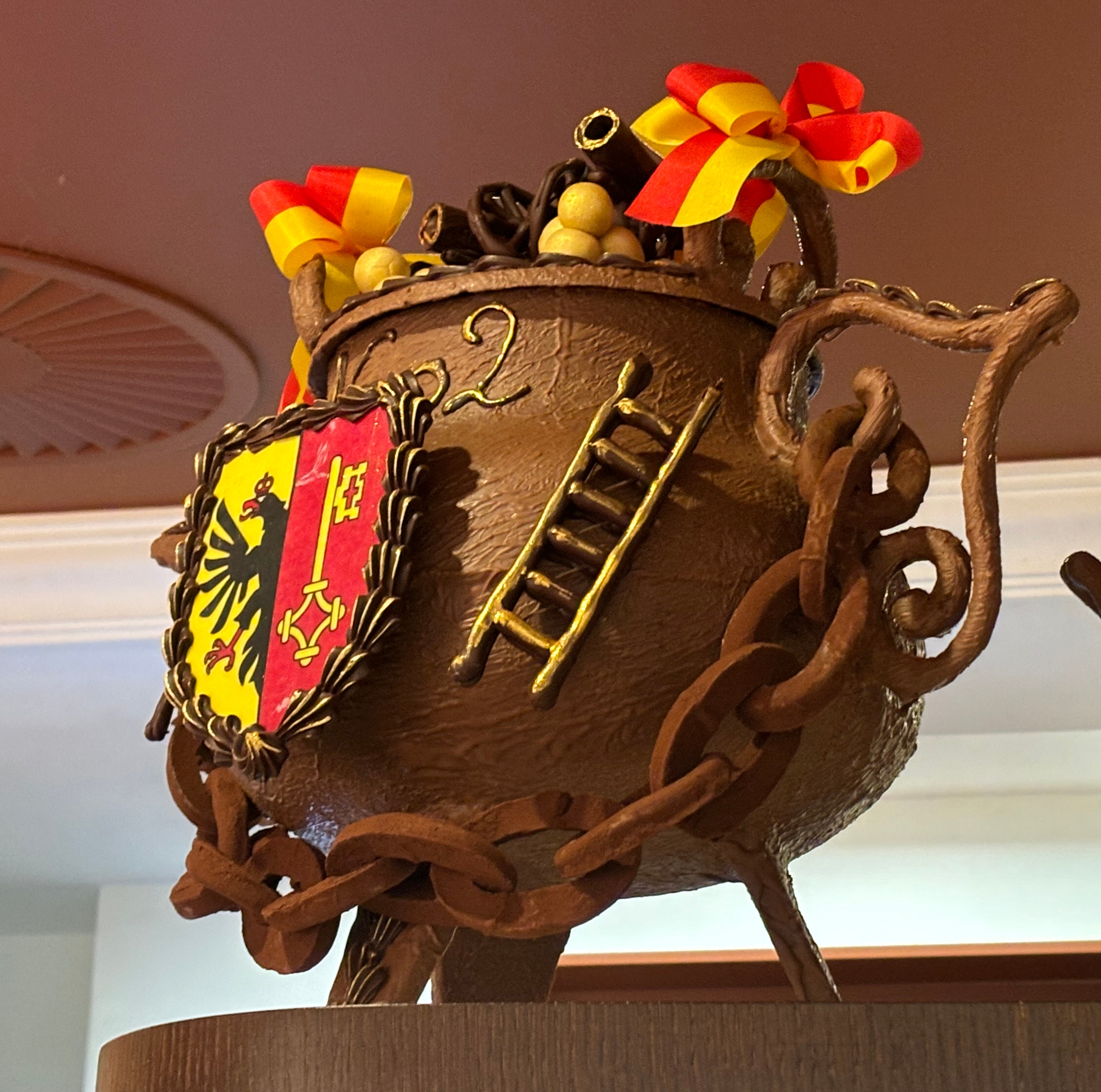
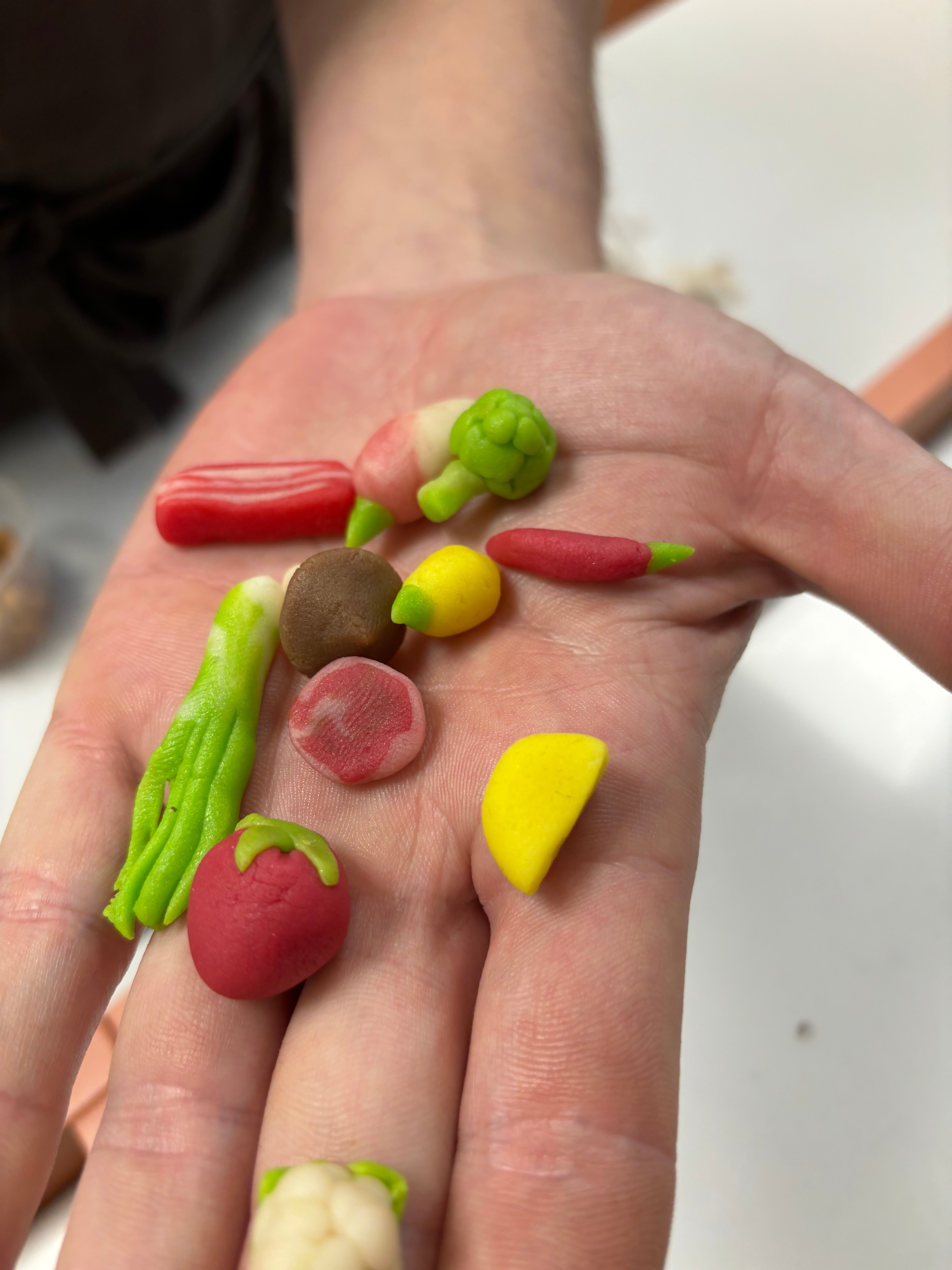
Little cauldrons (marmites, in French) are made from chocolate, in local bakeries and patisseries, with tiny marzipan replicas of vegetables placed within. Geneva’s coat of arms is created in chocolate too, and fixed to the front of the cauldron; a tiny chocolate banner is stuck onto each marmite, bearing the words: “Ainsi périssent les ennemis de la République (Thus perished the enemies of the Republic).”
The day is filled with processions in medieval outfits, complete with jesters and dancers.
Across the city, an elaborate type of chocolate wrapped in the Geneva colours of red and gold and decorated with the Geneva coat of arms, is sold and eaten too.
The city’s narrowest passage, Passage de Monetier, is opened to the public (it remains closed through the rest of the year). Processions also march through some of the other narrow passages used by Geneva’s soldiers on that long-ago night.
At the Fontaine de l’Escalade, a commemorative fountain built in 1857, the German sculptor Johannes Leeb immortalised the tale in stone and bronze, with scenes from the battle, the infamous ladders, and Geneva’s brave citizens all depicted. Topping it all, a woman, symbolising the spirit of the city, stands tall.
The festival concludes with a large ceremonial fire at a central square. In a carefully rehearsed production, 800 “soldiers” in historical costumes, some on horseback, re-enact the battle, with the audience occasionally breaking into a hymn of thanks titled Ce Qu’e Laino (He Who is Above).
(To reach Kalpana with feedback, write to kalpana_63@hotmail.com or @travelwithKalpana on Instagram)


