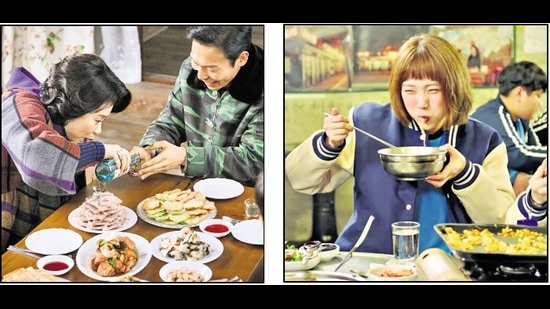
What does food have to do with a fantasy series about a mythical mountain god and his human girlfriend? If it’s a South Korean show, everything. In the hit series Tale of the Nine Tailed, characters tuck into delicious-looking naengmyeon (a cold noodle dish), gimbap (Korean sushi) and dried-pollock soup (made with a kind of whitefish). Even in the dystopian Korean show Squid Game, the first episode features fried chicken (a Korean favourite), tteokbokki (rice cakes) and salted mackerel.
Food is an integral part of all South Korean shows, regardless of genre. Characters constantly go to restaurants to drink soju and eat hearty meals; they also frequently cook for each other. They talk about the food. They show us the food: delectable close-ups of steaming bowls of soup, sizzling barbecued meat, crisp fish cakes and much more. Foods like kimchi and rameyon (instant noodles) have been familiar to us for a while; now we’re also becoming acquainted with dishes like jajangmyeon (noodles in a black-bean sauce) and nurungji (scorched rice crackers).
Which set me thinking: Why has food never had a big role in Hindi films? I went back to the movies of the 1950s, ’60s, ’70s, but couldn’t come up with anything (I’m happy to be corrected). There are innumerable scenes set in traditional kitchens, with mothers lovingly serving dinner in gleaming thalis to husbands and sons, but we never actually see the food, nor do we know what they’re eating (when we are told, it’s usually something generic like roti, dal and sabzi). Despite all the fuss about maa ka khana, we never encounter even this in any detail.
It’s the same with scenes set around the dining table. If the characters are from affluent families, they are often shown eating soup; otherwise they’re helping themselves to unidentifiable dishes from serving bowls.
Even in a relatively new film like The Lunchbox (2013), which is about the power of food as a form of connection, there is surprisingly little actual food. We see fleeting visuals of yellow dal, bhindi or paneer curry (and frankly, they’re not very appetising visuals), but that’s all. At one point, Ila (Nimrat Kaur) talks about her nani’s legendary tinda and Saajan (Irrfan Khan), who samples it, says it’s terrific, but we don’t see the dish.
It’s not as if Indians don’t like food. We love our food. We have fabulous dishes whose recipes have been passed down through generations in the manner of family heirlooms — in the case of my family, for instance, it’s the recipes for takey paise (besan ke gatte), bhuna meat, dal kachori and stuffed red-chilli pickle, among numerous other dishes, breads and pickles.
So why do we never see this love reflected on the screen? I have no answers, just a theory. Filmmakers typically spend money on what they feel will add to the commercial appeal of a movie. This means big stars and great music, locations, costumes and sets, because all this is seen to add to the look and feel of a film. What’s the use of showing close-ups of a meal your hero and heroine are sharing at a restaurant? You’d have to ask production to organise the food, you’d have to take care to shoot it beautifully. You’d have to pick your menu well because tinda may not look good on a plate, no matter how hard you try. And perhaps producers think it’s not worth all the hassle. How would it help the film or TV show’s prospects for success anyway?
Well, when close ups of gently simmering soup become as much of a high point in a show as declarations of love, you know that disinterest is misplaced. Food is the secret weapon of South Korean or K-dramas (also an exercise in soft power — world domination through kimchi and bulgogi)!
Steve Jobs famously quoted Pablo Picasso as saying “Good artists copy, great artists steal” (though no one knows if Picasso really said that). So shots of fluffy pulao, crispy naan, bhuna gosht or golden-brown aloo tikkis in an action thriller or love story? I’m in.

 E-Paper