
 E-Paper



Final reckoning: Around the world in ancient crypts

 Prefer HTon Google


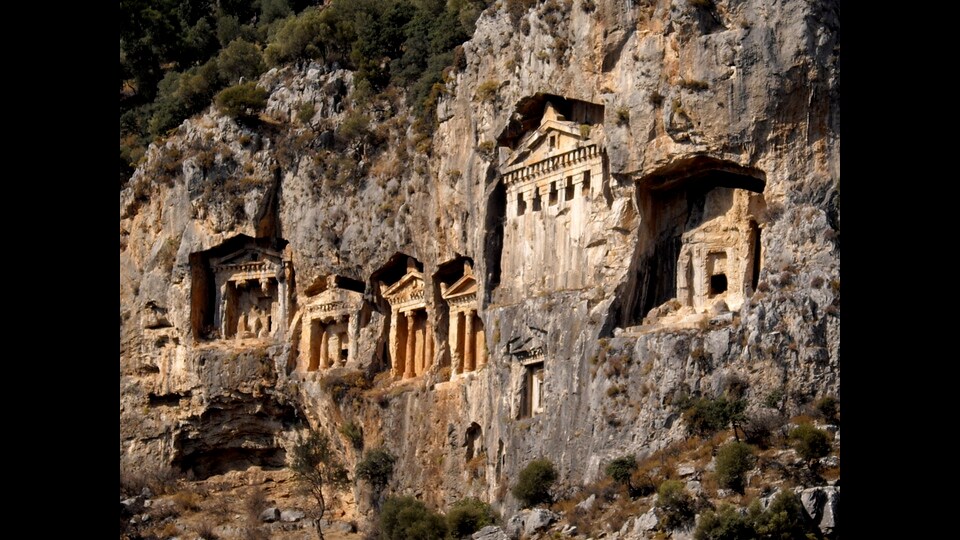
How we have honoured the dead through millennia? Take a look at some of the earliest such memorials found around the world.
Bodies buried close together, above bare rock. Elders interred upright in tree trunks. Families occupying entire “cities of the dead” erected in caves… the history of how we have honoured our dead, through the millennia, is vast, varied and fascinating. Take a look.
* Africa, c 3000 BCE
A massive, elaborate cemetery has been found in Kenya’s Lothagam valley, dating to 5,000 years ago.
At what is known as the Lothagam North Pillar Site, shallow 3-ft-deep pits packed closely together in a wide circle have been used to bury the dead. The site is thought to have been built by a late-Neolithic herding community.
The 98-ft-wide space is the largest and oldest known burial site in East Africa. Plenty of thought went into it. The circular dirt platform would need to have been built, on the region’s rocky, arid ground.
Ground-penetrating radar has shown that about 36 bodies are buried in a single 6-sq-ft segment, leading researchers to estimate that the site contains between 500 and 1,000 people.
* Australia; 2000 BCE
In parts of Australia, Aboriginal communities have a unique burial practice that involves placing the loved one’s remains in a highly decorated, hollowed-out trunk of a tree.
Such log receptacles have been found in the central Queensland Highlands dating to at least 700 years ago, but the practice itself is believed to have roots as far back as 2000 BCE.
In this practice, the body of the deceased is ritually painted with totemic signs, sung over and wept over. It is then taken to clan land and typically “buried” upright in a tree, where it is left to decompose. The bones are recovered months or years later, painted with red ochre and placed back in the log as final songs and dances are performed.
* China, c. 500 BCE
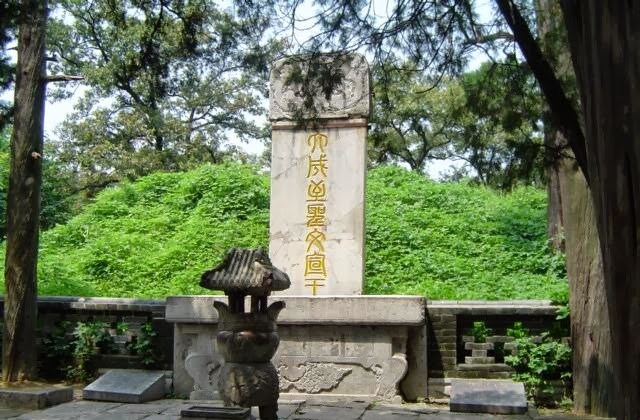
In the Qufu forest in eastern Shandong, 516 km from Beijing, sits a cemetery built in honour of the Chinese philosopher Confucius, who died in 479 BCE.
It covers nearly 2 sq km, and was set aside by the Han rulers of the time, for the family and descendants of Confucius. Tens of thousands of these descendants have since been interred here.
In 1994, the cemetery was recognised as a Unesco world heritage site.
Most graves are marked by a simple slab. Some of the slabs are erected on bases that resemble a tortoise, a common funerary marker in China.
The tortoise, incidentally, is a mark of respect too. It indicates that the deceased was so virtuous, their spirit will live on forever.
In a little aside, the depictions of tortoises amassed here over 800 years indicate an interesting evolution. While the early tortoises had plump, inviting faces, greeting visitors with what was almost a smile, many of the more recent representations look stronger, fiercer and almost dragon-like.
* Turkey, c. 500 BCE
Cavernous cliffs hold entire cities of the dead in southwestern Turkey, complete with ornamental tombs carved out of rock.
The Lycian people, who inhabited parts of Anatolia as far back as 500 BCE, built these tomb complexes over 800 years.
A single such city of the dead has been found to hold 400 tombs.
In an evocative detail, most tombs were designed to look like the traditional wooden houses of the time. Many served as a sort of family crypt, holding more than one body. Some of these caves are now ticketed archaeological sites.
* America, c 100 BCE
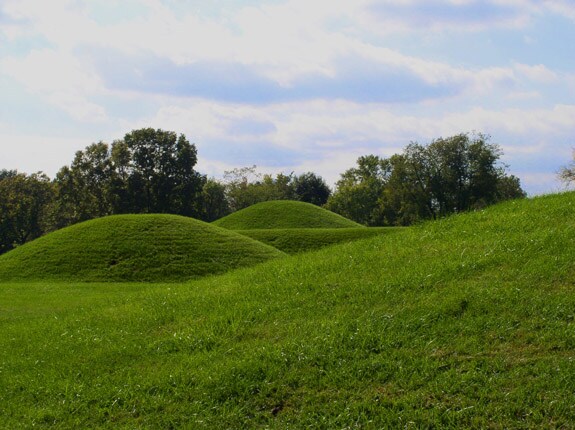
In Ohio, a network of burial mounds is now the US’s 25th such Unesco World Heritage Site.
The figure eight features prominently in these mounds. In Ohio, the 2,000-year-old Hopewell site is a network of eight mounds, each one eight-sided or octagonal, all sitting within a large earthen enclosure.
Typically, such mounds were created by piling topsoil, clay and shells atop a communal burial site.
Many of the mounds are situated in what were once thriving Native American settlements. These mounds — containing no visible markers such as stones, inscriptions or text — continued to be built all the way to the 16th century.


