“It’s unclear whether certain plastics are potentially more toxic than others,” says Tracey Woodruff, a professor at University of California, San Francisco.
What we do know, she adds, is that the chemicals used to give plastics their properties, such as bisphenol A (BPA; used to harden plastics) and phthalates (used to make them more flexible), do pose risks.
In 2022, Woodruff was commissioned by the government of California to review nearly 2,000 scientific studies about microplastics-linked health risks, and frame recommendations that could possibly guide future policies.
Her top tip for the individual? “Reduce your use of plastic.”
That, of course, is a longer-term goal, she adds. What can we do while we work at it? Here are her most easily implementable top tips.
At home
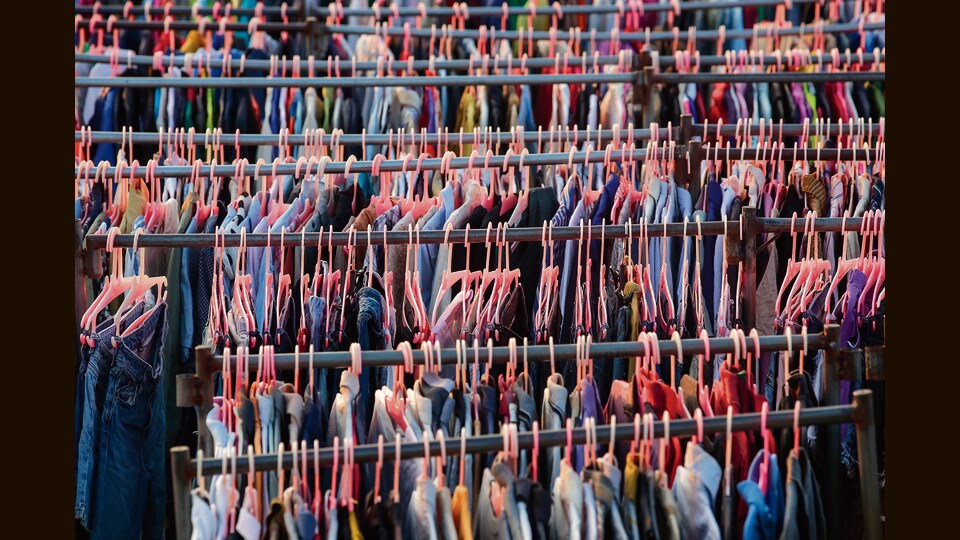
Switch to natural fibres where possible.
Research indicates that microplastic concentrations in the air tend to be higher indoors than outdoors. This is because of the close proximity to plastic objects that are shedding fragments as a result of friction and exposure to heat and light, in an enclosed space.
These fragments are inhaled in their highest concentration when dusting and sweeping. Dust acts as an efficient carrier, Woodruff says.
It helps to vacuum instead, and use a HEPA (high-efficiency particulate air) filter while vacuuming.
By the litre
Bottled water contains far more nanoplastics than earlier thought, a recent study by researchers at Columbia University has found.
These fragments are hard to test for, since they are often non-reactive to light and heat and have a width of only 1 to 1,000 nanometres (a single hair is about 80,000 nanometres wide).
But, using a new laser-based detection technique, the Columbia researchers tested three brands of bottled water in the US and found that, on average, a 1-litre bottle contained 240,000 detectable fragments. This is 10 to 100 times more than previous estimates (which accounted mainly for larger microplastics).
Some of the fragments likely come from the bottle-manufacturing process; others come, ironically, from a type of nylon used in the water filtration process, says the study report, which was published in the journal PNAS (Proceedings of the National Academy of Sciences).
Nanoplastics can penetrate physiological barriers more easily and, being lighter, can travel farther, study co-author Beizhan Yan, an environmental chemist at Columbia University’s Lamont-Doherty Earth Observatory, said in a statement.
To limit exposure, use metal or glass only. Avoid water sold or stored in plastic.
Nom nom?
“Microwaveable plastics are a myth we’ve lived with for far too long,” says Woodruff. “Heating food in plastic containers can release microplastics into the food.”
Packaged foods, by default, can be expected to contain more microplastics than meals cooked fresh, at home.
“The same goes for takeout,” says Suresh Valiyaveettil, a professor of chemistry at the National University of Singapore, who studies the synthesis, characterisation and applications of functional polymers.
“Cooking, heating and eating in non-plastic containers eliminates a major source of plastic exposure,” Woodruff says.

 E-Paper




 Prefer HTon Google