
 E-Paper



Hot plate: The climate crisis is now changing the flavour of our food

 Prefer HTon Google


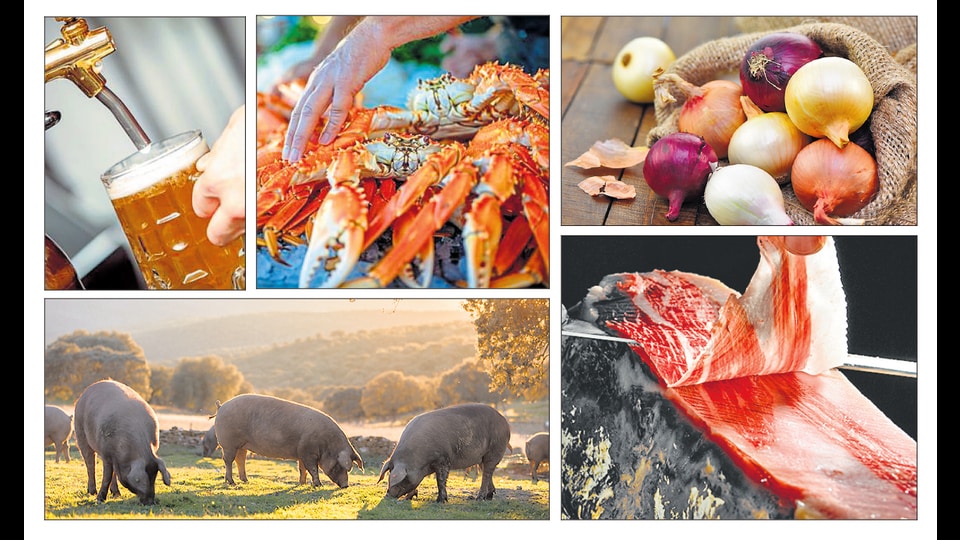
Apples are losing their crunch, tomatoes are getting sweeter. Beer, cheese and ham are being hit too, as plants up their defences in a changing environment.
The crunch of the apple, the tang of the grape and the sweetness of onion may be among the flavours set to change amid the climate crisis.
Some cheeses are also losing their flavour, amid intensifying drought in certain regions; lettuce is becoming more bitter; and a premium ham is being impacted, amid factors such as changing soil composition, reduced rainfall and rising temperatures.
Plants’ attempts at adaptation are registering as changes in flavour, writes Kathryn de Master, an environmental resource scientist at the University of California, Berkeley.
In 2019, she led a study focused on artisanal Wisconsin cheese and New England oysters and found that a drought in 2012 that affected much of midwestern America through spring, summer and autumn introduced climate-induced changes in the flavour profiles of both.
The drought’s impact on feed quality affected the taste of the milk from which the cheese is made, weakening the Wisconsin cheese’s distinct flavour of nutty, earthy and tangy notes. Raised ocean temperatures in the same year made New England oysters more susceptible to bacteria and viruses (a particular concern since this seafood is consumed raw).
In southwest Spain, meanwhile, a shortage of acorns amid heatwaves and droughts is affecting the sweetness of the prized Ibérico ham. Named after the Iberian Peninsula, the trademarked ham retails for about ₹750 per 100 gm. As farmers replace the missing acorns with supplements such as cereal, the change in diet is altering the fat composition of the uniquely nutty and savoury ham. Temperature and humidity play a role in its curing as well, and this is contributing to changes in its aroma and texture.
Lettuce, tomatoes and beer have been hit too.
According to the American Society of Horticultural Science, the ideal average daily temperature for field-grown lettuce is 18.5 degrees Celsius. High temperatures affect growth and lower yield, while also leading to tip burn and undesirable bitterness as the plant progresses to the flowering stage more quickly, the Society reported in 2022.
Onions get more pungent when grown under drought conditions, according to a 2024 study by researchers at University of Abomey-Calavi in Benin. A 2023 study by scientists at the Czech Academy of Sciences (CAS) and Cambridge University, meanwhile, found that hotter, drier and longer summers are affecting the quantity of European hops that give beer its distinct flavour.
And a 2013 study conducted in Japan found that varieties like the Fuji and Tsugaru apple are losing flavour and crunch, turning out sweeter and softer due to warmer temperatures and varying temperatures.
“When winters are too warm, fruit and nut trees do not enter a required dormant state. Without this ‘chilling,’ crop yields drop dramatically,” says Michael P Hoffmann, professor emeritus at Cornell University, who specialises in research on how climate change affects food. Elsewhere, he adds, 10 billion snow crabs, known for their wonderful flavour, disappeared from the Bering Sea over about three years (2018-21), because of warming waters.
“The warm waters increased their metabolism so they ate more and more until their sources of food were gone and they starved to death. Phytoplankton are also in decline in some regions of our oceans, raising concerns about the future of the fish we harvest from the sea.”
Hoffmann documents some of these pivotal shifts in his 2021 book Our Changing Menu. Co-authored with Cornell colleagues Carrie Koplinka-Loehr and Danielle L Eiseman, it chronicles how climate change is affecting yields of beloved foods such as cacao in West Africa, Brazil nuts in Bolivia, tea in India and sushi rice in California. Since this is an evolving issue, he adds, the book has a “living” component: a website where other researchers can post their findings too.
Here at home, Vibha Varshney, head of the biodiversity and food unit of the research organisation Centre for Science and Environment, points to a study by India’s National Institute of Nutrition on the nutritive value of Indian foods. “If you compare the levels of both macronutrients and micronutrients in 2017 with those the institute measured in 1989, it is evident that nutrition has dipped in recent decades. Climate change is one of the reasons for this decline,” she says.
Rising atmospheric carbon-dioxide levels have been shown to reduce nitrogen absorption by plants, which in turn affects protein content in food, she adds. “Research around the world has shown that wheat grown amid high carbon-dioxide levels contains less zinc and iron.”
The list of factors is really a long one.
“Wildfire smoke affects the health of humans but also cattle,” says Hoffmann. Prolonged exposure reduces milk production and alters metabolism, which may affect fat production in the cattle. This can affect yields and flavours of beef, cheese, dairy products. And on it goes.
“We need to increase the biodiversity on our plates,” says Varshney. “This will reduce dependence on commercially cultivated foods and boost the effort to eat hyperlocal produce.”
Remind people of the power of food, Hoffmann adds. “It is the perfect package for the climate-change story. It’s not only essential to life but is also deeply embedded in family histories and cultures. It gives us joy. Food is also easy to talk about, giving us unlimited stories to tell about what is changing, and how.”


