
 E-Paper



Of mice and men: Read an exclusive excerpt from the book Irrationally Rational
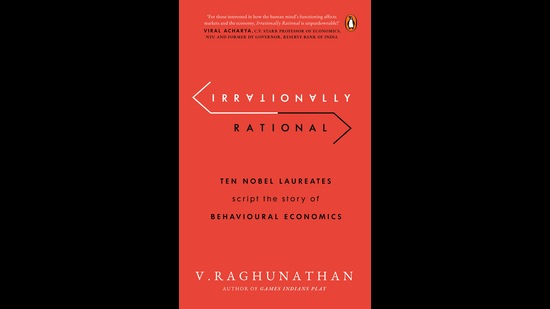
Humans beings aren’t utterly rational when making buying decisions. There are biases, preferences and other psychological factors at play. In this excerpt from Irrationally Rational: Ten Nobel Laureates Script the Story of Behavioural Economics, by V Raghunathan, an experiment explores, as a starting point, just how rational mice are when they’re the ones making decisions.


Leave alone men, even mice are known to be utility maximizers. John Kogel and his collaborators showed in laboratory experiments that rats are rational in the same sense as the economists assume humans to be!
In their experiment, a rat was confined for days in a cage. The cage had two levers; if the rat pressed one of them, each time a fixed amount of food was dispensed, and if it pressed the other, each time a fixed amount of water was supplied. This was the only way the rat could have food and water. The experiments put a ceiling on the total quantum of food and water by restricting the total number of lever-presses, so that after say a maximum of 10 presses, no more food or water would be available for the rest of the day. Thus, the total number of food and water releases comprised the rat’s daily ‘income’.
The experimenters also varied the number of lever-presses it would take to release water or food. For example, on some days the rat would have to press the food-lever twice or thrice to get some food, whereas a single press of the other lever would do for water. The total number of presses for food or water were equivalent to the ‘price’ of food and water, respectively, that the rat had to pay; so, if the rat is like people, it would like to minimize the total price of food and water, or the total number of presses, for maximum satisfaction or utility.
Within a few days of the experiment, the rat worked out his most preferred mix of food and water, given his ‘total income’ and the ‘relative prices’. And when the experimenters altered his ‘income’ and ‘relative prices’ of food and water, they found that the rat quickly learnt to maximize its utility. For example, when they changed the relative prices of food and water, the rat altered its consumption of food and water by consuming more of whichever was now ‘cheaper’. In other words, Kogel & Co showed that rats are utility maximizers or rational in the same sense as people are postulated to be, by monetary economists.
This fact may be used by the neoclassical economists and their critiques equally. A neoclassical economist will probably contend, ‘If even the measly mice are rational, humans—the higher animal—must certainly be rational.’ Their critique, on the other hand, may say, ‘Well, a simplistic mouse may be rational. But the complex higher order animal that humans are, they are anything but.’
(Excerpted with permission from Irrationally Rational: Ten Nobel Laureates Script the Story of Behavioural Economics, by V Raghunathan; published by Penguin Random House India, 2022)


