
 E-Paper



Post-Independence, three people’s movements that changed the game
In a complex nation, in a changing world, there is always work to be done. Take a look at three key movements that have driven India towards greater justice and equity for all citizens.


At the heart of the Indian Constitution, drafted under the chairmanship of Bhim Rao Ambedkar, was an unwavering belief in the equality of all citizens irrespective of caste, creed, class or gender.
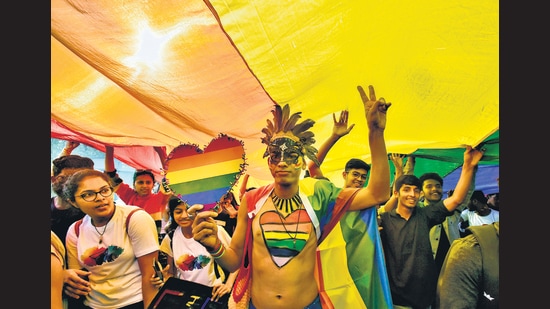
Yet there were freedoms still to be sought, including, for adivasi communities, rights over the natural resources of their land; for same-sex couples, the right to live free of persecution; for transgender persons, access to opportunity; for women, the rights to inheritance, representation in government, and a workplace free of harassment.
The freedom struggle was the start. It mobilised a nation, imbued it with a new identity and a zeal for self-determination. As the country enters its 75th year of Independence, a look at three people’s movements of the several that have driven change and betterment in these decades.
CASTE ASIDE
Like many young men, Sanjay Jatav wanted his wedding to make a splash. In July 2018, he threw a lavish dinner, invited friends to dance alongside him as he rode a horse to his bride’s home. In the caste-stratified society of central Uttar Pradesh, no Dalit man had done such a thing. Jatav knew this. Dalit wedding processions had been met with violence and even murder numerous times in the state. But the then-27-year-old worker with the Bahujan Samaj Party, buoyed by political and media support, was determined to use this seemingly ordinary act to rebel.
The police first told him a Dalit couldn’t lead a wedding procession across upper-caste parts. They cited potential law-and-order issues. When he refused to back down, his dreamed-of march came to pass. It made national news. That same year, Dalits were attacked for sitting cross-legged, growing moustaches, sitting on chairs, wearing shirts, swimming in a well, asking for a raise.

From BR Ambedkar, a Dalit icon himself, to Sanjay Jatav, who ended his march in raptures, saying he felt like a cabinet minister, the fight for social equality continues. “Our forefathers suffered discrimination, domination and suppression of their personhood; but we are today united, and despite all hurdles, trying to fulfil the dream of Dr Ambedkar of a just society,” says Manjula Pradeep, director of the Dalit Human Rights Defenders Network.
People’s movements have driven this fight across India, from Bengal, where reformers Harichand Thakur and Guruchand Thakur forged a new sect, to Tamil Nadu, where reformer Iyothee Thass empowered the Parayars in the 19th century.
Victories have been hard-earned. Legal statutes have been undercut by bureaucratic and political reticence. “Among our most important moments is getting the law against atrocities against scheduled castes and tribes, and banning manual scavenging,” says Pradeep. But violence, killings and massacres continue, and often no convictions follow.
“We, especially the women, are becoming aware and strong. But our people are being attacked and killed because the oppressors want to retain power. This is our biggest challenge; how do we change the mindset of a community that is so casteist?” Pradeep says.
It was a question that worried Ambedkar. In his last speech to the Constituent Assembly, he said, “On the 26th of January 1950, we are going to enter into a life of contradictions. In politics we will have equality and in social and economic life we will have inequality. In politics we will be recognising the principle of one man one vote and one vote one value. In our social and economic life, we shall, by reason of our social and economic structure, continue to deny the principle of one man one value. How long shall we continue to live this life of contradictions?”
75 years on, India is yet to resolve this conundrum.
SHE / HER
The women’s movement in India has not been linear or possessed of a singular focus. It has emerged from different compulsions, often expressed within larger political movements. In Maharashtra’s Shahada area, for instance, what began as protests by landless workers against exploitative landlords in the early 1970s became also a movement against domestic violence and an anti-alcohol agitation.
Legal wins, as with most civil rights movements, are important but are only a first step.
The anti-rape and anti-dowry agitations of the ’80s, for instance, led to the introduction of the crucial Section 498-A in the Indian Penal Code, which recognised mental and physical cruelty against women. But marital rape is yet to be outlawed.
Meanwhile, the Sexual Harassment of Women at Workplace (Prevention, Prohibition, and Redressal) Act of 2013 came about after a woman from an underprivileged caste, Bhanwari Devi (below), was gangraped in the early ’90s in a Rajasthan village, for trying to stop an infant from being married.
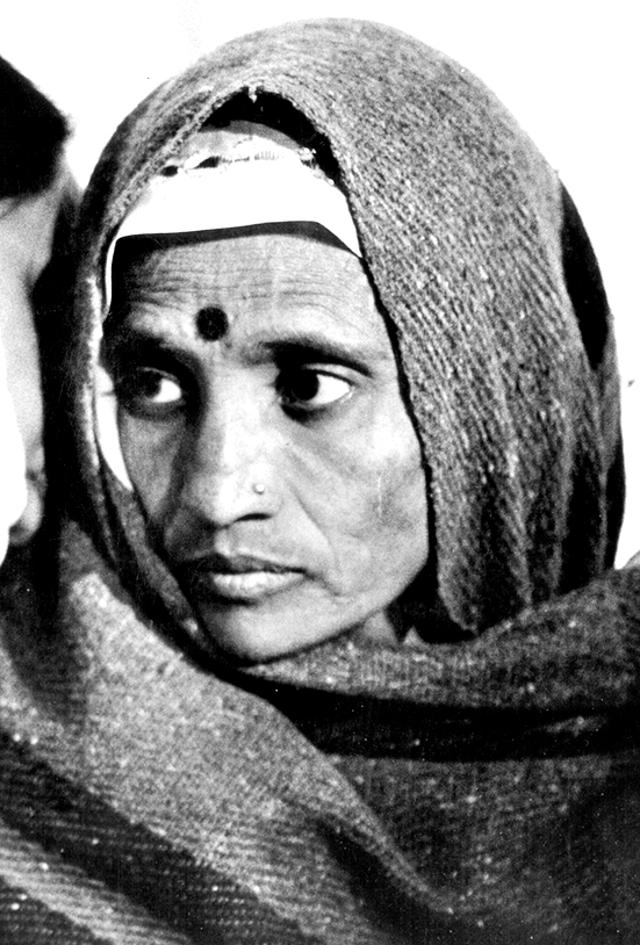
Devi was a volunteer in a state government campaign against child marriage. Large scale protests erupted after a sessions court held that she “could not have been raped” as her assailants were men from upper castes. A Supreme Court petition was filed by women’s groups, which resulted in the 1997 Vishaka guidelines to address the harassment faced by women in the workplace. Implementation remains inconsistent at best.
RAINBOW COALITION
The queer rights struggle coalesced primarily around a law. Section 377 of the Indian Penal Code, introduced by the British in 1861, treated same-sex desire as unnatural. It forced many members of the Lesbian, Gay, Bisexual, Transgender and Queer (LGBTQ) community to live large parts of their lives in secret, it encouraged social stigma, and exposed the community to police harassment and brutality.
While in the cities there was largely a don’t-ask-don’t-tell policy, particularly among the upper classes, the public expression of gender and sexuality came into its own in the 1990s. In 1990, Ashok Row Kavi founded Bombay Dost, and later co-founded Humsafar Trust. He was one of India’s first out gay men and was working to spread awareness about HIV/AIDS. Around the same time, Delhi-based activist Giti Thadani started a network called Sakhi, where lesbian women could communicate via letters. In Kolkata, Pawan Dhall formed Counsel Club in 1993.
In the early ’90s, the Centre recognised the need for a National AIDS Control Programme (NACO), which would work with grassroots NGOs focused on the LGBTQ community, as well as other vulnerable groups. Many of these grassroots outfits acted as building blocks of the later equal rights movements.
It was the AIDS Bhedbhav Virodhi Andolan (ABVA) that filed the petition in the Delhi high court challenging Section 377, but it was only in 2001 — after four men associated with a NACO programme were arrested under Section 377 in Lucknow, beaten and jailed — that a petition filed by Naz Foundation became a rallying point.
Eventually, Arif Jafar, was one of those arrested, was one of 34 people whose petitions in the Supreme Court led to the reading down of Section 377, in September 2018. Today, the movement is fighting on new fronts that include transgender rights and legalisation of same-sex marriage.
Jafar cautions that the fight for these rights will be harder still. “We fought bravely for our rights. We will need to fight even harder now,” he says.
(With inputs from Utkarsh Anand)


