
 E-Paper



Read an excerpt from Devashish Makhija’s book, Oonga

 Prefer HTon Google


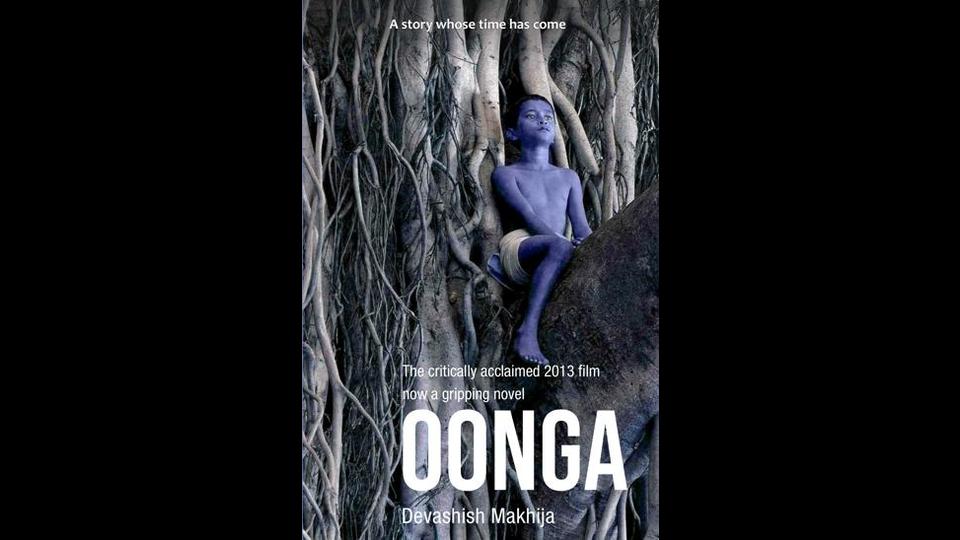
The story, based on the 2013 film of the same name, follows a young Adivasi boy who becomes obsessed with local stagings of the Ramayana. If good is destined to win against evil, he reasons, couldn’t he harness it and save his Odisha village from losing land to industrialisation and lives to the conflict between Naxals and government forces?
Oonga scurries to the peepal tree and scampers up its side like a squirrel. He stops at a low branch, wonders if he should settle down here. But then he changes his mind and climbs higher, to the highest branch that will bear his weight. From here he has a clear, uninterrupted view of the horizon. He’ll be the first to spot Hemla didi and her cycle. The only creature that might spot her before him will be the eagle. So he looks up into the sky above the treetop and tells the eagle to let him know if she spots Hemla didi. The only eagle circling the treetop must have heard little Oonga’s plea, because she breaks her circling and soars higher and higher till she dissolves into the midday sun.
*
The hot black road glistens in the blinding white sun, its tar melting in some places. Hemla cycles carefully, watching out for the sticky spots. If her cycle tyre hits a single one of them she’ll have to walk back to Oonga. By the time she reached him on foot the sun would have set. And she can’t afford to break her favourite little man’s heart all over again. One part of her is angry. At the contractor who was given charge of making this stretch of road. She knows him to be a corrupt man. Like most of his kind. If the tar had been of good quality this road wouldn’t be in this state. In fact when this road was kuchcha it was a lot sturdier. The locals know how to make pathways that last them years. But these contractors, they get sent in by those money-guzzlers, and decide that anything kuchcha needs to be made pukka, no matter how useful or not it may turn out to be. How can I ever convince the adivasis that they must be open to the idea of development, if this is what they get in the name of it? thinks Hemla, a cloud of worry starting to descend upon her all over again.
So lost in her own worrisome thoughts is she that Hemla does not notice a dusty jeep lying in wait off the side of the road. It sits there – a hunting beast made of cold metal – as still as the hot thick air in these parts, as if waiting for its prey to amble by unsuspectingly.
This is the last stretch of pukka road before Hemla needs to turn off into the jungle pathway. She can see the jungle trees up ahead. The shade they promise is inviting. The kuchcha pathways of the forest may be bumpy but the softness of the dirt and the cool of the shade and the absence of noise more than make up for the bumpy ride.
In her eagerness to dive into the forest once again, Hemla starts to pedal faster. She doesn’t notice the high-pitched rumble of the jeep as it drives past her and slows down. And just as she’s about to pass it again, it swerves sharply into her path. Hemla screeches to a halt, hops off her seat. She’s not sure why but she’s unwilling to engage with whoever might emerge from that jeep. Today she must get to Oonga at any cost. She holds her handlebar and walks briskly with her cycle, hurrying towards the trees. As the jeep shudders and dies, it coughs out two men. Their uniforms have the same camouflage print as the CRPF soldier Hemla saw just a little while ago. She tries her best to walk past their enquiring gaze, but the older of the two strides up behind her, grabs her cycle carrier, and she’s forced to stop. The younger one hurries over to block her path.
Pradip pulls the carrier clamp open and slides out a package. Covered in postage stamps, this parcel has clearly travelled a long way to reach Hemla. Pradip reads her name on it, “Hemla Mandingi.” Hemla is quiet, her face shuttered. “That’s you, right?” Pradip asks, in Hindi.
“Yes, why?” asks Hemla, starting to get very uncomfortable. “Take that radio off you and get in the jeep,” Pradip says, and reaches to grab Hemla’s elbow.
Hemla shrugs his hand off, demands to know, “Why? What have I done?”
Pradip is in no mood to chat. “Ask the sahib when you meet him,” he snarls, and tries to pull her transistor radio off her shoulder.
Hemla jerks her arm away, almost stumbling. “Show me a warrant first,” she shouts defiantly.
Pradip looks at her, incredulous, scoffs, grabs her elbow hard, rips the radio off its strap, tosses it to the ground, and tugs her towards the jeep.
Sushil has been holding onto the cycle by the handlebar all this while. He looks a little perturbed by all of this. He watches Pradip jostle with Hemla and shove her into the back of the jeep. Sushil quickly wheels the cycle off the road and allows it to clatter into a ditch by the side. He clambers into the back of the jeep as Pradip starts the engine in the front.
*
As he drives, Pradip adjusts the rear-view mirror to catch Hemla’s reflection in it. He tilts it away from her face to her chest. Hemla notices this. She’s been in similar situations before. In areas plagued with conflict it’s the women that have the toughest time. She adjusts her saree to cover her sides, and throws Pradip her most furious glare. She knows her glare will make no difference to a man of his sort, but she glares him down anyway, to let him know that she is not just a regular adivasi, she knows her rights, and she knows where to go to get them. The real battle, Hemla believes, is between minds, not between hands or feet or guns or arrows. And if the mind can be trained to be strong, the mind can prevail. At times like these she prays she can help deliver to all those little adivasi children a world free of glares such as the one she’s being forced to give Pradip right now.
Sushil has been struggling to point his rifle at Hemla. The jeep is cramped for space, and the rifle is long. Unsure of how exactly he should negotiate with this situation, he asks his senior, “Sir, is it necessary to point this gun at her?”
Pradip scowls, “It’s not necessary…”
Relieved, Sushil starts to bring the rifle down, when Pradip barks, “But it is an ORDER!” Startled, Sushil snaps the rifle back up again! So sharply that it knocks Hemla on the chin.


