E-Paper



Ride tracker: How animals, wheels, trade steered the history of the road

 Prefer HTon Google


Roads kept empires stable, connected communities. They still save lives. But they are also still the first sign that humans are coming.
The earliest roads were made of timber and were brief paths, meant to ease the movement of wheels (and feet) over troublesome areas such as bogs.
Then came flagstones (as stone-cutting tools improved), cobblestones (uncomfortable for humans but good to keep horses’ hooves from slipping) and tar (traces of which have been found in 8th century CE Baghdad roads).
Roads kept empires stable. They became the mark of great civilisations, in Harappa, Persia, the great Roman empire. Coupled with the wheel, they helped humans shrink the distance between their homes and the nearest sources of water, food, employment, entertainment and defence.
Our words for “vehicle” come from our ancient words for path or way.
The Sanskrit root term “vaha” (to bear) birthed the Latin “veho” or “vehere” (to carry). By the 1100s, this had yielded the Old English “weg” (or path) and the Old High German “wegan” (to move). From here, of course, came “vahan” (Hindi for vehicle), the English “wagon”, and “vehicle” itself.
Path (used both in English and Hindi), incidentally, is from the Old Iranian term for “earth beaten by foot”.
Animals too have beaten earth underfoot to build paths. There is a theory that the first paths were animal-made, as large animals like elephants, bison and buffalo migrated in search of water and food. Humans may have followed in their wake, at first.
But animals didn’t maintain their paths. Humans made paths consistent. It is unclear when the first footpaths were maintained, since early human habitation left no permanent traces. But as settled living caught on, 12,000 to 10,000 years ago, humans likely built and maintained deliberate pathways between settlements and nearby sources of water. Later, the paths would have linked settlements and fertile plots where seeds were sown for agriculture.
Trade was the first big catalyst for road-building. Early tribes likely used well-maintained pathways to facilitate the trade of flint, dyes, narcotics and special plants. The Australian Aboriginal peoples still used such pathways for this purpose when the first European explorers arrived on that continent in the 17th century.
The wheel, of course, would have been the next turning point.
The earliest known wheels have been dated to 4500 BCE Mesopotamia and were used for pottery and then for two-wheel carts. By about 4200 BCE, the first animal-drawn vehicles were likely in use, led by horses, donkeys or cattle.
As the wheel boosted transport, the loads became heavier and the journeys longer. And roads began to matter.
The oldest known paved roads — made using bricks, stones and timber — have been found in ancient urban centres such as Ur in Mesopotamia and Glastonbury in England, and have been dated to 4000 BCE and 3300 BCE respectively.
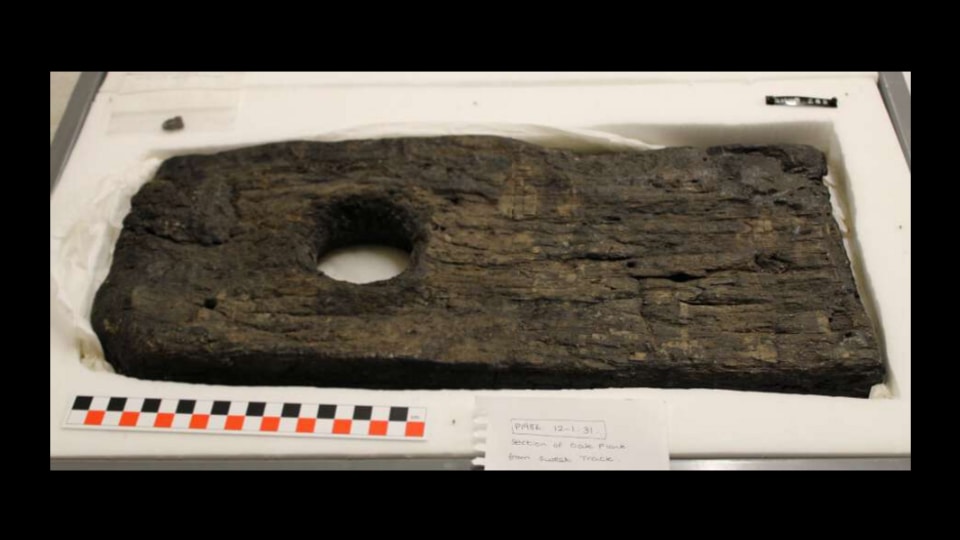
The earliest traces of a built path go back a bit further. In Glastonbury, walkways made of oak planks dating to 3800 BCE have been found. These were small stretches built to make it easier to push a cart over boggy peatlands.
By 2200 BCE, an early highway was being built in Egypt. Incredibly, traces of the sandstone, limestone and wooden logs still survive. This eight-mile (12.8-km) road facilitated the movement of large sleds filled with basalt from a region full of quarries to a patch of desert where temples and pyramids were being built.
By 1100 BCE, the Assyrian kings had the world’s first road engineers on record, and roads were being laid across the Assyrian kingdom (whose capital was Assur, in present-day Iraq).
By the 5th century BCE, the Persian king Darius 1 had built the Royal Road, a dramatic 2,400-km highway that linked Sardis in the west of the empire to Susa, the capital. He had snatched the throne, assassinated other claimants, been able to establish no real claim himself (other than brute force and military might, that is) — and revolt was brewing. The road was built to help protect his place on the throne. It was dotted with 111 post houses that messengers could use to relay messages to the palace.
It’s a model Alexander the Great would later use, in the 4th century BCE.
In India, it is worth noting, some of our national highways have been laid atop what were major trade routes in ancient times too. Dating to the 4th century BCE, the Uttarapatha or the Northern Great Route stretched from Taxila in modern-day Pakistan, through Punjab, to the western coast of the Yamuna (now the border between Uttar Pradesh and Haryana). This became the Grand Trunk Road. The Dakshinapath or Southern Great Route stretched from Magadha (now Bihar) in the east to Pratisthana (present-day Paithan in Maharashtra) in the west.
By 300 BCE, caravans were using a combination of existing roadways and trails of their own to take large consignments of luxury goods from China, India and the Middle-East to Europe by land. This set of trails would come to be known as the Silk Road.
The route was extended to connect to the Middle Eastern network of routes in 200 BC, and by 100 BC, it was an integral trade trail between China and the Mediterranean.
Cuisines and cultures would merge and new ideas would find wings, along this route.
As the science of metallurgy developed, better stone-cutting tools were forged and flagstones began to be laid on dusty, irregular roads, to make movement still easier, particularly for armies.
The Romans took to using a mix of stones, gravel and densely packed layers for roads that were smoother and lasted longer. The first of their great roads, the Via Appia, was built in 312 BCE and stretched more than 540 km to southern Italy. Parts of it have been preserved on the outskirts of Rome.
By the 19th century, the industrial revolution had made road-building materials easier to standardise. Colonialism saw roads flung across continents, as imperial governments sought to regulate and control unfamiliar territories and unfriendly populations. Roads, like railways, also facilitated trade. And so, they became a metric of progress.
Roads remain the difference between life and death. The golden hour in medicine isn’t a golden hour without a good road. They continue to boost trade, connect communities and keep nations and neighbourhoods safe.
But they are also still the first sign that humans are coming. And something — fire, war, chainsaws, traffic, concrete — always follows.