
Setting up a home office? Top 5 tips to ensure your workspace boosts productivity
Create a productive home office with the right location, furniture, lighting, storage, and personal touches that signal focus and efficiency every day.
As someone who has been working remotely for over a decade, I’ve realised that creating a proper sanctuary for work at home makes all the difference. And no, it doesn’t mean setting up on the dining table or propping a laptop on the bed. True productivity comes when you carve out a space that signals to your brain it’s time to focus. For me, the right spot, the right desk, and a zone dedicated purely to work have been the quiet secret behind my efficiency.
Neha Khandelwal
Content Lead, HT Travel | Travel & Lifestyle Journalist
With over 10 years of content writing experience, Neha Khandelwal is a lifestyle journalist and the Content Lead at HT Travel. She specialises in destinations, hotels, aviation, luggage, travel gear, and practical guides that help readers plan smarter and travel better. Her work combines first-hand experience, expert insights, and extensive research to create stories that are informative, useful, and easy to follow.
Career Journey & Experience
Neha began her writing career as a freelance journalist in 2010 before entering mainstream media with The Times of India in 2022. She later joined Hindustan Times, where she has written extensively across travel, lifestyle, home, and consumer trends. Her professional background extends beyond journalism. Before moving into digital media full-time, she spent nearly a decade in interior design, managing residential projects from concept to execution. She also trained in visual merchandising with Shoppers Stop and Pantaloons and worked with women-led startups across design and operations. These experiences continue to shape her storytelling, especially in how she evaluates hotels, design-led stays, hospitality spaces, and travel experiences.
A naturally curious learner, Neha has completed beginner certifications in pottery, scuba diving, baking, creative writing, and other creative pursuits. She has read more than 2,000 books, trained in Bharatanatyam for 8 years, and ghostwritten a book on Ladakh tourism.
Subject Expertise
Travel is at the heart of Neha's work. She covers destinations, hotels, airlines, luggage, packing strategies, travel accessories, and emerging travel trends through a mix of reporting, product testing, and conversations with industry experts. A frequent traveller herself, she approaches every trip with a journalist's curiosity and a planner's mindset, focusing on experiences that readers can realistically recreate. From choosing the right cabin bag to decoding hotel openings and destination trends, her writing prioritises practical advice over promotional claims.
Her background in interior design also gives her a distinct perspective on architecture, hospitality design, boutique hotels, luxury stays, and thoughtfully designed spaces.
Education & Professional Background
Neha holds a Master's degree in Interior Design. Her early experience in interior design, visual merchandising, and design operations gives her a unique understanding of aesthetics, functionality, and user experience, adding depth to her coverage of hotels, resorts, and travel spaces.
Editorial Philosophy
"As an avid, research-driven traveller, my goal is simple. To answer the questions you actually have before booking a trip. I cut through the promotional noise with honest reporting and expert insights. Making travel planning seamless, smart, and reliable so you always know where to go next."
Read moreRead less
Content Lead, HT Travel | Travel & Lifestyle Journalist
With over 10 years of content writing experience, Neha Khandelwal is a lifestyle journalist and the Content Lead at HT Travel. She specialises in destinations, hotels, aviation, luggage, travel gear, and practical guides that help readers plan smarter and travel better. Her work combines first-hand experience, expert insights, and extensive research to create stories that are informative, useful, and easy to follow.
Career Journey & Experience
Neha began her writing career as a freelance journalist in 2010 before entering mainstream media with The Times of India in 2022. She later joined Hindustan Times, where she has written extensively across travel, lifestyle, home, and consumer trends. Her professional background extends beyond journalism. Before moving into digital media full-time, she spent nearly a decade in interior design, managing residential projects from concept to execution. She also trained in visual merchandising with Shoppers Stop and Pantaloons and worked with women-led startups across design and operations. These experiences continue to shape her storytelling, especially in how she evaluates hotels, design-led stays, hospitality spaces, and travel experiences.
A naturally curious learner, Neha has completed beginner certifications in pottery, scuba diving, baking, creative writing, and other creative pursuits. She has read more than 2,000 books, trained in Bharatanatyam for 8 years, and ghostwritten a book on Ladakh tourism.
Subject Expertise
Travel is at the heart of Neha's work. She covers destinations, hotels, airlines, luggage, packing strategies, travel accessories, and emerging travel trends through a mix of reporting, product testing, and conversations with industry experts. A frequent traveller herself, she approaches every trip with a journalist's curiosity and a planner's mindset, focusing on experiences that readers can realistically recreate. From choosing the right cabin bag to decoding hotel openings and destination trends, her writing prioritises practical advice over promotional claims. Her background in interior design also gives her a distinct perspective on architecture, hospitality design, boutique hotels, luxury stays, and thoughtfully designed spaces.
Education & Professional Background
Neha holds a Master's degree in Interior Design. Her early experience in interior design, visual merchandising, and design operations gives her a unique understanding of aesthetics, functionality, and user experience, adding depth to her coverage of hotels, resorts, and travel spaces.
Editorial Philosophy
"As an avid, research-driven traveller, my goal is simple. To answer the questions you actually have before booking a trip. I cut through the promotional noise with honest reporting and expert insights. Making travel planning seamless, smart, and reliable so you always know where to go next."
1. Location matters
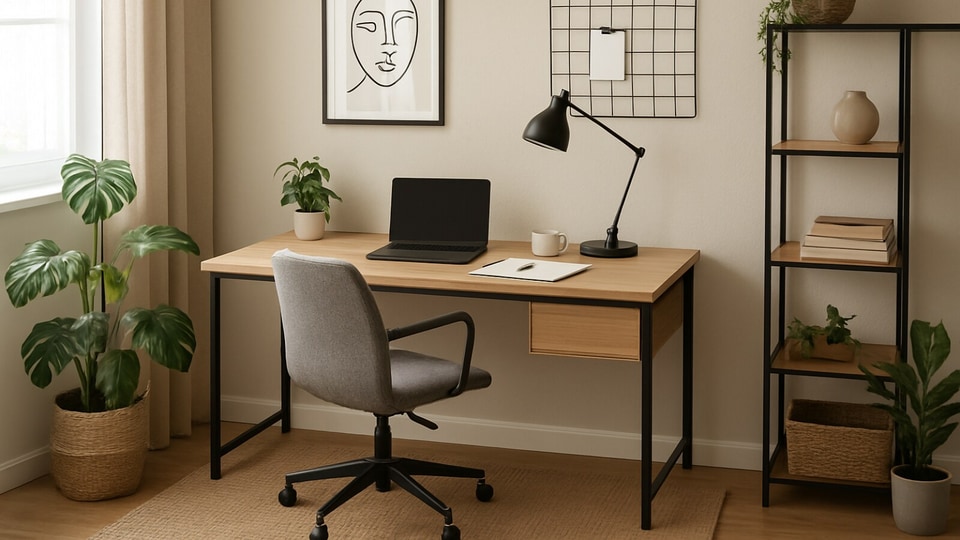
Setting up an effective home office always begins with picking the right corner, one that supports focus and keeps distractions away. A quiet corner that keeps household noise at bay is ideal, but I’ve also found that natural light can transform focus levels during the day. It doesn’t have to be a big space, just a consistent one. When your desk stays in the same place, your brain starts associating that zone with work, which helps cut distractions and get into the flow faster.
2. Invest in the right furniture
A desk and office chair aren’t just functional; they shape how long you can actually work without fatigue. I’ve seen people compromise with dining chairs or sofas, but their posture suffers quickly. An office chair with proper back support, paired with a desk at the right height, changes the way you work. Even in smaller homes, a compact desk is better than balancing everything on the wrong surface. Comfort and proportion matter more than size.
3. Lighting and ambience
While natural light is great, it isn’t always available or enough, especially once the sun sets. That’s where good artificial lighting makes a difference. A desk lamp that casts focused light, paired with softer ambient lighting, keeps the space bright without straining your eyes. Pro tip: always position the light source above or beside your desk, never behind you, as it creates screen glare and makes working uncomfortable. The idea is to avoid harsh glare and create an atmosphere that feels comfortable yet helps you stay alert.
4. Smart storage solutions
A cluttered desk can be one of the biggest drains on focus. I’ve noticed that when everything has a place, working feels smoother and faster. Simple solutions like floating shelves, slim cabinets, or even wall-mounted organisers can keep essentials close without eating up floor space. In smaller homes, I often suggest storage that doubles as decor, like woven baskets or compact bookcases, so the office corner feels tidy yet inviting.
5. Personal touch and zoning
A home office shouldn’t feel sterile. Adding small details like plants, artwork, or a colour scheme that inspires you can make the space feel more inviting. I’ve also found that creating a clear boundary between work and relaxation is key. Even in a compact room, a rug under the desk or a divider can signal to your mind that this corner is for focus and nothing else. Another thing that works for me is pinning a letter on my board, reminding me why I love working from home and how it supports my growth. It’s a simple cue that gives me an instant boost every morning before I start work.
Working from home can be a real boost to productivity, but only if the space is designed with intent. From picking the right spot and furniture to managing lighting, storage, and adding personal touches, each choice shapes how effectively you work. For me, it’s never been about a fancy setup, but about creating a space that trains the mind to focus and makes work feel effortless.
Similar articles for you
Why vintage decor is making a comeback: Textile museum designer Ravisha Merchant weighs in
8 easy ways to use mirrors to make a small space look bigger
Colour theory for your home: How to set the mood with the right palette
The author of this article holds a Master's Degree in Interior Design and has spent over a decade in research, teaching, and designing homes from scratch.
Disclaimer: At Hindustan Times, we help you stay up-to-date with the latest trends and products. Hindustan Times has an affiliate partnership, so we may get a part of the revenue when you make a purchase. We shall not be liable for any claim under applicable laws, including but not limited to the Consumer Protection Act, 2019, concerning the products. The products listed in this article are in no particular order of priority.

E-Paper

