
 E-Paper



Simple songs of freedom: A look at the tales national anthems tell

 Prefer HTon Google


Some countries have as many as four anthems, to represent different languages or tribes. Others have dark histories buried in the music and lyrics.
Some are lyrical, others defiant; still others are persistent earworms of the level of Baby Shark. (Have you tried getting Star-Spangled Banner out of your head during Olympic season?)
The national anthem is one of the most recognisable marks of any country. And it’s interesting the tales they tell.
Most anthems are composed in the style of either a march or a hymn. O Canada of course is the latter. Great Britain’s God Save the King is a rallying cry that falls somewhere in-between.
By and large, the idea is the same across the board: swords drawn, brave patriots stand ready to defend; a rich and glorious past inspires loyalty and devotion.
The oldest national anthem still in use today is the Wilhelmus of the Netherlands, composed between 1568 and 1572. Very much in the manner of a hymn, with a church organ even playing in the background, it was created amid a struggle for freedom from Spanish rule.
Given that it was born of such resistance, it is rather ironic that Wilhelmus was at one point translated from the Dutch into Malay, so that it could be sung in Indonesia, when that country was a Dutch colony. (This occupation lasted 350 years, ending in 1945.)
States with multiple national languages, or complex histories, do this at home too.
South Africa’s national anthem weaves together five of the country’s 11 official languages, with each awarded a stanza.
Switzerland has national anthems in all four of its official languages: French, German, Italian and Romansh (an ancient tongue now spoken by about 60,000, concentrated in one region of this country).
One of New Zealand’s two national anthems is commonly sung with the first verse in Māori and the second in English. While the sentiments remain the same, in a bit of tokenism within this bit of tokenism, the Maori version replaces the term New Zealand with the country’s pre-colonial name of Aotearoa.
Troubles can reflect dramatically even in the titles of anthems, the meaning sometimes forgotten over time, but the evocative history pinned in place.
The Czech Republic’s anthem is titled Kde Domov Můj or Where is My Home?, reflecting the centuries of shifting borders and invasions. Kurdistan’s Ey Reqib can mean Hey Enemy or Hey Guard, a reference to the country’s troubled history with the subjugation of Kurds and of dissent.
National mottoes can be incredibly evocative as well. Not all countries have one. Those that do often pack in so much symbolism, it’s a lesson in succinct writing.
Satyameva Jayate or Truth Alone Triumphs is a tip of the hat to India’s unique freedom struggle and the satyagraha (generally understood as passive resistance but literally, “holding firmly to truth”) that drove it.
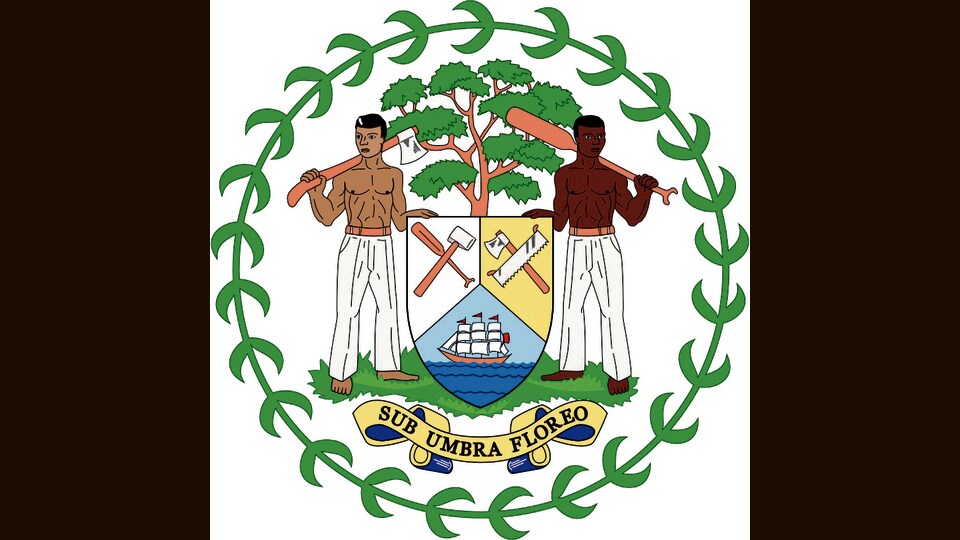
In Belize, the motto is Sub Umbra Floreo, Latin for Under the Shade I Flourish, a reference to the coastal country’s jungles, which underpin livelihoods and ways of life here (and still shelter the ancient Mayan ruins that embody their rich past).
Luxembourg, a tiny landlocked country surrounded by Belgium, Germany and France, has the defiant We Want to Stay What we Are.
And Greece has Eleftheria i Thanatos meaning Liberty or Death, a motto that dates, incidentally, to an 1820s battle for freedom from the Ottoman Empire.
(Adam Jacot de Boinod is the author of The Meaning of Tingo)


