
 E-Paper



Swords drawn: K Narayanan on 2025 and the world of videogames

 Prefer HTon Google



Small studios won big; AAA companies are hiring again. Tech giants are pulling in designers, for simulations that have nothing to do with gaming.
The best that can be said of gaming in 2025 is that things weren’t as bad as in 2024.
The year saw some dark patterns continue. Layoffs, estimated at about 5,300 as of November 30, were lower than in 2024 (14,600) and 2023 (10,500). In January, however, something shifted. For the first time in years, industry tracker Amir Satvat noted that hiring in gaming wasn’t just holding steady, it was actually keeping pace with layoffs, and in some cases even exceeding them.
After the bloodshed of the past few years, even such news feels welcome.
Studios building the next wave of big titles (CD Projekt Red has The Witcher 4 and Cyberpunk 2; Sony Santa Monica has a new God of War) began recruiting globally again, hiring in places where a year earlier entire teams had been shed.
Beyond traditional studio, a quieter trend was unfolding too: tech companies outside the gaming world were pulling in designers, systems thinkers and interactive-media specialists for roles that don’t involve game development but things that look a lot like it.
Car manufacturers, for instance, use gaming engines to build virtual replicas of vehicles for everything from crash testing to simulations of aerodynamics. Skills-training platforms such as Osso VR hire designers to ensure that simulations have realistic physics and “game feel”, to improve learning retention. Apps such as Robinhood and Revolut use game mechanics (streaks, badges, progress bars) to trigger dopamine loops that make mundane tasks such as budgeting feel rewarding.
Meanwhile, AI’s footprint in gaming widened dramatically this year. In 2024, most studios were still experimenting with artificial intelligence in isolated pockets. Now, according to a Google Cloud report, nearly 87% of game developers use AI agents in day-to-day production, thus automating everything from code stubs to asset clean-up.
The number of games on Steam declaring generative-AI usage jumped from about 1,000 in 2024 to 7,818 in 2025, accounting for almost one in five releases.
With the surge came structure. Studios that once treated AI as an optional hack now put formal policies in place to govern its use, a sign that the tool has become part of the production pipeline rather than a curiosity.
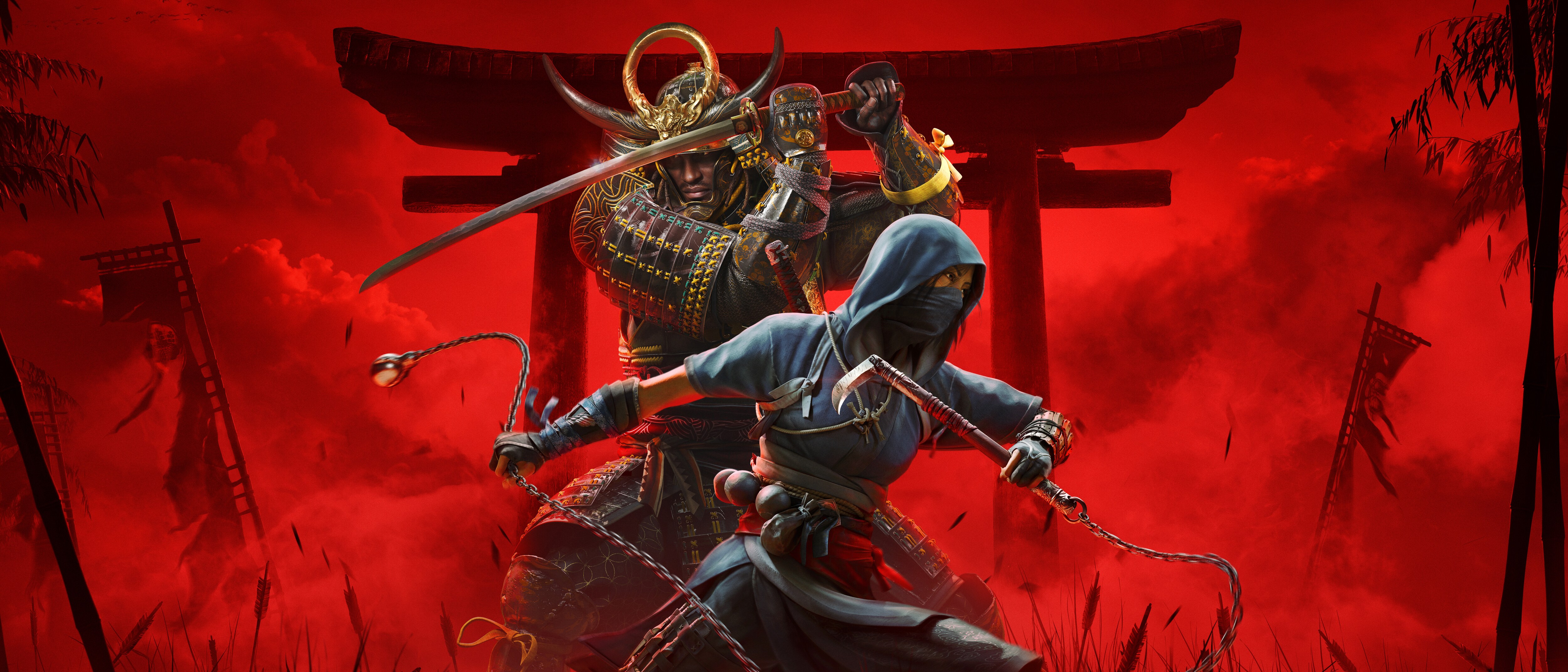
Meanwhile, 2025’s list of hits was short but well-defined.
Hades II arrived in Early Access and crossed a million units within weeks, outpacing the original’s slow-burn trajectory by an order of magnitude. Hollow Knight: Silksong, arriving after half a decade of expectation, had more than 500,000 concurrent users on Steam at launch.
Among the big-budget AAA releases, Assassin’s Creed Shadows posted stronger week-one sales than 2020’s Assassin’s Creed Valhalla, and Ghost of Yotei (positioned unavoidably against 2020’s Ghost of Tsushima) recorded a longer and more stable post-launch player tail than its predecessor.
A year crowded with releases still produced a handful of clear winners, and in a landscape where players were openly admitting they already had too many old games to play, these numbers mattered because they broke through the noise.
Place the “prestige indies” (Silksong, Hades II) against the AAAs (Shadows, Yotei) and the deeper pattern becomes clear. Smaller studios are converting anticipation into engagement with almost no marketing outlay. Years of devlogs, community testing, mod culture and Early Access momentum do the work that multimillion-dollar promotional campaigns once did.
The gains were outsized: higher concurrents, faster sales curves, stronger word-of-mouth. The AAAs, in contrast, had to spend heavily just to hold attention; hundreds of millions in production and marketing chasing an audience sceptical of pre-orders and fatigued by annualised formulas. Shadows and Yotei sold well, but against the rising costs, their victories looked narrower.
Interestingly, one of the most successful games of 2025 was not part of a franchise, nor did it benefit from the community that grows around beloved studios, indie or otherwise.

Clair Obscur: Expedition 33 didn’t ride the usual hype cycle; it built its own. Developed at Sandfall, by a small team made up of migrants from Ubisoft, they had something better than scale: striking art direction that looked unmistakable in a timeline full of sameness.
The first trailer spread fast, hitting an algorithmic sweet spot with its Dark Souls-Belle Epoque aesthetic. Every preview emphasised polish, coherence and ambition well beyond the studio’s size. Critics quickly began calling it the first new RPG of the year “that doesn’t look like the last ten”. With no Early Access to dilute the impact, launch day arrived with the curiosity intact, and word-of-mouth did the rest. In a year defined by fatigue and an aversion to hype, Clair Obscur offered surprise, and players rewarded it accordingly.
Meanwhile, consolidation reshaped the business landscape beneath all this. The year’s gravitational event was the $55 billion buyout of Electronic Arts by a consortium led by Saudi Arabia’s Public Investment Fund, indicating that predictable live-service revenue is now strategic infrastructure for big capital.
Across the industry, mid-sized studios and senior teams displaced by cancelled projects have quickly been absorbed into new ventures. This marks a split field: on one side, financial giants consolidate proven franchises; on the other, nimble studios take shape from the fallout of layoffs and project closures.
In the geopolitics of gaming, China remains the heavyweight single market, with major players such as Tencent reporting double-digit growth in revenue and a stable base of top titles such as Honor of Kings and Peacekeeper Elite. India is emerging as one of the fastest-growing ecosystems, projected to surpass 500 million gamers in 2025 and become a billion-dollar market, driven by inexpensive connectivity, smartphone ubiquity and a young user base. Together these trends show Asia not just as a huge consumer base but as an increasingly influential engine shaping global gaming growth.
Growth is shifting, then, southward, eastward and towards younger, mobile-first markets less fatigued than those in the US and Europe. The centre of gravity is tilting, quietly but decisively, and the industry’s old assumptions about where innovation and revenue will come from no longer seem secure.
Maybe 2025 will turn out to be one of those inflection points we only recognise in hindsight, or maybe it’s just the industry adjusting to a new normal.
(K Narayanan writes on films, videogames, books and, occasionally, technology. The views expressed are personal)


