
 E-Paper



Top of the crops: Take a trip around India in 10 GI foods


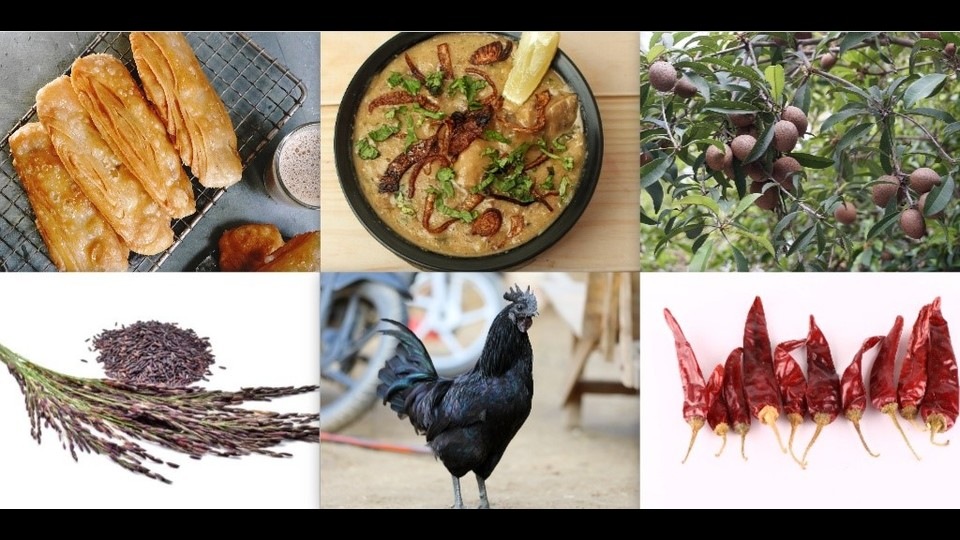
To celebrate the real flavour of India, sample the foods it is protecting. From Lakadong turmeric in Meghalaya to Gujarat’s Gir Kesar mangoes, from Kashmir saffron to Edayur chillies in Kerala, India’s Geographical Indications tell new stories of culture, community, craft and unique cuisine.
It’s a bumper harvest, of sorts. In the last few weeks alone, India has awarded Geographical Indications to a rice variety and a type of onion in Maharashtra; a sweet cucumber from Nagaland; orange and chilli varieties from Manipur; an Assamese homemade wine; a rare oil from Uttarakhand; local mango and chilli cultivars from Kerala; and an aromatic rice from Madhya Pradesh.
You may have tasted all of them, or none. For now, it doesn’t matter. Around the world, a GI is formal recognition that a product — typically crafts, agricultural produce, wines, cheeses, India even has laddoo and bhujia varieties — is produced in a specific region, and is special not because of the brand but because it comes from this location. Think of champagne from Champagne in France, American Washington apples from Washington State, and Parma ham from Parma in Italy.
“Patents are for the rich,” says Rajendra Ratnoo, controller general of patents, designs and trademarks, under the Department for Promotion of Industry & Internal Trade. “Geographical Indications are for generations to share. A recognition of years of adaptation to the region.”
India has been on a GI-granting spree since 2003. Our registry totals more than 380 items; more than half of them are foods produced for domestic consumption. You can buy directly from specialised sites like GITagged.com or the Geographical Indications Store at Goa’s Dabolim airport.
GI status is intended to allow India’s diverse produce to shine, protect traditional techniques, differentiate legitimate producers from cheaper knockoffs, and eventually give the former a competitive edge in exports.
What GI is not is a magic wand. Karan Manral and his wife Yogita Mehra moved to Goa nearly two decades ago, maintain their own farm and advise restaurants, farmers’ groups and food-service companies on sustainable produce. Manral says that because agriculture in India is geared towards quantity — large yields to feed a large population — there has been less focus on diversity and culinary value. “A GI is a good start to build a narrative; the idea that something is special because it comes from this region, with this kind of soil, climate, water, community and farming style,” Mehra adds.
India’s GIs then, are strong first steps. They help Basmati eaters appreciate that sticky Bengali Gobindbhog and Kerala’s short-grain Pokkali might be better accompaniments to local dals and curries. A chef might find it easier to source three regional turmerics and oranges from five states for a new menu. “The next step is to tell buyers that the difference is worth it,” says Manral. “Of what use is any tag if you can’t use it to create and extract better value for the product and a community’s way of life?”
This will take more than tags, laws and registries. And it will take time and money. “Even those who’ve never tasted champagne, or can’t tell how it’s different from other sparkling wine, know it to be superior,” Manral points out. Protections for the French wine have been in place since 1891. “That’s a 130-year headstart and a parallel promotional campaign to give it that value.”
In the 18 years since India started granting GIs, there has been plenty of teething trouble. Regional squabbles over ownership have resulted in separate GIs for the Banglar Rasogolla and the Odisha Rasagola. GI for Goan toddy has been rejected because the registry was not convinced that the spirit is unique. And critics say that GIs benefit middlemen and wholesalers much more than growers. Culinary institutes still don’t teach students enough about agricultural diversity.
Ratnoo says the government is working to address these issues. The GI movement is being linked with state-level and rural schemes so products can be matched with the right supporters. Forward-linkage efforts are being established, so growers can directly connect to the industries that use their products. “We’re also trying to link it to the fair-trade movement,” he says. “No product exists in isolation. The idea is to protect nature and cultures at the same time.”
.
Kashmir saffron
Iran produces the most saffron, a staggering 300 metric tonnes. But India’s 13.2 metric tonne output, grown in the highlands of Jammu and Kashmir, is considered superior. Those precious filaments are a deeper red, with a distinctively long, thick head. They’re stronger in flavour and aroma too. Historians say the first blooms arrived from Persia before 500 BCE. But Indian farmers in Pulwama, Budgam, Kishtwar and Srinagar have long complained that the paler Iranian import, repackaged to be sold in India, has damaged the reputation of the Kashmir crop.
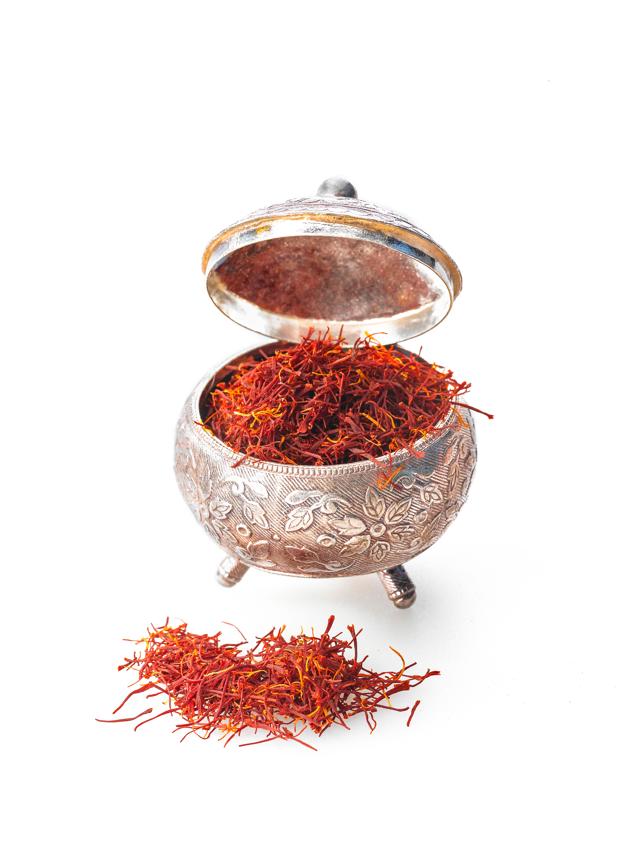
Hope arrived last year when Kashmir Saffron was granted GI, making India the only country with Geographical Indication protection for the expensive spice. It caps a decade of good news: sustained snowfall and rejuvenation of farmland mean yields have grown tenfold since 2011. Kashmir saffron is no longer vanishing, and now it’s formally protected too.
.
Kangra tea
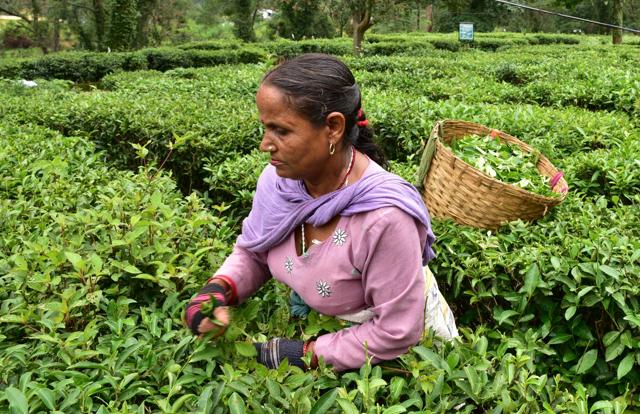
Himachal’s homegrown tea is delicate in more ways than one. The Chinese hybrid growing along the Indian state’s chilly slopes since 1849 produces a brew too pale to process into the packaged tea powders that Indians use for kadak chai. So Kangra produces only leaf teas — a green with a woody profile, and a black that leaves a mildly sweet aftertaste. Both have suffered over the years.
The tea bushes are old, so yields are low. Demand from key overseas markets in Europe, Central Asia, Australia, Afghanistan and Pakistan has thinned. And despite government efforts to curb the sale of tea gardens, there are fewer growers than before. A pandemic-induced labour shortage and a dry spell this year have only made matters worse. The tea, which was granted GI in 2016, will need all kinds of other assistance to survive.
.
Araku Valley Arabica coffee
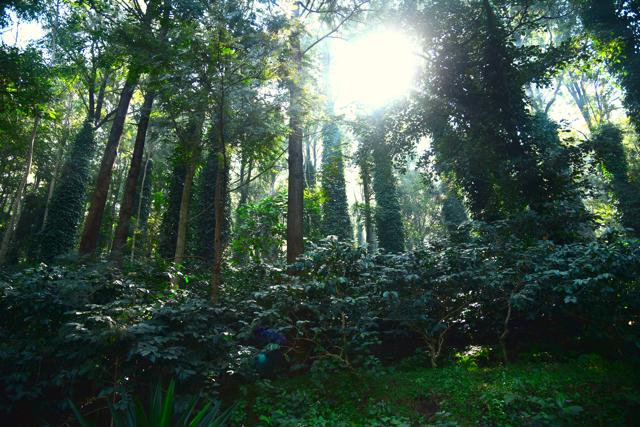
India is the world’s sixth-largest producer of coffee. And of the seven coffees protected by GI in India so far, six come from either Karnataka or Kerala or both.
The Araku valley is different. Its beans grow in the warm, dense, iron-rich Naxal belt of Andhra Pradesh and Odisha, tended largely by 10,000-odd tribal farmers who plant pepper between rotations. And yet, Araku’s Arabica — smooth, sweet and more likely to remind you of chocolate than of the bitter Robusta — yields 75 tonnes a year. It reaches trendy coffee houses in Italy, the UAE, Spain, Sweden and France, where it wins prizes.
Much of this success is the result of efforts by non-profits like the Naandi Foundation over two decades. They’ve helped local communities develop a stable livelihood by growing fair-trade, high-quality, sustainable coffee. Their models are inspiring growers in Odisha’s Koraput region too. And the coffee is finding fans in new regions. An Araku Coffee café opened in Paris in 2017, India got one in Bengaluru in March. The GI, which came in 2019, is merely one more cup raised in cheer.
.
Judima rice wine
For Assam’s Dimasa tribe, getting GI for a little-known sweet brew isn’t about cornering a lucrative European market or even fighting domestic plagiarism. It’s about local pride, the first step in giving a home-made product a standardised commercial avatar, finally enforcing quality control, and giving traditional knowledge a future.
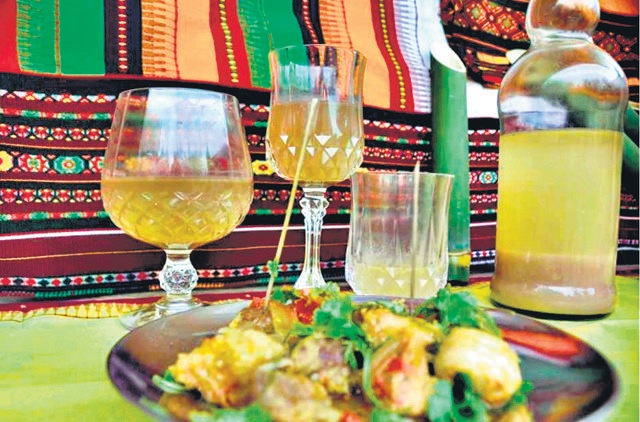
The wine is traditionally made by women, who ferment sticky rice with a mimosa-like local bark called thembra for a week. Judima is central to Dimasa celebrations and is drunk at births, deaths, weddings and religious festivities. It features in local folk tales.
India already has granted GI to Nashik Valley wine and Goan feni. Recognition for a rice wine (the GI was granted in September 2021), locals hope, will boost marketing and trade. Meanwhile, several other beers and brews made by other tribes in the region have applied for GIs of their own.
.
Kalanamak rice
It sounds salty, but the indigenous rice from UP’s Purvanchal region has long held a reputation for being sweeter than most rice. It gets its name from its black husk, but it’s also locally known as Buddha’s rice, from the belief that the Buddha broke his fast upon enlightenment with kheer made from Kalanamak. This explains the demand from Japan, Thailand, Myanmar, Sri Lanka and Bhutan. But Kalanamak is also part of a larger plan.
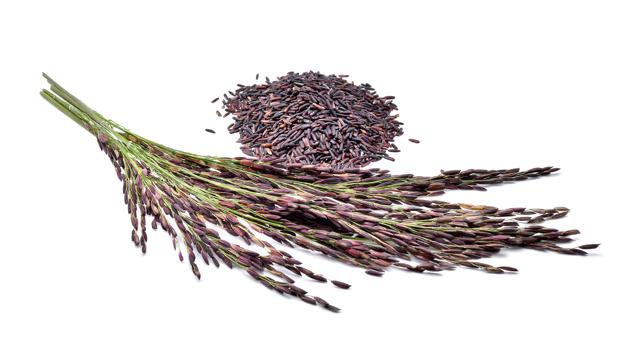
More than a dozen varieties of rice, from West Bengal’s Gobindbhog to Kerala’s Pokkali, have been granted GI status, to offer domestic and export markets an alternative to Basmati. Kalanamak’s GI came in 2013, after a decade of revival efforts to protect the low-yield crop. The variety is now grown using organic methods, is more disease-resistant, and goes through two rounds of transplanting to increase its yield. It still makes a great kheer.
.
Khola chillies
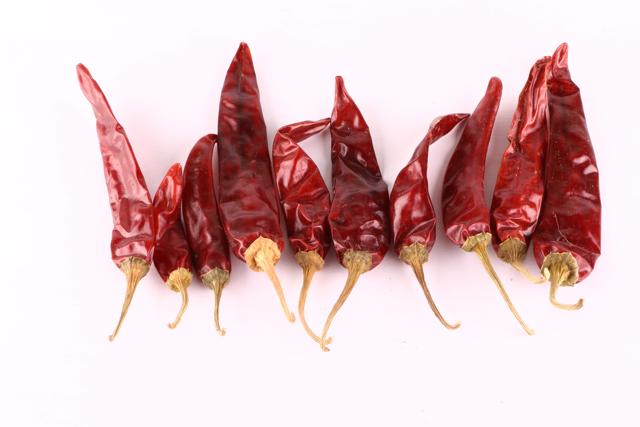
Khola chillies were Goa’s first agricultural product to be tagged, in 2019 — a nod to the Portuguese, who introduced chillies to India. The Khola chilli grows on Goa’s hill slopes, emerging bright red but only mildly spicy, lending itself well to pickles, papads and the vinegary recheado paste. About 10 Indian chillies carry GIs, the most recent addition being the hot Dalle Khorsani cherry peppers from Sikkim and Darjeeling.
For Goa, the GI is a way to encourage local youth to take up farming. Formal recognition for produce means inter-state trade and export are easier. In this case there’s also government support to develop a flat-land variant to boost yields. Goa’s variety needs all the help it can get. The Tauktae cyclone in May wiped out nearly 90% of cultivation, and prices that rarely crossed ₹400 per kg now stand at ₹1,200.
.
Silao khaja
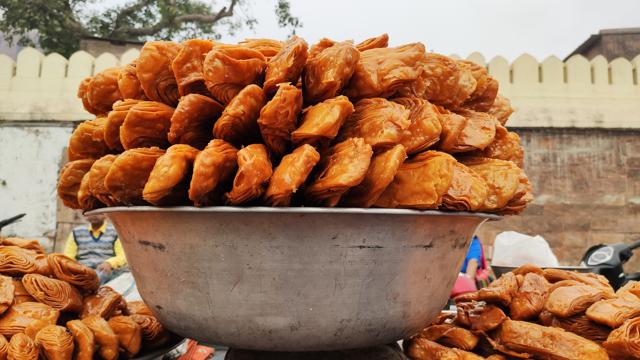
The story of this delicacy from the Silao region of Nalanda, Bihar, is many-layered. Documents submitted to the GI registry (which granted it GI in 2018) mention that when JD Beglar, an Armenian-Indian archaeologist and photographer, visited Silao in 1872-73, he found communities who said they’d been making the sweet since the time of King Vikramaditya in the 1st century BCE.
In local folklore, the Buddha was offered the sweet when he passed through Silao while making his way from Rajgir to Nalanda. The Chinese traveller Hiuen Tsang mentions it in his writings on Mithila. Silao Khaja, fittingly, is many-layered too. As many as 16 thin, flaky sheets, made from local wheat dough, are dexterously stacked, along with sugar, maida, ghee, cardamon and aniseed, and fried to a light-gold crisp puff. It’s lighter and less sweet than other varieties. Silao has 60-odd stores, run by the local Sah community of sweetmakers, selling the khaja. None will part with their recipe.
.
Hyderabad haleem
When haleem, a meaty Ramzan preparation from Telangana’s capital, received GI in 2010, there was some confusion. Haleem, critics said, was neither indigenous to India nor tied to a region. The dish has its origins in the Persian harees, which is at least 1,000 years old and possibly came to India in the time of Emperor Akbar, in the 16th century.
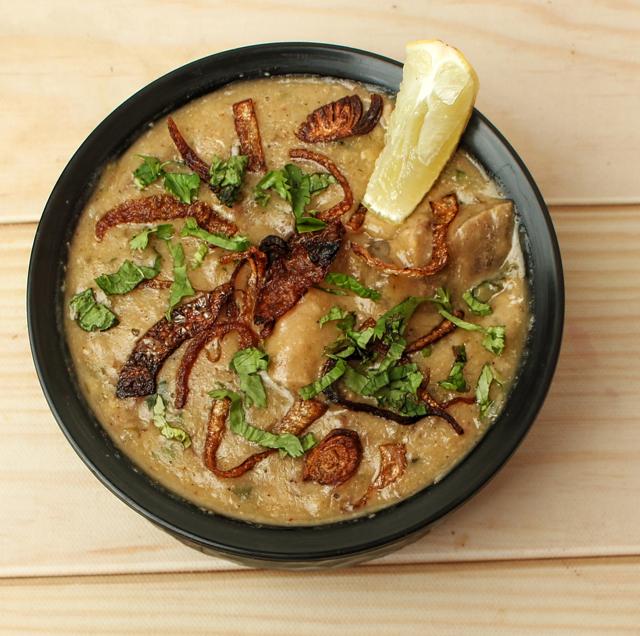
Harees is a mild dish of wheat soaked overnight, cooked with meat and animal fat, strained and pounded. A more modern version, called haleem, was served by Hyderabad aristocrat Saif Nawaz Jung in the early 1900s, and restaurants began selling it in the 1950s. It’s no easier; cooking it can take 12 hours.
Wheat is still soaked overnight, but with lentils mixed in. The mix is then boiled. Beef or mutton and spices are stewed slowly on firewood, mixed in with the wheat and pulses, and hand-pounded using long paddles until the whole reaches a porridge-like consistency. Locals and visitors polish it off topped with fried onions and a squeeze of lemon. The GI is to protect the process against commercial versions across the city and country.
.
Jhabua Kadaknath black chicken meat
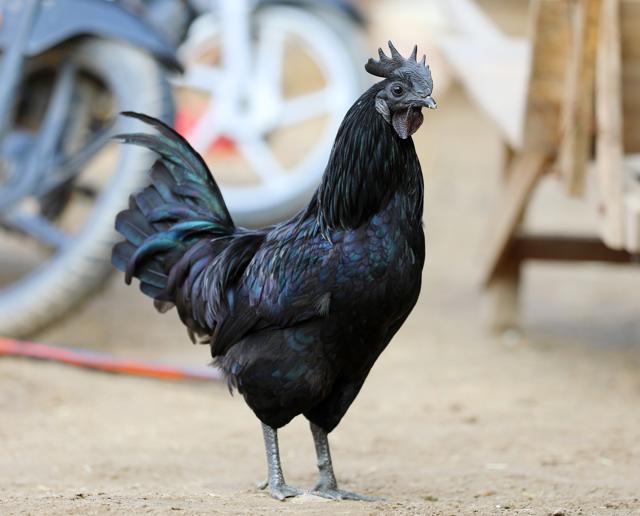
All kinds of foodstuffs have been given GIs: temple prasad, mithai, jaggery, paan, snacks like Rajasthan’s Bikaneri bhujia. But only one can be raised for food. The glossy all-black Kadaknath chickens from Jhabua and Dhar in eastern Madhya Pradesh have traditionally been raised by the Bhil tribe, but the jungle fowl is now a common sight on urban and rural farms due to the high demand for its gamey meat.
Kadaknath chickens gain weight slowly; the hens lay fewer eggs than their regular white counterparts. But the Kadaknath’s black meat is high in protein and low on cholesterol and has the lowest fat content of any Indian chicken breed. Chicken farmers from the region welcomed the GI status in 2018. It’s helped Jhabua’s breeders send live chickens and meat directly to buyers and made it easier to insure their poultry against disease.
.
Dahanu Gholvad chikoo
An astonishing number of fruits have been granted GI. These include several varieties of mango and banana, oranges from Manipur, pineapples from Kerala, guavas from Allahabad and pomellos from Karnataka. The chikoo or sapota (mud apple) crop from the villages of Palghar just outside Mumbai got its GI in 2017, but the area’s calcium-rich soil has been yielding sweet chikoos since 1901.
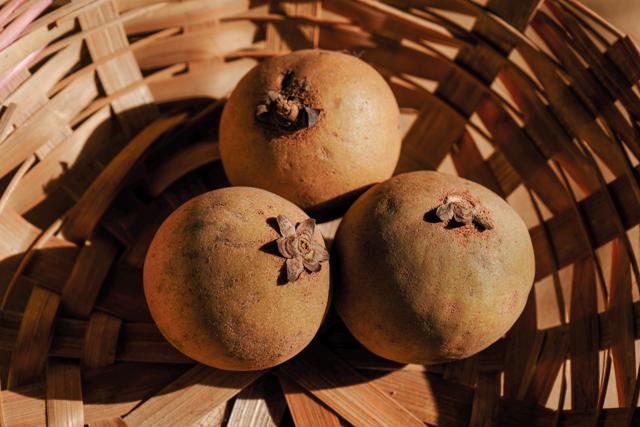
The saplings came from the garden of Bombay businessman Dinshaw Maneckji Petit. They were planted in Dahanu by his estate manager Ardeshir Irani. The plot grew. Bumper crops came in the 1970s, with locals raising farms of their own. This year, GI-labelled chikoos were exported to the UK for the first time. Meanwhile, back in Dahanu, farmers are also developing chikoo breakfast cereal, wine, and chocolate.
 ABOUT THE AUTHORRachel Lopez
Rachel Lopez is a a writer and editor with the Hindustan Times. She has worked with the Times Group, Time Out and Vogue and has a special interest in city history, culture, etymology and internet and society.Read More


