
 E-Paper



Welcome to the party: This Diwali, a look at the ancient history of celebration

 Prefer HTon Google


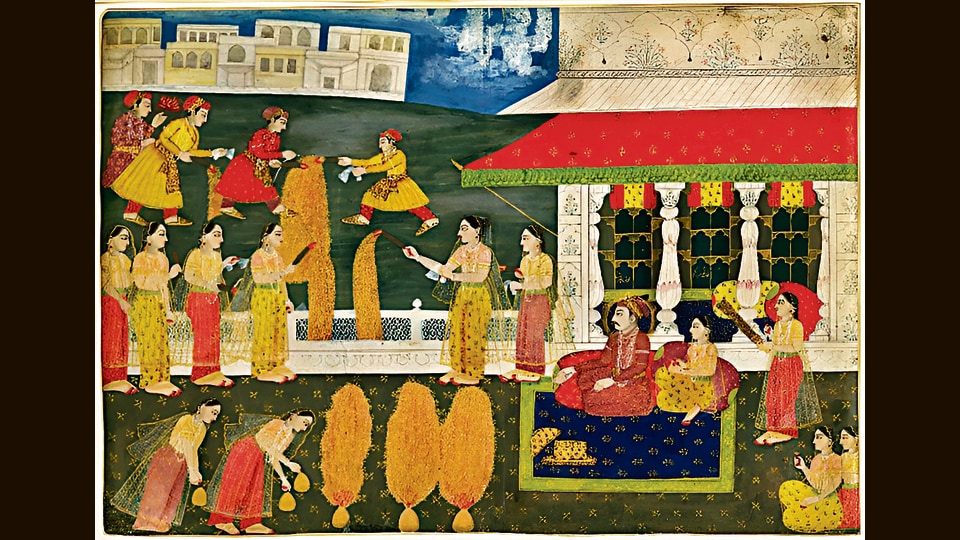
For 5,000 years, there has been dancing, processions, rituals and feasts. What have we celebrated, from Africa to Asia, Europe and South America? Take a look.
The oldest recorded festival was celebrated in Ancient Mesopotamia, on the fourth day of the month of Nisan, the first month of the Babylonian year, around 3000 BCE.
Called Akitu, it lasted 12 days and, at its core, was a celebration of the planting of a new crop of barley, and a renewal of the contract between the king and the gods of ancient Babylon, most notably Marduk.
There were days of mourning and days of feasting. Ceremonial puppets were made and burnt. Statues of the gods were taken to the innermost sanctum of the temple on the sixth day, and taken out and paraded along the main streets on the ninth.
The high priest stripped the king of his crown and sceptre, and led him to the sanctum of Marduk. There, in front of the idol of the dragon-slaying deity, he slapped the king hard, pulled his ears and forced him to kneel.
The king then recited a ceremonial prayer, swearing that he had not sinned against Marduk, the city or its people. His royal accoutrements were then returned to him, and the priest struck him again, so hard that the king was expected to shed tears from the pain. If the king humbled himself and wept, it was understood that Marduk was content for him to continue his rule.
On the seventh day, there was a public re-enactment of Marduk’s battle against Tiamat, the dragon-like representation of chaos; the performance depicted how Marduk’s victory had led to the creation of the world.
Every aspect of Akitu was linked to renewal. Not surprising, given that the festivities likely began as a way to appease the gods at the start of the new agricultural cycle.
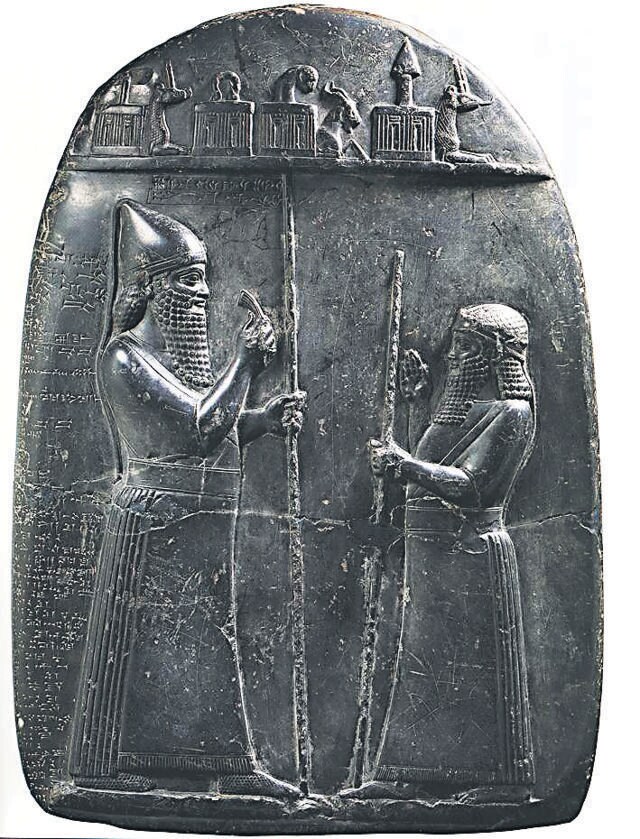
Whether from cultural osmosis and the borrowing of customs, or from the coincidence that marks so much parallel evolution through history, similar celebrations would be observed in Ancient Egypt too and, about 2,000 years later, in Ancient Greece and Rome.
Processions, sacrifices and dramatic performances remain hallmarks of religious festivals worldwide.
Akitu itself was celebrated, in the Middle-East, all the way through to the 10th century CE. It travelled to Greece and Rome, and was celebrated in parts of Europe until at least the 3rd century CE. It outlasted the Mesopotamian civilisation by about 1,500 years, and finally died out in the 11th century, living on after that in the cuneiform inscriptions on clay tablets…
Until the 1960s, when the scattered Assyrian people began to reclaim their identity, and decided to revive Akitu. It was no longer about a king and the sowing of barley, but it was something just as significant: the building of community and the celebration of tradition.
The revival of Akitu was not unique. Across civilisations, festivals that once marked cosmic or royal renewal have endured, faded and resurfaced, reshaped by time and faith, yet preserving their essential rhythm of return.
In China, for instance, the Lunar New Year has been celebrated since about 1600 BCE. Carvings on “oracle bones” describe sacrificial ceremonies to deities and ancestors at the end of the year, hoping for protection and a good harvest.
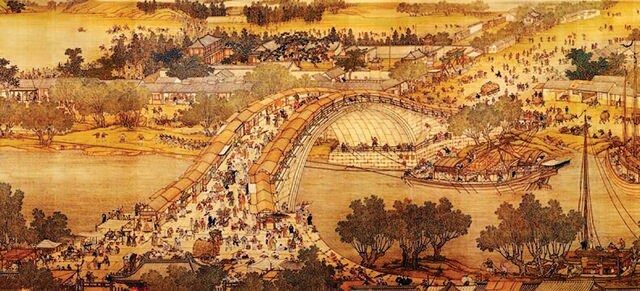
By the time of the Han dynasty in 200 BCE, motifs of the battle of good over evil started to appear. The practice of hanging auspicious red lanterns and bursting firecrackers began; this was done to chase away Nian, a legendary monster that ate crops, livestock and people. These practices continue to the present day.
Context and custom write the script, but most festivals continue to mark harvest and sowing periods, or solstices and the change of seasons, even if these foundational events now go wholly unnoticed by most revellers. Hence their evocatively universal themes of light conquering darkness, renewal and rebirth.
Diwali, which coincides with a harvest too, is, for some, about Krishna’s defeat of the demon Narakasura. For others, it is the day a triumphant Rama returned to Ayodhya after 14 years in exile and the defeat of Ravana.
Oil lamps are prevalent in descriptions of the festival going back to plays and texts from the 7th century. This may have given way to electric bulbs, but to this day, diyas are still lit in homes across India and beyond.
***
As societies grew more complex, the focus of celebration began to shift.
In Ancient Greece and Rome, they retained their sacred vocabulary, but increasingly became civic institutions; occasions where the community celebrated itself as much as its gods.
In Athens, the Great Dionysia began as a ritual to honour Dionysus, the god of wine and ecstasy. By the 5th century BCE, it had evolved into a public theatre festival that expressed the city’s identity and ideals.
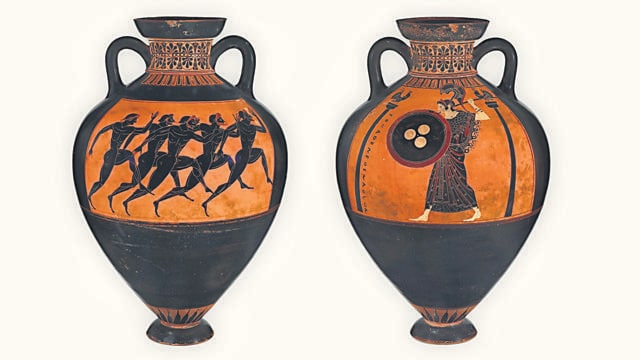
Tragedies by Aeschylus and Sophocles were performed not as entertainment in the modern sense but as civic acts of reflection. Through myth, Athenians explored questions of justice, fate, and duty, renewing the moral order of the polis just as Babylonians had once renewed the cosmic order before Marduk.
The Panathenaia, another great Athenian festival, was a celebration of Athena, the goddess of wisdom and war, but it was also a celebration of the city named in her honour. The events combined athletic contests, processions, sacrifices and poetry. Every four years, a new robe, woven by women of Athens, was carried in a grand procession to clothe the statue of Athena on the Acropolis. The offering was symbolic of the citizens reasserting their bond with the goddess, but also represented their pride in being Athenian. It was devotion reimagined as patriotism.
***
Ancient Rome inherited and expanded these traditions. Their Saturnalia, held in honour of the god of plenty, was a time of deliberate inversion. Masters served their slaves, gambling was permitted, and formal speech gave way to laughter and licence.
It was a brief suspension of hierarchy, a controlled descent into chaos, after which order was restored. Like the ritual humiliation of the Babylonian king, Saturnalia offered symbolic renewal through reversal.
The pioneering sociologist Emile Durkheim gave a name to the passionate sense of unity and energy that arises when people come together in a shared ritual. He called this “collective effervescence”.
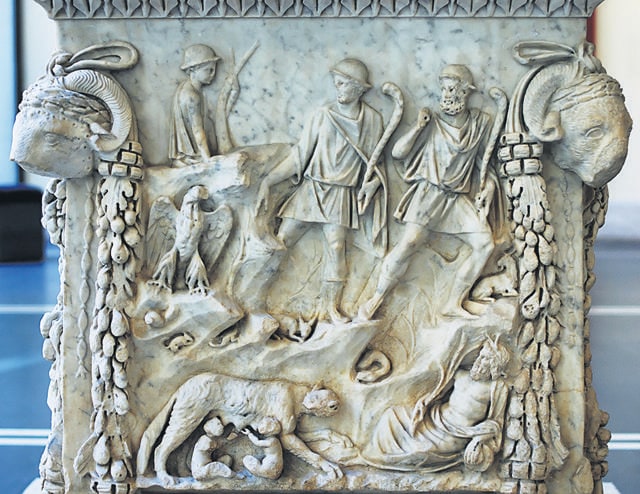
Durkheim argued that this experience is what makes individuals feel part of something larger than themselves and reinforces social bonds. It is a view echoed by the cultural anthropologist Victor Turner, who repurposed the Latin term communitas.
For Turner, spontaneous communitas was the transient personal experience of togetherness, the kind of fellow feeling that led to the Christmas Truce of 1914, when British and German troops stopped fighting each other to exchange small gifts, sing carols and celebrate the holiday together.
***
Religion as a binding force has ebbed over the past century, but the need for community celebrations has not. So it is identity we now sanctify. Christians with Jewish heritage (or vice-versa) may celebrate Chrismukkah; African-Americans reclaim lost links with an ancient heritage through Kwanzaa.
The structure of celebration remains constant. Each society creates its vocabulary of renewal, its way of managing the tension between order and freedom, piety and pleasure. The human need for collective affirmation endures.
What began in Mesopotamia as rituals built around power, stability and sustenance have become celebrations of faith, identity and belonging, enacted through spectacle and shared emotion.
How are you celebrating, this festive season? Write in and tell us your story.
(K Narayanan writes on films, videogames,books and, occasionally, technology)


