
 E-Paper



Where the wild things are: Take a walk inside India’s private forests

 Prefer HTon Google


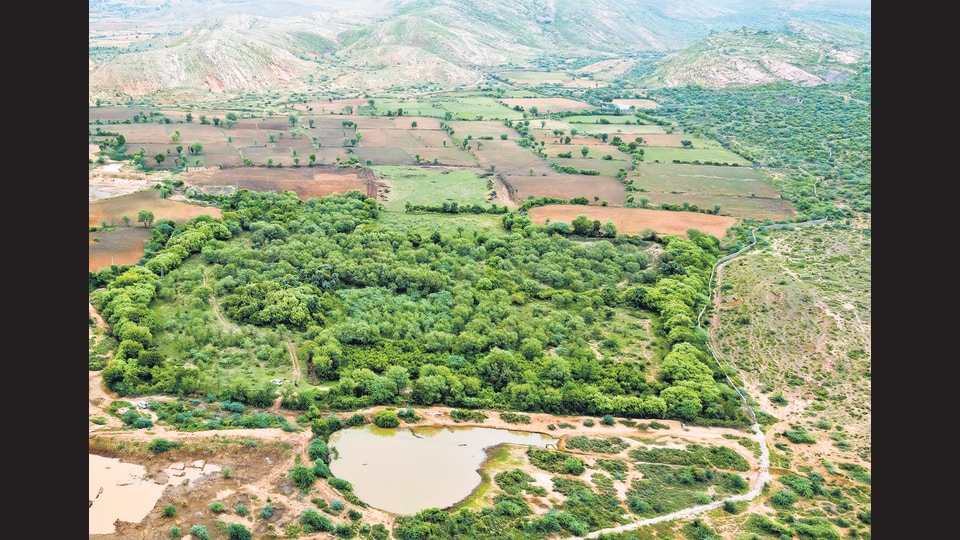
Meet the mavericks who are rewilding India, one private pocket at a time. It’s a simple but radical approach: Buy plots of land, pull out exotics, plant natives, and let nature take over.
Nature has been kind to India. History has not. Over the last 200 years, India has lost large swathes of its diverse forest land to human impact (housing, industry, infrastructure, mining, hunting… it’s a long and sad list).
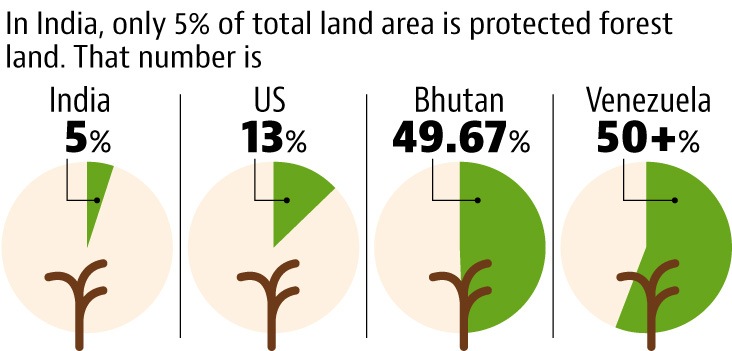
Today, only 5% of India’s land area is protected forest land. This includes wildlife sanctuaries, national parks, conservation reserves and community reserves. Even these pockets are shrinking.
“Sanctuaries and parks are now embedded in a contrasting matrix of revenue lands,” says Soubadra Devy, a conservation biologist at the Ashoka Trust for Research in Ecology and the Environment (Atree). This means that there are farms, homes, hotels, highways, even power plants and mines peppering what should be untouched wilderness.
In buffer zones directly around protected forests, a wide range of infrastructure and development activities are prohibited. But “there is also a terrible compromise in the buffer zones; over time, these have become leaner and leaner, denotified from 5 km to as little as 1 km, even less,” Devy says.
Add to this a depleting water table, sound and light pollution, changing rainfall patterns and the impact of that on the most crucial of wildlife resources, water, and what emerges is a depressing tableau of depleted pockets under sustained threat.
What can one do? How does one begin to address the need for balance, in a nation of 1.4 billion people, with all the demands and needs that kind of population entails?
Some are taking a simple but radical route — buying land near existing forests and then helping it rewild. This can take decades of care and attention as invasive species are slowly weeded out and indigenous ones returned. The results are dramatic — tigers stopping by for days, elephants giving birth, otters frolicking in a stream, all on land owned and nurtured privately.
Aerial views show the contrast. Amid pocket squares of agricultural land, a sudden wilderness of trees. What was once a coffee and cardamom estate near the Brahmagiri Wildlife Sanctuary in Kodagu, Karnataka, is now 300 acres of forest. In Rajasthan, 35 acres of farmland has become a lush grove dotted with watering hole where spotted deer, tigers and nilgai visit from the adjoining Ranthambore tiger reserve.
Devy points out that the governance of this land should be made polycentric, where the original owners of the land, often farmers and pastoralists, have access to it for grazing should they need it, and where the forest department is involved in the protection of wildlife in the area.
In addition to reviving natural habitats for a host of animals, these pockets also act as carbon sinks. The idea of rewilding private land outside of forest reserves could be a key factor in the future of forests. “A network of private forests could mean better representation of this country’s diverse ecosystems,” says Devy. “It’s about time that India came up with a policy and guidelines for enthusiastic rewilders, who have risen in number, that will protect the land and its wildlife, and will take into consideration the rights of the communities living around it.”
.
ASHOKAVANA, KARNATAKA: Letting the jungle leapfrog ahead
Resorts were vying for the patch of land that is now a private forest called Ashokavana in Bisle, Karnataka. A perennial stream runs through the 15-acre former cardamom estate, which sits on the edge of the Pushpagiri wildlife sanctuary.
The area lay along a pilgrimage route, and would have been an ideal spot for a hotel. But one resort would likely have meant more, and people, and traffic. When GN Ashoka Vardhana heard about the situation from friends at the Kudremukh Wildlife Foundation in 2006, the solution presented itself almost immediately. “Buy the land so that the resorts won’t get it,” he says.
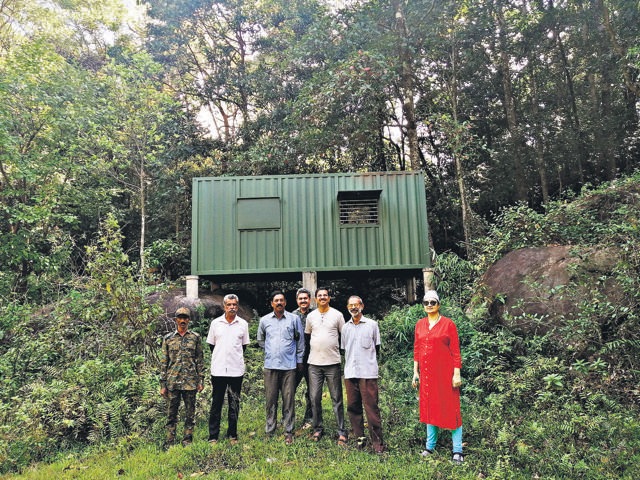
Vardhana, an author and conservationist, bought the land with a friend, general surgeon and wildlife enthusiast Dr Krishna Mohan, 55, for ₹60,000 an acre, with just one aim — to leave it alone and let it return to the wild.
They named it Ashokavana (vana is forest in Kannada). In 15 years, they haven’t planted anything, harvested anything or tried to keep wildlife away. The cardamom still grows, but wild now. A canopy of tall trees has formed.
“The only expense we incur every year is the land tax of a few hundred rupees,” says Vardhana, 69. In exchange he is greeted with the news, from nearby villages, that elephants are roaming on this plot and that large colonies of frogs have formed in the monsoon.
“People understood what we were trying to do, but they would advise me to sell the wood and plant new trees etc,” says Vardhana. “I had to explain to them that this was not about the wood, but also about the animals and birds who would return to this place.”
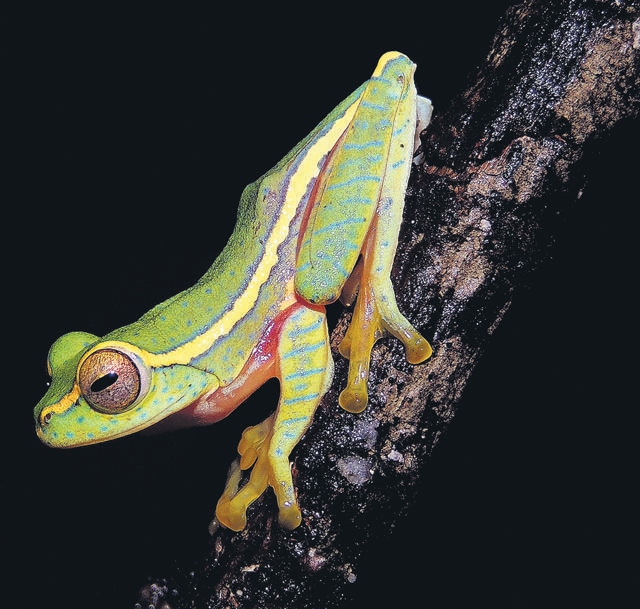
In the early years, Vardhana would visit once in a while with his wife Devaki, 63, a fellow wildlife enthusiast and adventurer, to camp on the land. Now, every monsoon since 2012, frog enthusiasts have begun to visit his plot. “We’ve identified 38 species, a few rare ones,” says KV Gururaja, a batrachologist at Gubbi Labs, a private research collective that conducts the annual Bisle Frog Watch. “For two days every year, we identify species in Bisle, take pictures, study breeding periods, calls and behaviour, do frog counts and log all the information on the India Biodiversity portal.”
Earlier this year, Vardhana installed a container unit in a clearing, so the researchers would have somewhere waterproof to stay. He’s named it the Kappe Goodu (Frog’s Nest) research station. Gururaja is thrilled. “Usually, it’s the larger mammals that get all the attention,” he says. “The study of amphibians in India is yet to go beyond taxonomy. So it’s nice to have this research base named after them.”
Since buying the land, Vardhana has observed a few changes owing to infrastructure and development projects that have come up around it. “The Shiradi Ghat railway track, road-widening, mini hydel power projects and new power lines have disrupted an elephant path,” he says. “The elephants started entering the forest through paddy fields that had never been affected by wildlife like this until about 15 years ago.”
There is now talk of buying up those villages for an elephant corridor. But news of the corridor has driven land prices up, with the result that Vardhana can no longer afford to expand his forest. He began trying to in 2012, after closing down a bookstore in Mangaluru that he ran for 36 years. But the price had already jumped, to ₹10 lakh per acre, “so no one is really able to buy it,” he says.
Still, an elephant corridor would be good news, he says. “I think one of the great challenges India’s forests face is encroachment,” says Vardhana. “Individuals will take an acre here, an acre there and it doesn’t seem like much. But when everyone’s doing it, you don’t realise how much forest land we are actually losing.”
IN BHADLAV, RAJASTHAN: Offering animals a little more sanctuary near Ranthambore
Aditya Singh was an officer in the union ministry of communications; his wife Poonam Singh was a sculptor and fashion designer. They had a busy life in Delhi. But what they really loved was the wild, and it was always calling to them. They travelled, went on jungle safaris, took up photography, but it wasn’t enough.
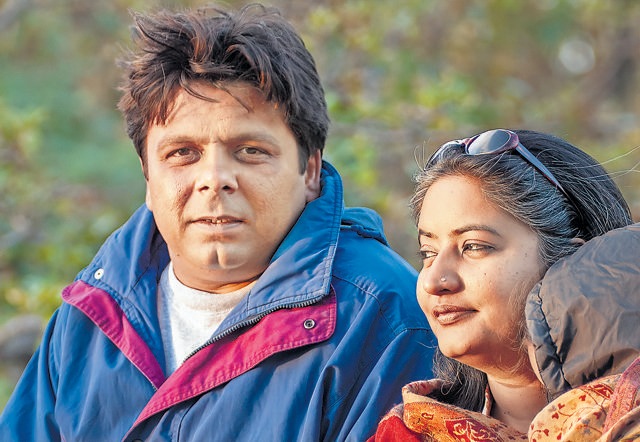
In 1998, they finally succumbed to the call, quit their lives in Delhi and moved to Sawai Madhopur, the town closest to the Ranthambore tiger reserve (RTR). There they acquired and ran a six-room tourist lodge.
As they settled into their new lives, says Aditya, 55, they began to hear of a rising number of cases of man-animal conflict. Farmers were selling land near the reserve so they could move further from it to escape that conflict (mainly with the burgeoning populations of wild boar).
The Singhs began to think about buying some of this land, just so they could let it rewild. Both tiger lovers, the idea that they might someday see a big cat stalk through something they had helped return to nature thrilled them. In 1999, they bought their first 4 acres, abutting the forest. They built small earthen check dams in natural depressions and, in the monsoon, these would turn into watering holes and attract animals from the reserve.
The couple began saving up for more land and slowly their little project grew. They now have 35 acres in Bhadlav, abutting the RTR. And camera traps set up by the conservation NGO Tiger Watch have recorded tigers, leopards, jungle cats, mongoose, porcupine, spotted deer and numerous other creatures not just walking through it but staying, resting, feeding.
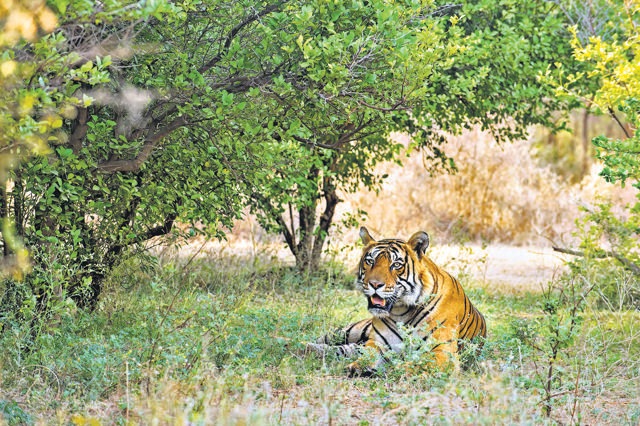
“The tigers rest on this land,” says Tiger Watch field director Dharmendra Khandel. “Usually, they only leave the reserve at night. They kill some prey, feed and move back into the jungle. But on [Singh’s] land, they stay for four, five days. That is an indicator that they feel safe enough to relax there.”
It’s their dream come true, says Poonam, 52.
Since 2004, the Singhs have been acquiring land for a similar effort just outside the Corbett Tiger Reserve in Uttarakhand. They now have 20 acres there. “We have tried to make both plots as forested as the national park,” says Aditya.
“In Corbett, things rewild much faster. In Bhadlav, there is an extended dry season and the dominant tree species is a slow-growing one, so we have to give it more time. We have to keep at it, uprooting the invasives, planting the natives, and holding out against any resort that wants to set up here,” Aditya adds. “We’re never going to sell to them. Our daughter, she’s nine now, she’ll inherit it.”
SAI SANCTUARY, KARNATAKA:In a rare forest, never mind what otters think
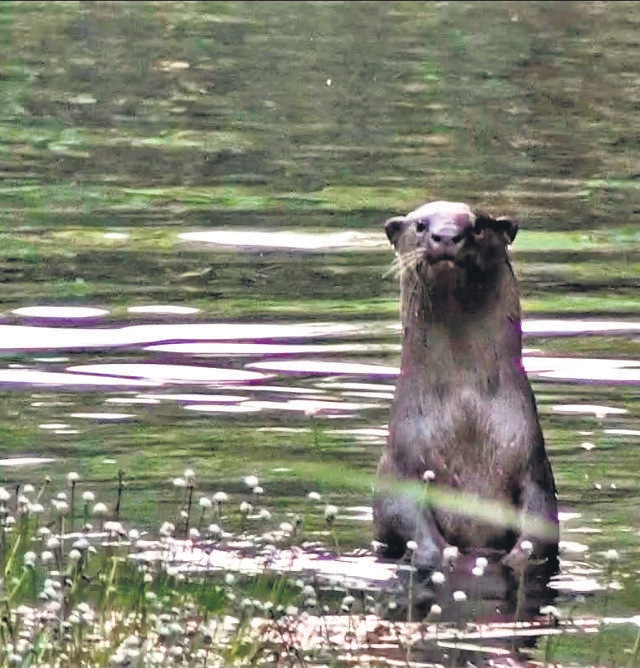
In 2019, one of Pamela Malhotra’s camera traps captured a rare sight. Eurasian otters were frolicking at a stream on her 255-acre property bordering the Brahmagiri Wildlife Sanctuary.
Little is known about these elusive creatures; there are only a few recorded sightings. So it was a moment of great excitement for Pamela, 69, and her husband Anil Kumar Malhotra, 78, who own and run the SAI (Save Animals Initiative) Sanctuary in Karnataka’s Kodagu district, on the edge of the Western Ghats.
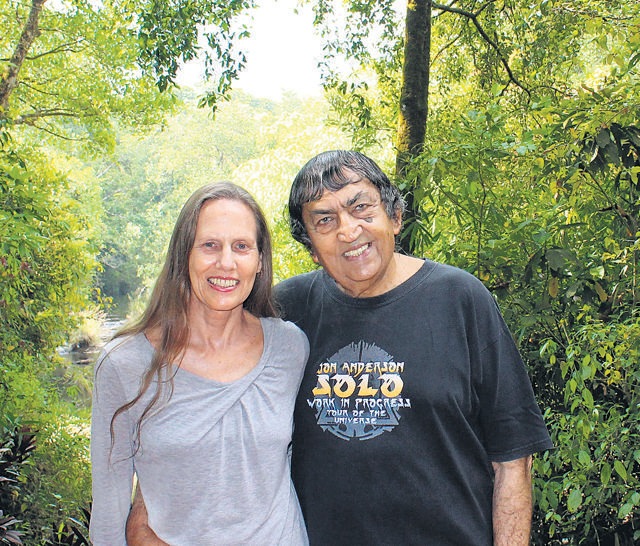
The Eurasian otters are among a wide range of species captured by Pamela’s camera traps. “They have shown us that the sanctuary has become a little creche for birds and animals,” she says. “They feel protected, there’s an abundance of food and water. And they are a great joy for us to look at.”
This wildlife haven used to be an orchard, then a coffee and cardamom plantation. This switch did not suit the climate, what with the region’s intense rainfall, and so the land went up for sale again.
Enter the Malhotras, she an American with a background in healthcare and pharmaceuticals, and he with a background in banking and real-estate. They had been looking to sustain a forest of their own, and had spent a decade in Uttarkashi, trying to buy land and settle in. But they ran up against an ownership cap of 12 acres for non-Uttarakhand residents. Plantation land in Kodagu didn’t have such restrictions. In 1992, they purchased the first 55 acres and set to work trying to rewild it.
“The coffee side of the land was quite denuded. We let it all be and allowed nature to take its course,” Pamela says. “The coffee is also eaten by civets, and we wanted to encourage them to stick around.”
The Malhotras started out rearing cattle, but then decided against it because they wanted to reduce their impact on the land. “Once the cattle were all given away, it made a huge difference in the wildlife coming out in all times of day and night too,” Pamela says. They earn a small living off a four-room ecotourism lodge near their living quarters.
Meanwhile, out on their land, two streams that originate in the Brahmagiri wildlife sanctuary have become watering holes for wildlife. Sambar and deer appear frequently, and sometimes a lone tiger, leopard or dhole (the Indian wild dog). The massive gaur trundle through too, from time to time.
Tyler Hounshell, a Master’s student at Yale, did a disaggregated cost-benefit analysis of the SAI Sanctuary, under the supervision of Columbia University and the Ashoka Trust for Research in Ecology and Environment (Atree). “Private forests are great habitats for pollinators – almost (or just as good as) government-owned wildlife sanctuaries,” he says. “So local stakeholders gain benefits from the pollinators because crops like coffee (which is a valuable cash crop in the area) cannot be self-pollinated. These crops rely on pollinators to cross-pollinate them and studies show that yields of beans are way lower without them.”
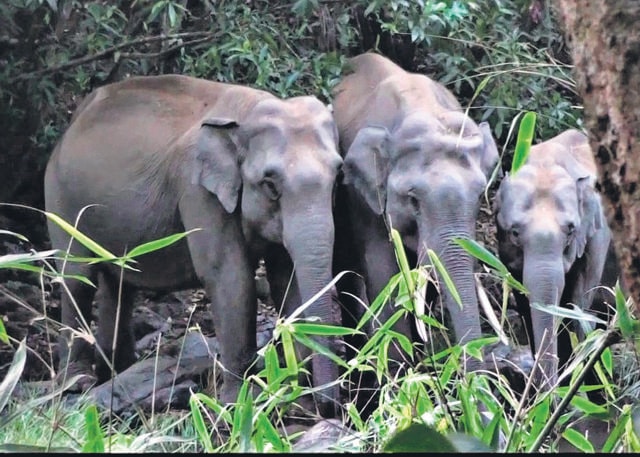
Out of respect for the animals, the Malhotras traverse their property on foot. Their only interference involves checking on the camera traps and water bodies. “We’ve never been in danger, but we are careful,” says Pamela. “You’ll find that the gaur are sweet, but you have to respect their space, and don’t ever come between family members.”
Their living quarters are smack in the centre of the property, fuelled by wind, solar power and biogas.
“What we’ve seen happening around the world this past year, where people were locked down and the wildlife started coming out onto the streets … people have to understand what a massive footprint humans leave behind,” Pamela says, “and how that footprint scares all other life away.”
MULAI KATHONI, ASSAM: An island in the Brahmaputra goes with the flow
Jadhav Payeng, 62, considers himself a happy man. Of all the private rewilding efforts in the country, his has to be the most intriguing. The cattle farmer from Assam has spent over 40 years building a forest on an island in the Brahmaputra, where there wasn’t one before.
The 550 hectares of barren land that he regreened, using traditional knowledge from elders of his tribe, were prone to flooding and erosion.
Payeng was in his early 20s when he decided to take up where a government project had left off. In the 1980s, a reforestation effort by the state forest department was meant to plant thousands of trees in a five-year period on the 200-hectare Aruna Chapori island in the Brahmaputra. The young Payeng was a labourer on the project. Two years in, the project was discontinued.
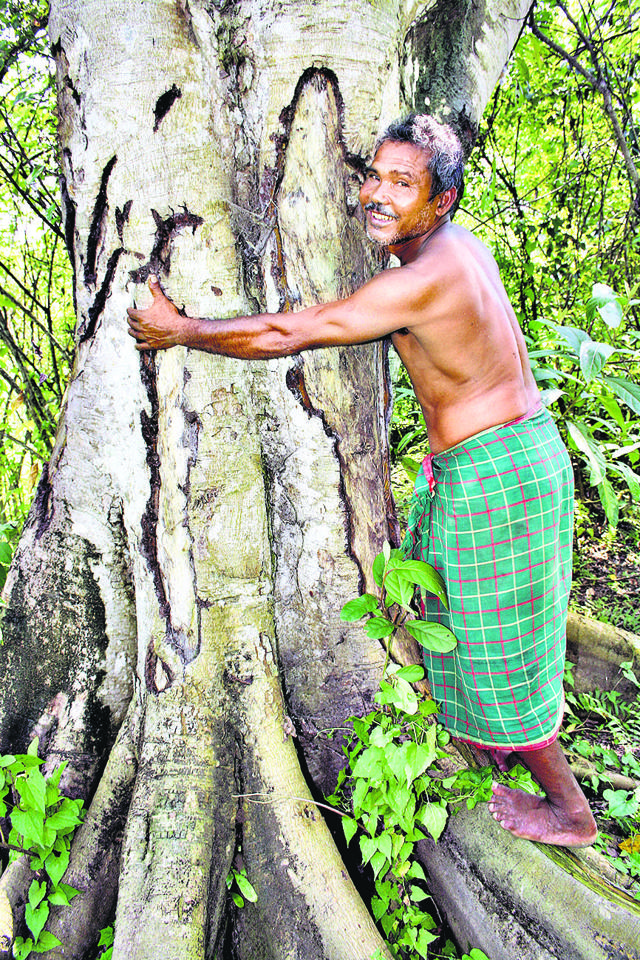
Payeng decided to keep it going, by himself. So little by little, in secret and anonymously, he tended to the trees that had been planted, and planted new ones. He consulted with the elders of his Mishing tribe on what plants to grow and how to care for them, prepared manure using cow dung and compost and set up an indigenous drip irrigation system made up of an earthen pot on a bamboo platform. Over time, the forest took on a life of its own.
“When I started to do this work, I faced some opposition from the surrounding villages, primarily because elephants started visiting the forest, and on their way they would raid some of the crops,” Payeng says. In 2009, the local press began to cover his efforts. As word spread across the country and beyond, Payeng became reluctantly famous. He was nicknamed the Forest Man of India, and awarded the Padma Shri in 2015.
Today, the forested island is referred to Mulai Kathoni or Forest of Mulai (Payeng’s nickname).
To Payeng, the most thrilling development has been the way the island has come to life. Rhinos come from Kaziranga, about 60 km away; elephants have been born amid the trees he planted; tigers visit and stay for a few days; wild buffalo and migratory birds, including pelicans and the Himalayan Griffon vulture, visit as well.
But since this is not a notified area, the forest department doesn’t patrol it. So members of the Mishing and Deuri tribes defend the island, patrolling for poachers and timber smugglers and reporting them to the state forest department.
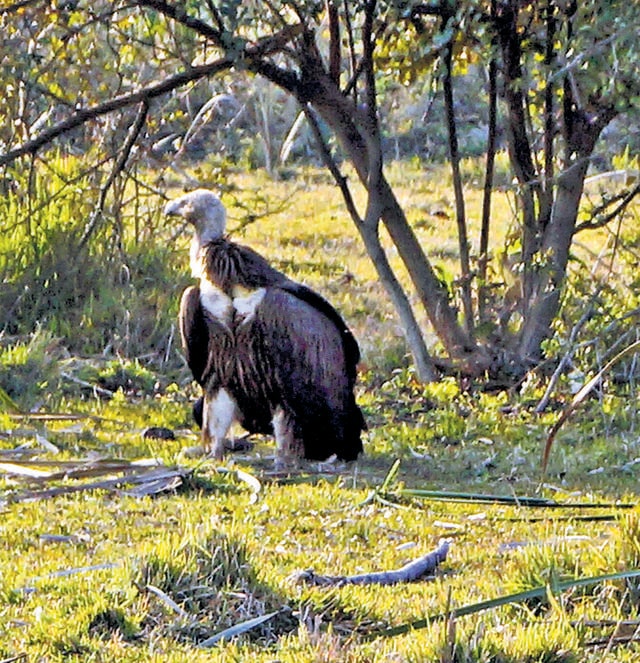
“It is a big problem and we have become unable to protect the forest alone,” Payeng says. “It’s time for the government to start providing protection.” Notifying the land comes with drawbacks that could restrict the community’s use of the forest and its resources. The struggle to keep the dense forest free, accessible and protected is Payeng’s ongoing mission.
He, meanwhile, lives in a bamboo hut in the forest, while his family, wife Binita, daughter Munmuni and sons Sanjay and Sanjib, live in his village 6 km away.
To this day, Payeng works from 5 am to 3 pm, planting saplings, collecting seeds and patrolling the 550 hectares. “I think Mulai Kathoni will be recognised as a rare achievement if it is not eventually destroyed by humans,” he says.
(With reporting by Jitu Kalita)
.
BY THE NUMBERS
12: India is one of 12 megadiverse countries in the world. To make this prestigious list, a country has to have at least 5,000 endemic species of plants, and a marine ecosystem, within its borders.
4: India also houses parts of 4 of the world’s 36 biodiversity hotspots — in the Himalayas, Indo-Burmese region, Western Ghats and Sundaland (the Andaman and Nicobar islands). To qualify for this list, a region has to have more than 0.5% (or over 1,500) of the world’s plant species as endemic, and should have lost more than 70% of its natural vegetation. In other words, these regions are irreplaceable and threatened by human activity. This is according to Norman Myers, the British biologist who coined the term “biodiversity hotspot” in 1988.
Incidentally, conservationists are now making a case for biodiversity coldspots as well. These are areas such as grasslands, where the number of species is not as important as the unique biodiversity they support. These are lands that are more threatened because they are treated as wasteland. The desert-grassland landscape in western Rajasthan, home to the last few (less than 100, some say) Great Indian Bustards is one such.
(Sources: bsienvis.nic.in; iucn.org)
.
CAN SCOTLAND STEP UP?
* Scotland is one of the most nature-depleted countries in the world. Over the years, it has suffered deforestation, overgrazing by deer and sheep, the widespread planting of non-native exotic conifers, and the extinction or decline of keystone species such as wolves, lynx, wild boar and beavers; even of the salmon and trout in the rivers.
* Currently only 1.5% of Scotland’s land is protected as nature reserves; 4% is marked as native woodland.
* The Scottish Rewilding Alliance is working to improve these numbers. The coalition of over 20 environmental organisation came together in 2019 to promote rewilding as a key element in the search for a better balance between protecting the ecology and generating new opportunities for the population.
* The rewilding alliance is calling on the Scottish government to declare Scotland the world’s first rewilding nation, with a wide-scale approach that will earmark a share of total land area for rewilding, and offer landowners and farmers incentives to manage land differently.
* Meanwhile, individuals, charities and organisations have begun working independently, buying large tracts of land across the country and working towards restoring them to their natural state.
* In one example, Langholm, a village in the south of Scotland, raised £3.8 million (about ₹39 crore) to purchase 5,200 acres of the Langholm Moor from private owners. It is now being transformed into the community-owned Tarras Valley Nature Reserve.


