
 E-Paper



Mental health: In celebration of crying

 Prefer HTon Google


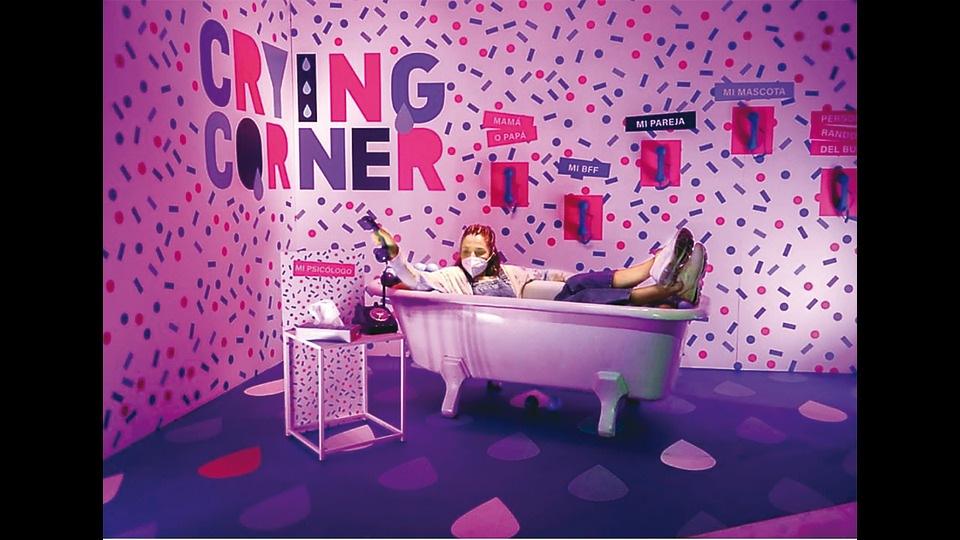
It’s healthy, it’s healing, it’s absolutely normal and everyone should do it, say these three professionals
On World Mental Health Day, in the second week of October, the Spanish Prime Minister, Pedro Sanchez, announced a €100-million mental healthcare drive, with plans that include a 24-hour suicide helpline. Making waves internationally, however, is La Lloreria, or ‘The Crying Room’—built in the heart of Madrid—which aims to tackle the stigmatisation around crying and reaching out for help.
Further south, in Bogotá, Colombia, a new hotline number has been set up to answer calls from men who struggle with jealousy, fear, or control, or who often call to cry, not knowing what else to do.
No matter where you are in the world, why is there such stigma around crying, even after science has long-ago proven that it’s a good release?
Prof. Rachana Johri, Director, Centre for Psychotherapy & Clinical Research, Ambedkar University
There’s a definite ban on crying, especially in public places but even in intimate spaces, because crying is about shame, dependency, and vulnerability—all the things that we aren’t ‘supposed’ to express. And this is even more true for men. When men express themselves and cry, it’s considered inappropriate—only occasionally it may be considered ‘charming’.
As far as The Crying Room is concerned, just providing a space to cry is a grand symbolic gesture; crying is a desire to be heard, and people need more than just empty spaces. We need a more social world, better support systems, and most of all, people who are there to listen to another person crying.
Dr. Gaurav Deka, Founder & Director, Cognial Healers Academy
Crying is the body’s method of melting down difficult emotions which are often found in a frozen or suppressed state. It is actually healing, and sometimes the only healing one might need.
There is stigma around it because of the patriarchal structure and viewpoint of the society, where crying is strongly associated with being weak, and often feminine. It is, in fact, a gender-neutral phenomenon, a beautiful expression of complex emotions.
Dr. Deepak Raheja, Sr Psychiatrist & Psychologist & Director, Hope Care India

Crying is a beautiful technique if used adequately. If you go back 20 or 30 years ago when the saying ‘Mard ko dard nahi hota’, was all the rage, men were seen as the bastion for women, and women had to play the stereotypical roles they were assigned. But over the years we’ve understood that emotions are unisexual. And if they are unisex, we should allow men to explore their ‘feminine’ sides—by that I only mean the softer, finesse-laden nuances of life, and vice versa.
What we really need to debate is sensitivity and empathy. As a friend, grandmother, partner, or spouse, if someone has broken down in front of you, they’re willing to open up to you. That takes a lot, and you need to make them feel safe.
Follow @modwel on Instagram and @UrveeM on Twitter
From HT Brunch, November 28, 2021
Follow us on twitter.com/HTBrunch
Connect with us on facebook.com/hindustantimesbrunch


