
 E-Paper



What makes for a great remake? One director reveals his cheat sheet

 Prefer HTon Google


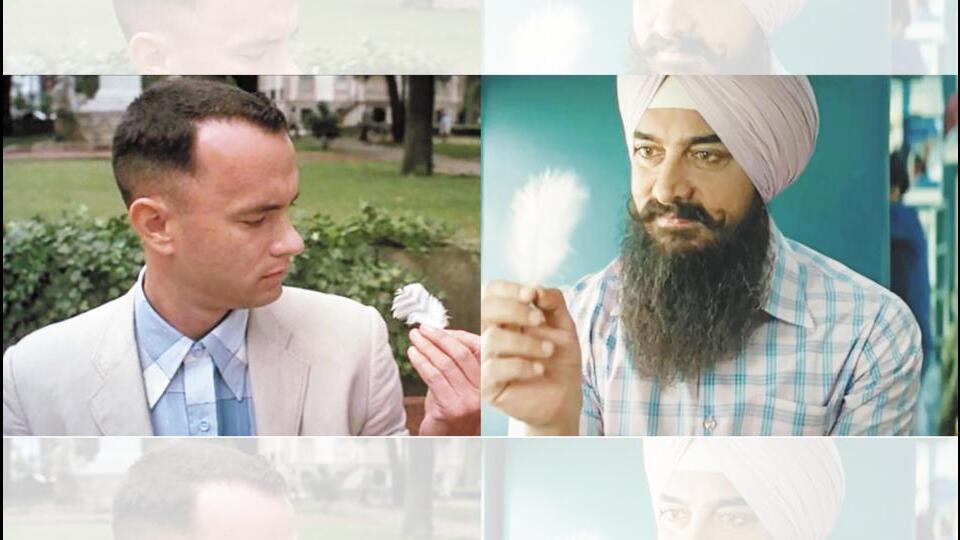
Licensed remakes often flounder. Unofficial tributes do well. Sandeep Modi, who made the Indian adaptation of The Night Manager spills secrets to an apt homage
Never heard of Hello Friends? Let’s ruin your day, shall we? The unofficial Hindi remake of Friends aired on Zee TV in 1999. It was terrible. The cast of six included Cyrus Broacha (playing Cyrus, modelled on Chandler), Simone Singh (as a Monica-type Sanjana) and Nikhil Chinapa (a Ross-inspired Vikram). The jokes are direct lifts, delivered badly. There’s no comic timing. The camera picks all the wrong light and angles. The whole series, 26 episodes, is rated 1/10 on IMdB.
The show is from an era when Indian producers defined copyright as “the right to copy”. Hindi remakes of films, recreated shot for shot, would be applauded. Tunes would be lifted and reset to a dandiya beat. Inspiration, they called it. It was the best of times; it was the worst of times.
Inspiration got trickier as international films and shows began airing on TV, and when foreign studios set up shop here. Game shows, talent contests and reality TV were (and remain) the easiest to franchise and create licensed local versions.Amitabh Bachchan had everyone hooked on to Kaun Banega Crorepati in the early 2000s. Even Indians who’d watched British original Who Wants to Be a Millionaire? (1998-), loved it. Bigg Boss, airing in Hindi since 2006, was spawned from the Dutch Big Brother (1999–). India now produces seven Bigg Boss shows in regional languages; each has its own fan base.
Drama remakes are a mixed bag. The 2000s Colombian telenovela Yo soy Betty, la fea struck gold with an American version, Ugly Betty, later in the decade. But it was the Indian adaptation, Jassi Jaissi Koi Nahin, that had the nation hooked from 2003-2006. Don’t remember the cringey Karishma Ka Karishma (2003–2004), lifted directly from the ’80s kids’ show Small Wonder? Good. We’re trying to forget too.
Director and filmmaker, Sandeep Modi, who helmed the Indian adaptation of The Night Manager (2023) on Disney+Hotstar, and adapted the Dutch drama series Penoza into Aarya (2020-2021) says localising any story needs care and craftsmanship. Here’s what separates local gems from poor copies.
The homage is made obvious.
“Filmmakers who have pride and love for the source material” will find ways to make it work in a new location and context, Modi says. “To pay homage to British author John le Carré’s 1993 novel The Night Manager, we shot a scene where Sobhita Dhulipala’s character is reading the book while lounging by the pool.” Some scenes, such as the one with Shaan Sengupta (Aditya Roy Kapur) on the boat en route to Sri Lanka, were recreated shot for shot from the 2016 show. Tom Hiddleston, who starred in the original, praised the adaptation.
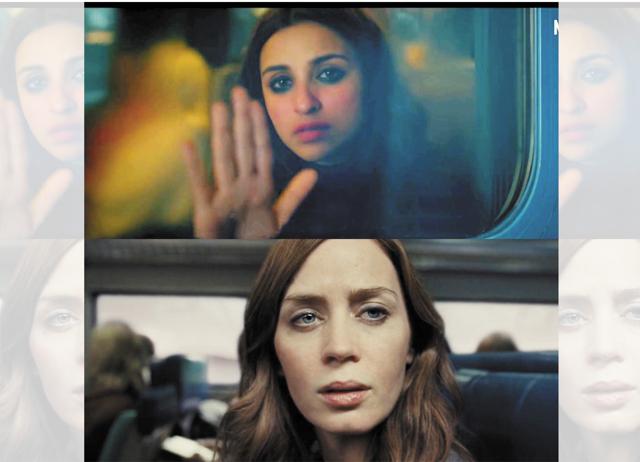
It mirrors in spirit.
“It’s not just the plot. You have to think of the theme and the relevance to make the story local,” says Modi. For Aarya, he relocated Penoza’s Amsterdam underworld to the opium trade along the Madhya Pradesh-Rajasthan state border to “make the story more apna”. He also built on the family theme: What makes a daughter put her father in jail?
Characters forge new paths.
In Modi’s version of The Night Manager, Shaan’s backstory includes a tragedy involving a young girl, rather than an adult woman from the original series. “I check if there’s something in a character that changes once I Indianise it,” he says. “The key is to let the character react to the plot. Immediately, you’ll know what works and what doesn’t.”
Never touch the principle.
Keep the essence of what made the original great – the aftermath of loss, the quick-fire dialogue, the casual cruelty in a relationship, the jokes about ageing – and any remake will shine. Vishal Bharadwaj kept Shakespeare’s core themes intact with his Indian adaptations of Othello (Omkara, 2006), Hamlet (Haider, 2014) and Macbeth (Maqbool, 2003). “In Omkara, the Shakespeare equivalent Iago, Langda Tyagi, was completely desi. The film switched the politics from class to caste,” Modi says. “I always look at an adaptation and ask, ‘Is this how Vishalji or his team of writers would have done it?’”


